
Key takeaways
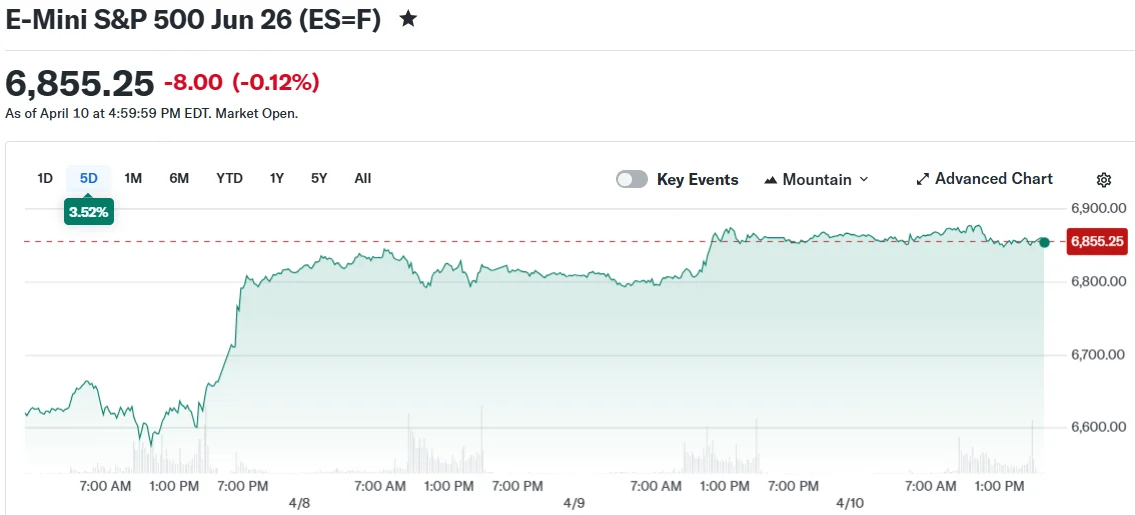
- The major indexes posted back-to-back weekly gains: the S&P 500 advanced 3.5%, the Dow rose 3%, and the Nasdaq jumped 4.7%.
- Financial sector heavyweights, including JP Morgan, Goldman Sachs and Bank of America, release their quarterly results this week.
- Consumer prices posted their biggest monthly jump in nearly two years during March, driven primarily by energy costs
- West Texas Intermediate crude is trading at $98 a barrel, although futures point to a possible drop toward $85 by summer.
- The technology sector shows a major split: software names are down 30% while chip manufacturers are up more than 20% year-to-date
Stock markets finished their second positive week in a row as Wall Street turned its focus towards quarterly corporate reports. The S&P 500 rose 3.5%, while the Dow Jones Industrial Average added 3% and the Nasdaq Composite, which is dominated by technology stocks, rose 4.7% over the five-day period. Despite remaining in negative territory for 2026, all three key metrics are now less than 1% away from returning to breakeven.
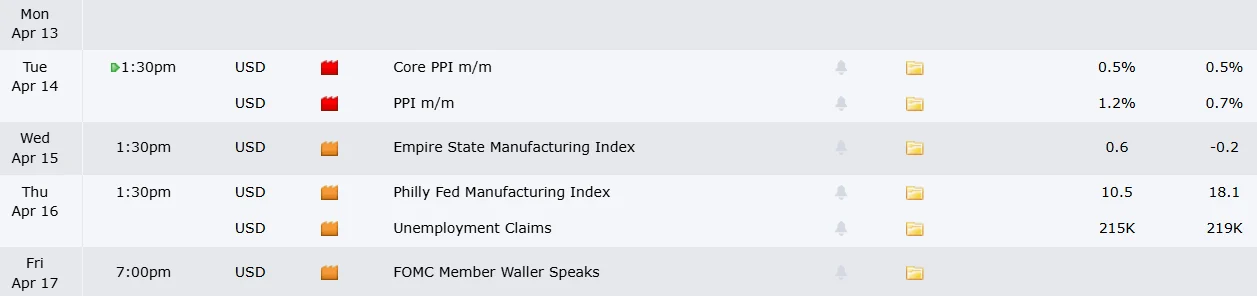
The coming days feature a calendar full of company announcements. Goldman Sachs kicks things off on Monday. JPMorgan Chase, Citigroup and Wells Fargo all deliver their numbers on Tuesday. Bank of America and Morgan Stanley are scheduled to issue on Wednesday, while Netflix and Taiwan Semiconductor close out the week with releases on Thursday.
Investors remain attentive to international developments as well. Vice President J.D. Vance revealed on Saturday evening that diplomatic negotiations between the United States and Iran conducted in Pakistan throughout the weekend concluded without any progress, with Tehran rejecting its commitments regarding nuclear weapons development.
Crude oil remains the driver of the central market
Since the start of hostilities between the United States and Iran, oil prices have emerged as the primary metric attracting traders’ attention. WTI finished Friday’s session near $98 a barrel, representing a significant jump from around $68 before the conflict erupted.
However, so are July settlement futures Pricing oil Much less around $85. Evercore ISI’s Julian Emanuel suggested that stabilizing WTI in the “low to mid 80s” range would sufficiently remove downward pressure on stocks.
The 14-day temporary truce, which included the United States, Israel and Iran, provided market participants with renewed confidence over the previous week. The sustainability of this ceasefire will largely determine oil prices, and thus the broader trajectory of the stock market.
Inflation data on Friday revealed that consumer prices rose 0.9% during March, representing the largest one-month advance since June 2022. Economic analysts attributed the bulk of this rise to energy-related increases stemming from geopolitical tensions.
The University of Michigan’s measure of consumer confidence fell to an all-time low in April, although researchers noted that 98% of survey responses were collected before the ceasefire was announced.
Divergent fortunes within the technology sector
The performance gap between technology stocks has widened significantly. The iShares Software Sector ETF is down more than 7% over the past week and now shows a 30% year-to-date decline.
Salesforce is the weakest performer in this category, falling more than 35% in 2026. AppLovin, Intuit, and ServiceNow are all down more than 40%. Microsoft, PalantirOracle shares fell by more than 25%.
Chip manufacturers present a contradictory picture. Shares of the VanEck Semiconductor ETF are up more than 20% this year. Shares of Intel, Applied Materials, Lam Research, and Marvell Technologies rose more than 50%.
ASML reveals its results on Wednesday, followed by Taiwan Semiconductor Corporation on Thursday. Taiwan Semiconductor Corporation’s preliminary revenue numbers for March released last week indicated continued strong demand for AI processors.
Netflix also joins the reporting schedule on Thursday, capping an eventful week for corporate earnings.




