

short
- A Gallup study found that Generation Z uses artificial intelligence more but trusts it less.
- Fear of cognitive decline and dependency has grown among young people.
- Workplace anxiety is rising as artificial intelligence threatens careers.
Generation Z increasingly hates AI, but they also can’t stop using it, according to a new report Gallup poll Released this week.
The survey was conducted from February 24 to March 4 by the Walton Family Foundation, GSV Ventures and Gallup, and included 1,572 Americans between the ages of 14 and 29. About 51% of them still use generative AI at least weekly, an increase of 4% from last year.
The use of AI among Generation Z is on the rise, but enthusiasm is declining.
Excitement around AI fell by 14 percentage points to just 22%. The percentage of hope decreased by 9 points to 18%. Anger rate increased 9 points to 31%. These are not marginal transformations.
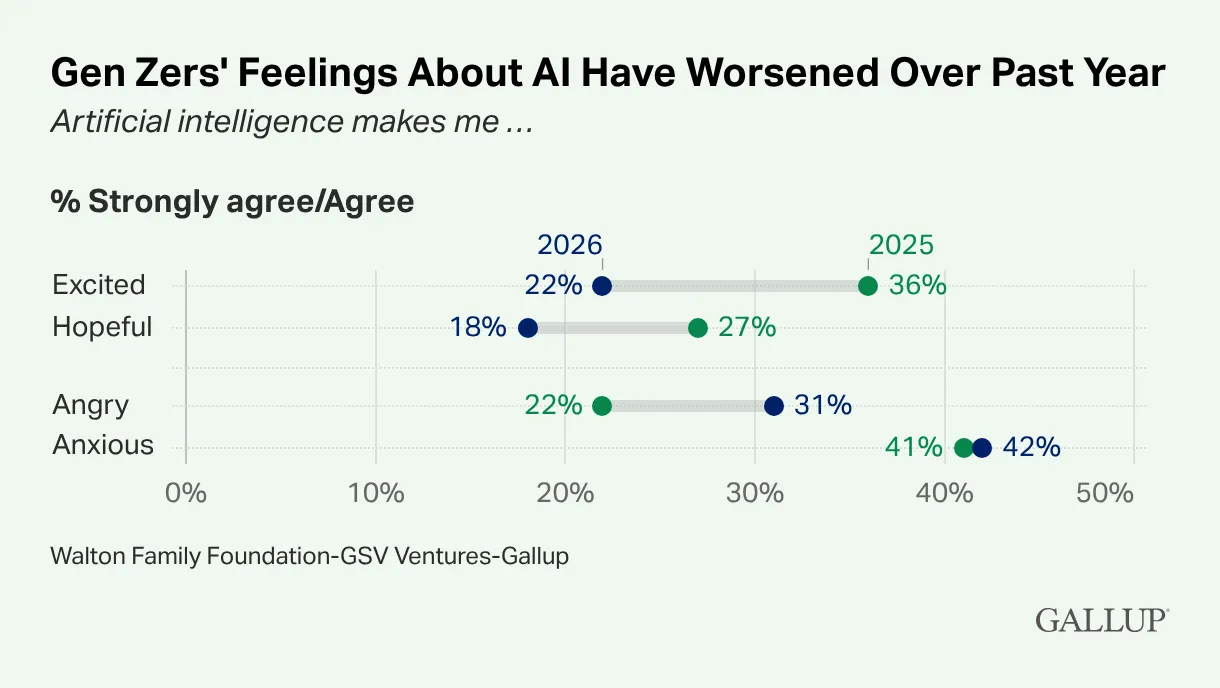
This negative sentiment extends even to the most hardcore users. Among Gen Zers who use AI every day, excitement fell by 18 points year over year. “In most of these cases, Gen Z has become increasingly skeptical, increasingly negative — from a place where they weren’t particularly positive about it even in the past year.” He said Zach Hrynowski is a senior education researcher at Gallup.
Eight in 10 Gen Zers believe that relying on AI to get work done faster is likely to make learning more difficult in the future, showing fears that they will become dependent on a tool that makes them worse at the things it helps them do.
This issue has been studied before. Scientists You’ve wondered if AI makes you dumber Back in 2024, and the verdict was uncomfortable: Overreliance on tools like ChatGPT has been linked to procrastination and memory loss in students.
Besides worrying about declining cognitive skills, users are also concerned about how AI will affect their creativity. Only 31% of Gen Z respondents believe AI helps them come up with new ideas, down from 42% last year. Only 37% trust it for accurate information, compared to 43%. This tracks with separate research demonstrating this Generative AI compromises authenticityand enhancing individual production while narrowing the diversity of creative work in general.
The uncertainty in the workplace is even more acute. Nearly half of Gen Z workers — 48% — say the risks of AI outweigh its benefits at work, an 11-point jump from last year. Only 15% see this as a net positive for their career. Less than 20% prefer AI over humans for services such as tutoring, financial advice, or customer support. Trust in AI-powered work is 28%, compared to 69% for exclusively human production.
Part of this is rational fear, considering artificial intelligence Already displaced White collar jobs are coming faster than most people expected, and Generation Z is watching this happen as they enter the workforce. Sydney Gill, a 19-year-old first-year student at Rice University, He said the New York Times: “I feel like anything I care about is likely to be replaced, even in the next few years.” Gallup separate He studies It found that 42% of bachelor’s degree students reconsidered their college major because of AI.
almost Three quarters More K-12 schools now have AI policies — up 23 points in one year — but more rules haven’t resulted in more trust. It has even perpetuated a sense of academic dishonesty: 41% of students believe that most of their classmates use AI in their schoolwork when they are not supposed to.
“What we see in the data is a generation that recognizes the benefit of AI but is increasingly concerned about its long-term impact on learning, confidence and career readiness,” said Stephanie Markin, senior partner at Gallup. “Their growing skepticism suggests a need for more thoughtful integration of these tools into both the school and workplace settings.”
Generation Z was supposed to be a proof of concept for AI, a generation that relied so heavily on digital tools that adoption would be seamless and enthusiasm would be self-sustaining. Instead, the data show a group that uses AI largely out of necessity, feels increasingly distrustful of what it produces, and fears that cutting corners will make them worse off in the long run. Even elite scientists have Confession began AI does most of their thinking now, which may explain why Generation Z doesn’t feel particularly reassured when they see this.
Daily debriefing Newsletter
Start each day with the latest news, plus original features, podcasts, videos and more.



