
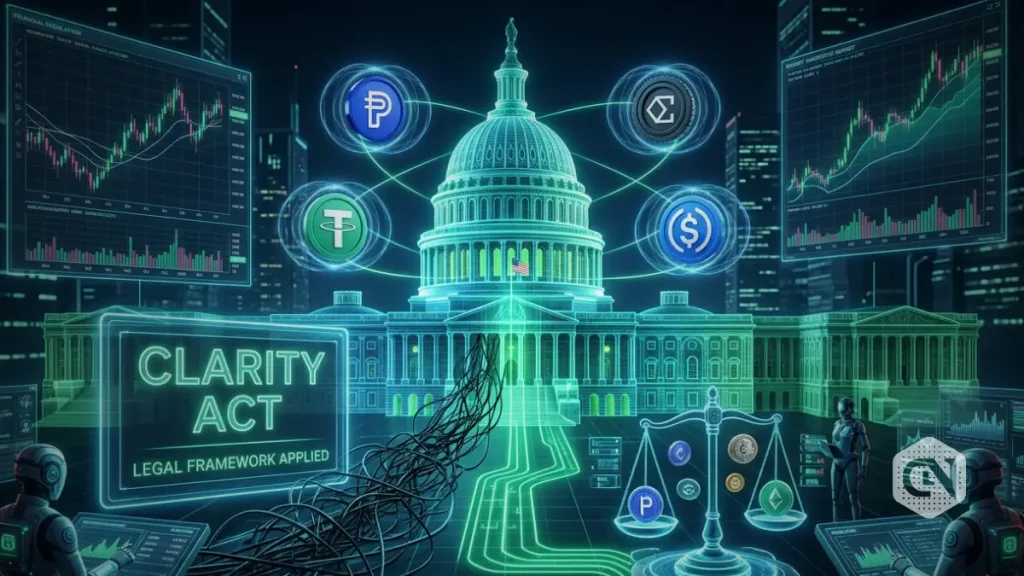
- US lawmakers are seeking to pass the Clarity Act before the midterm elections this year.
- The dispute over stablecoin returns remains a major hurdle in Senate talks.
- The senators also expressed that the risk of delay pushes the timeline for cryptocurrency regulation in the US beyond 2030.
US lawmakers have warned that the window for action on the Crypto Clarity Act is closing quickly. The proposed “Clarity Act” is now at the heart of this urgency. Supporters say it could determine how digital assets are regulated in the United States for years to come.
Cynthia Loomis has taken a strong stance on the issue. She said Congress must approve the bill within this year.
Clarity Act deadline closing quickly?
Senator Lummis said failure to act now will result in delays until at least 2030. She described now as a “critical” time for the country’s financial future. She spoke at a time when legislative priorities are likely to change ahead of the midterm elections in November.
The recent administration has alienated the digital asset industry. It is time to welcome them home with clear rules of the road.
Pass the Clarity Act.
– Senator Cynthia Lummis (@SenLummis) April 12, 2026
The Clarity Act attempts to draw clearer lines between regulatory agencies such as the US Securities and Exchange Commission and other agencies. Industry officials believe this kind of clarity can help companies act with more confidence. It can also stimulate investment and innovation within the country.
The bill has support outside the US Congress. David Sachs also called on lawmakers to act quickly. He asked the Senate Banking Committee to advance the legislation without delay. He also reiterated the possibility that Donald Trump could eventually sign the bill into law if it reaches his desk.
Many figures from the cryptocurrency industry have also supported the effort. Dixon said clear regulations would benefit users and builders alike. He said regulatory confirmation would allow companies to plan long-term operations and give consumers better protection. Meanwhile, some previous critics have taken a different stance.
Brian Armstrong had previously withdrawn his support for the bill. But he recently stated that the timing of the organization now makes sense. Paul Grewal, his firm’s chief legal officer, said the bill could soon enter the review stage within the Senate Banking Committee.
Despite the support, one of the main issues is the handling of stablecoin returns. This indicates whether companies can offer returns to users who own stablecoins.
The debate has been divided encryption Companies from traditional banks. As cryptocurrency companies aim for flexibility, banks have raised concerns about risks to lending and financial stability. Scott Besant did not discuss this issue. He attacked industry voices opposing the bill and reiterated that clear legislation is necessary. He said that many cryptocurrency companies have already moved their operations to areas with specific rules, such as Abu Dhabi and Singapore. strong Systems It could bring this activity back to the United States. Another source of complexity is political differences.
Some lawmakers have raised concerns that support for the bill in the Senate could be affected by potential conflicts related to cryptocurrency projects linked to Donald Trump. And there is the fact that the time pressure remains relentless.
In July 2025, the bill passed the House of Representatives with bipartisan support. But it has stopped since he sat in the Senate. There were deadlines that did not move forward, pushing back the schedule each time. Lawmakers are now watching the calendar closely. If the bill does not move forward by May, its chances of passing this year could decline sharply. The upcoming election cycle could shift attention away from cryptocurrency regulation and toward campaign priorities.



