
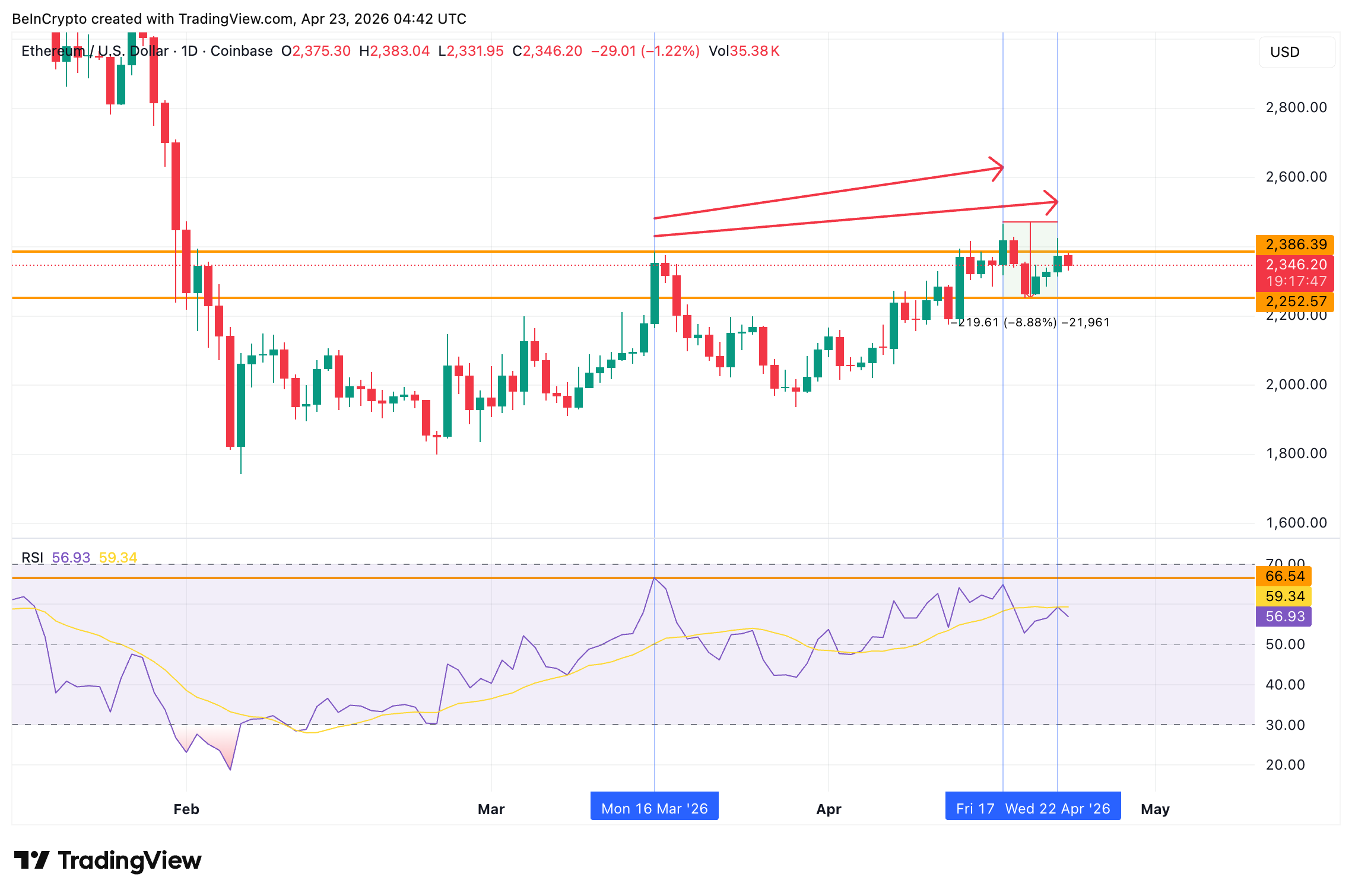
Ethereum (ETH) price is issuing the same bearish warning that preceded the ~9% correction last week, with the signal appearing again on April 22.
However, the basic situation has changed. The buildup of whales and the volatility in the funding rate suggest that the path this time may differ from the April 17 unwinding, although the fundamental divergence remains intact.
The RSI divergence flashes for a second time as the position of the whales changes
Ethereum (ETH) price. A regular bearish divergence flashes for the second time in five weeks. The Relative Strength Index (RSI), a momentum indicator, peaked at 66.54 on March 16. When the price pushed to a higher high on April 22, the RSI failed to match that peak, leaving a lower high on the oscillator. The reading indicates weak momentum.
The same pattern emerged between March 16 and April 17. At the time, it led to an 8.88% correction before ETH found a foothold at $2,252.
Want more symbolic insights like this? Sign up for Editor Harsh Notariya’s daily newsletterhere.
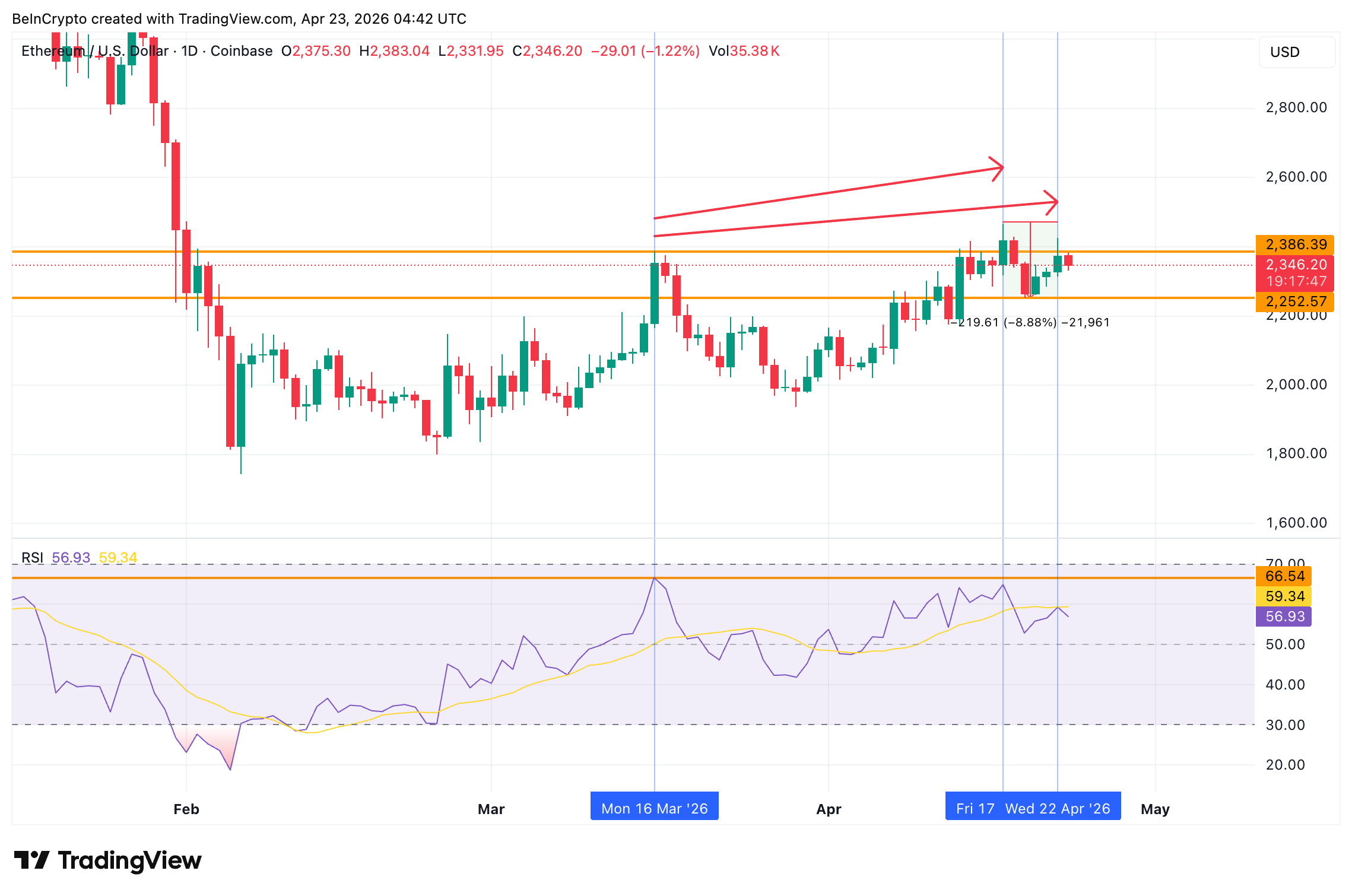
However, the whale’s behavior seems different this time. Data suggests that Ethereum whales may be starting to add supply again. Their holdings rose from 123.75 million on April 19 to 123.91 million by April 22.
In contrast, during the calm period from April 16 to 19, whales dumped their reserves as prices corrected. The shift in positioning indicates a different background, although the difference itself is still active. However, traders should keep an eye on whale positions going forward as this group tends to have reserves suddenly drop.
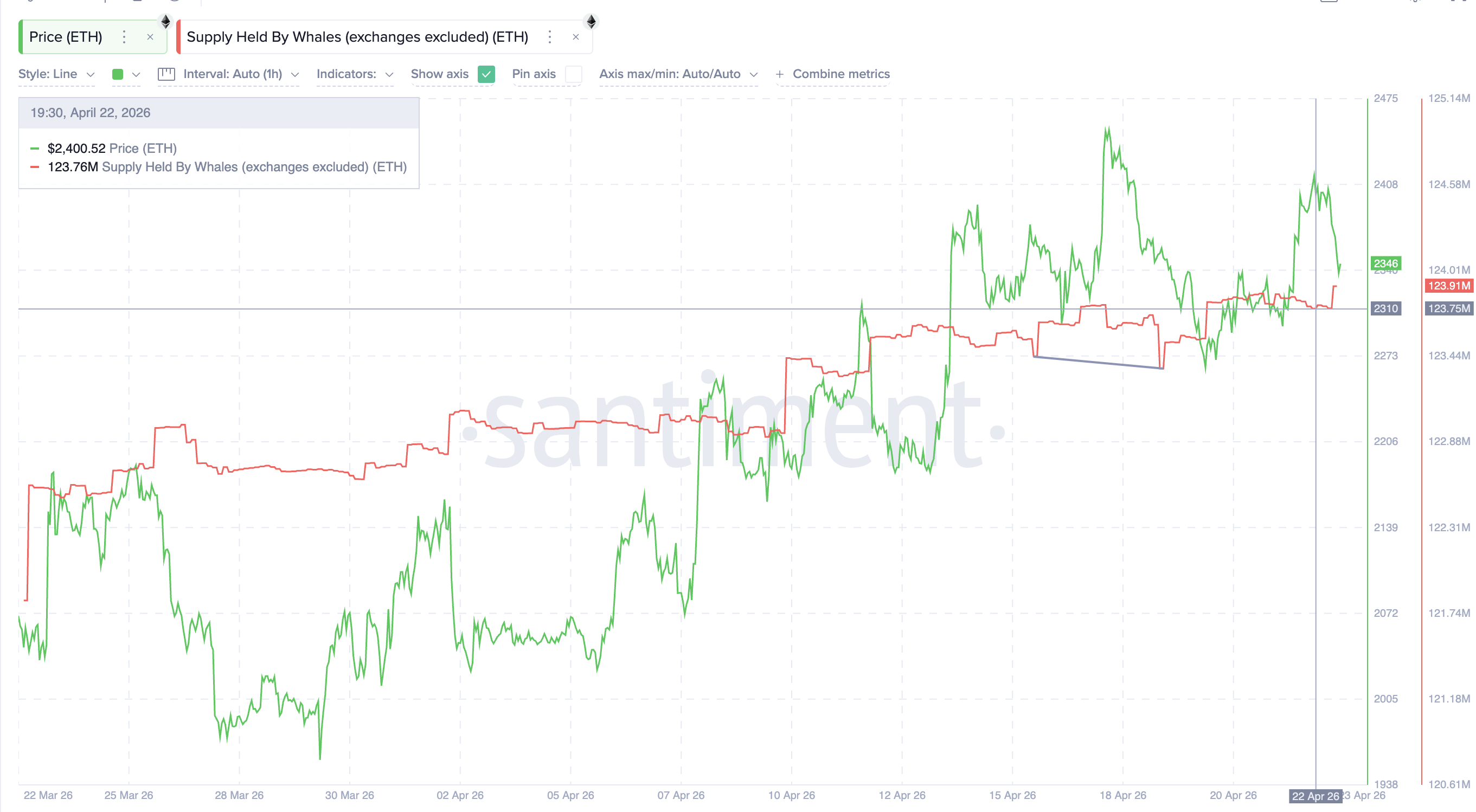
Whether the funding rate and open interest confirm this shift determines whether the divergence triggers another deep decline.
The funding rate contrasts with last week’s setting
The derivatives market is showing a different positioning setup compared to mid-April. ETH’s open interest is around $12.3 billion, compared to the reading when divergence was launched on April 17. However, the Ethereum funding price has flipped.
On April 17, funding reached -0.003%, indicating a short biased market. This short-bias deflection created pressure dynamics. Once the price reversed from the April 19 low (after the divergence occurred), the trapped short trades had to be covered, which helped fuel the rebound. In contrast, the funding rate is now slightly positive, which means that traders tend to buy.
Transformation is important. Long-time biased positions, albeit moderate, are experiencing bearish divergence creating the opposite setup to last week. If a pullback begins, long liquidations will amplify the downside rather than putting short pressure on the bounce. However, financing rates remain far from the ceilings needed to impose immediate pressure in either direction.
With the influx of whales supporting the uptrend but positions leaning towards buying, the… Ethereum price chart He becomes the decision maker.
Key Ethereum price levels determine the next step
the ETH price chart Defines decision areas. To invalidate the bearish setup, ETH needs to close above $2,377, the 0.236 Fibonacci level, which is currently limiting the bounce.
The negative situation depends on the whales sticking to their current position. If ETH cannot recover $2,377 and whale reserves decline, $2,252 will become the first test mentioned earlier. This level is in line with the concentrated ETH cost basis set.
Glassnode data shows that 716,028 ETH ranged between $2,231 and $2,250 in cost. Bondholders on this cost basis did not sell during the April 17-19 correction period. This is probably why $2,252 was held as support last time.
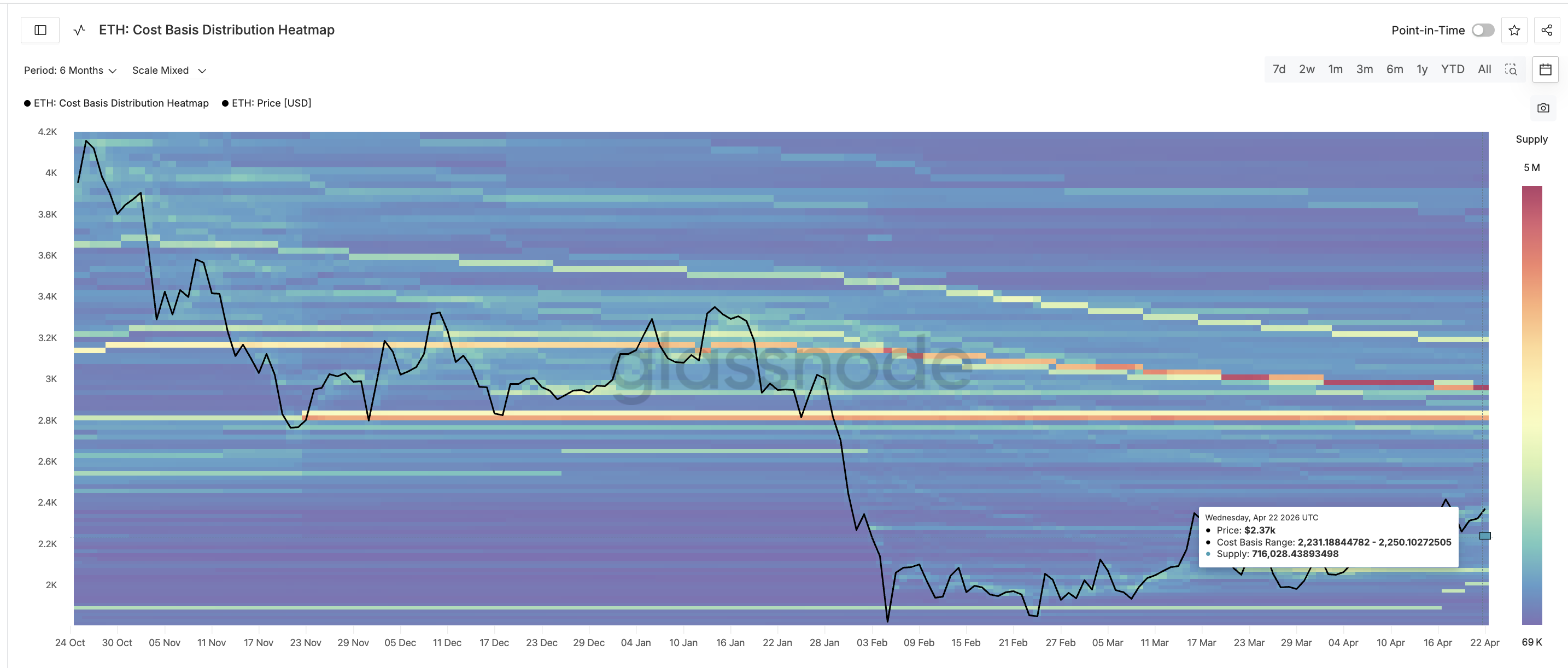
If $2,252 fails, the next major demand zone is between $2,067 and $2,085. This pool contains 1,417,672 ETH at cost, nearly double the established supply at $2,252.
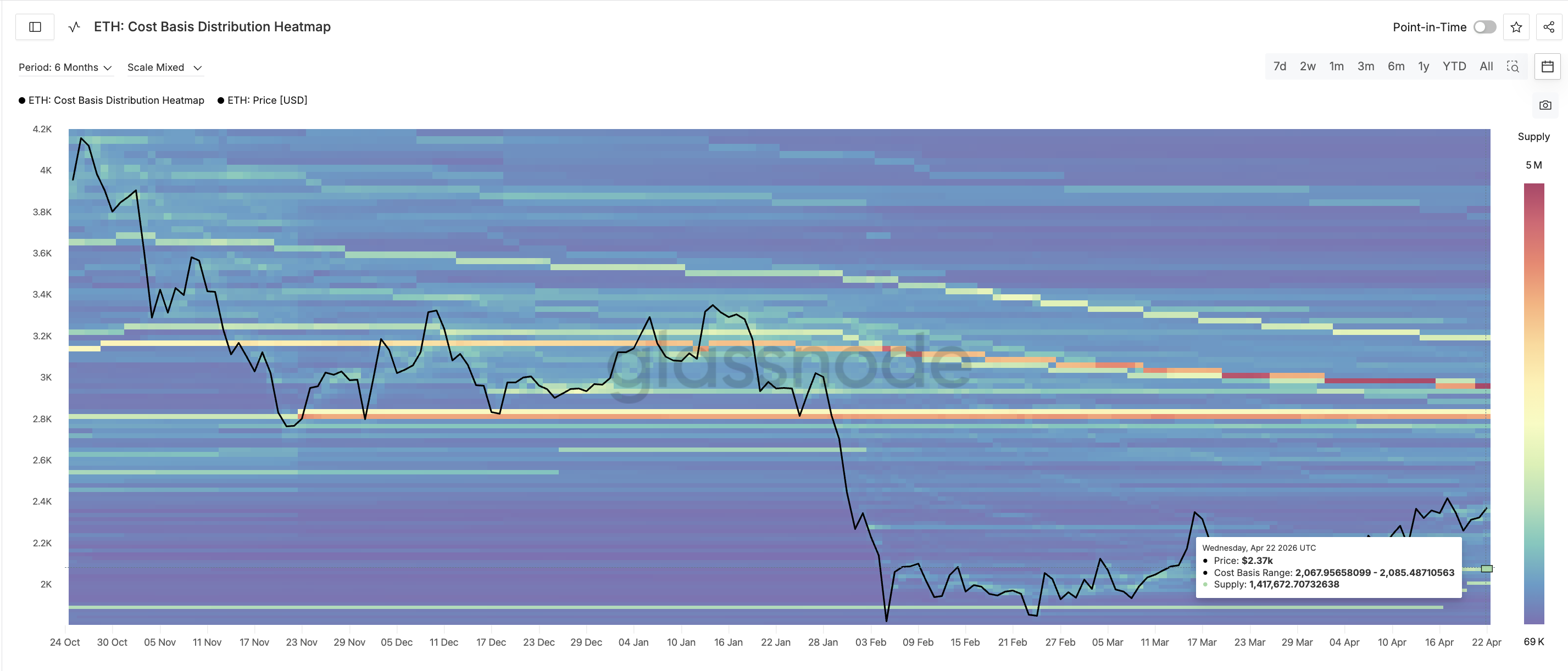
A break below exposes lower levels on the ETH price chart, i.e. around $1935.
One nuance matters. The divergence is active, but the flow of whales has shifted since April 17. The correction may not be as deep this time. However, a sustained distribution of whales would negate the fundamental difference between last week’s setup and today’s.
A daily close above $2,455, or 0.382 Fibonacci, opens the way towards $2,517. Extended targets lie at $2,580, $2,783, and $3,112.
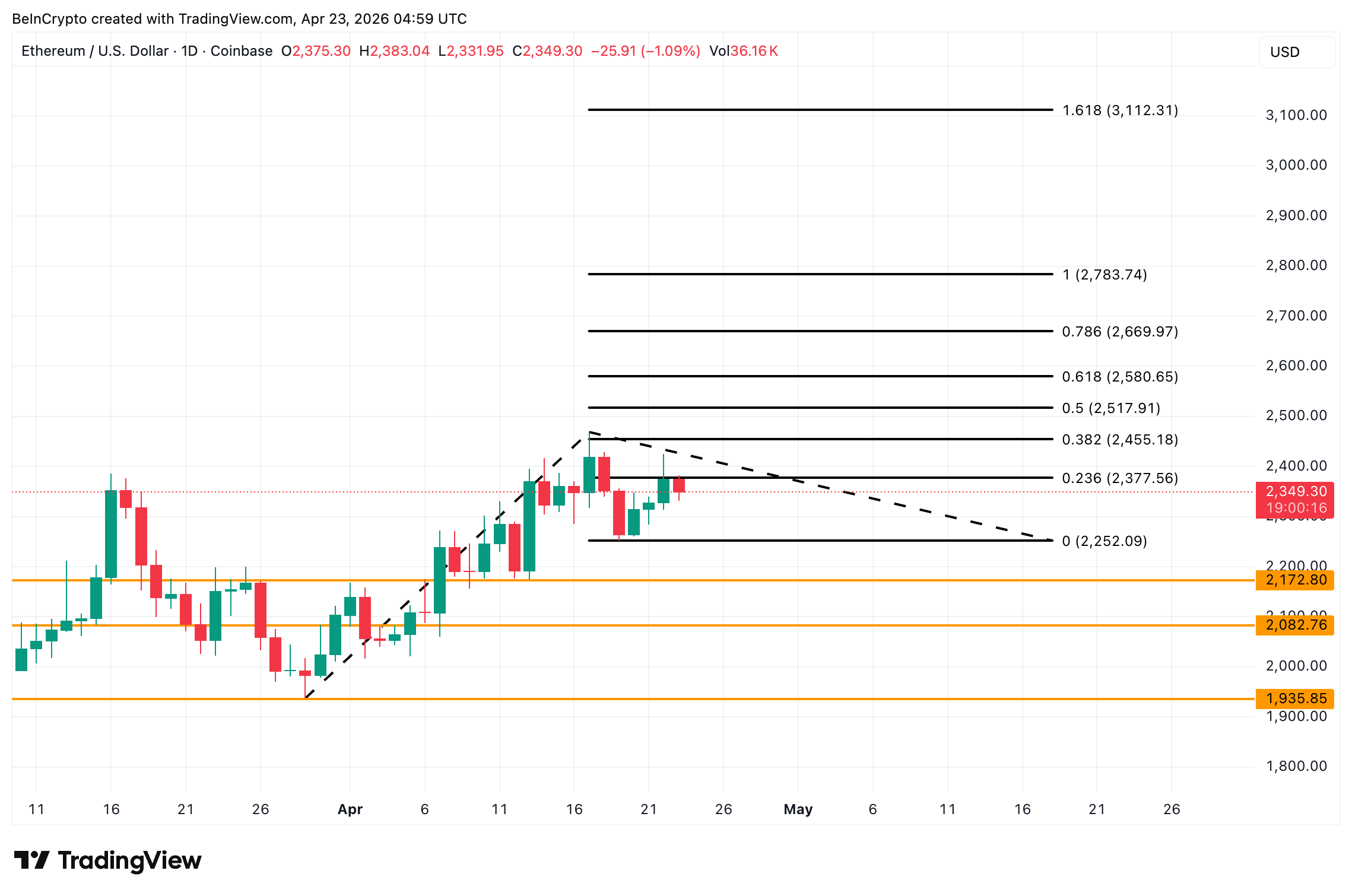
However, if the $2252 level is broken, the chart has a key level at $2082, which corresponds to the largest demand area above $2000. This means that the $2,252 level separates a shallow pullback from a deeper influx into the 1.4 million ETH cost basis area.
this post Ethereum price warning has been triggered again after a 9% drop last week appeared first on BeInCrypto.



