
14.png-2-scaled.jpg)
Please note that we are not authorized to provide any investment advice. The content on this page is for information purposes only.
Nvidia shares are trading higher today amid reports that China has cleared the way for ByteDance, Alibaba and Tencent to start buying Nvidia’s advanced H200 AI chips. US President Donald Trump had previously allowed the export of H200 products to the communist country, but it appears that Chinese companies were waiting for government approval.
Chinese regulators had previously been reluctant to approve imports, fearing they would undermine the growth of domestic chipmakers such as Huawei. However, the tide turned this week during an official visit to China by Nvidia CEO Jensen Huang.
China has reportedly cleared H200 imports
According to reportsThe first batch of approvals covers more than 400,000 H200 chips, with an estimated value of $10 billion. ByteDance, Alibaba, and Tencent are first in line, with a waiting list for other local companies forming. Sources indicate that Beijing’s “gesture” comes with conditions. Regulators are expected to require a bundle ratio, where companies must buy a certain percentage of domestic AI chips (such as Huawei’s Ascend series) for every imported Nvidia chip.
Why the H200 matters to China
The H200 is a big leap over the “watered-down” H20 chips previously available in the Chinese market. It offers nearly six times the performance of H20, making it essential for training the massive large language models (LLMs) required to compete with Western entities like OpenAI.
In a social media post last month, Trump said exports are allowed “Under conditions that allow for continued strong national security,” he added, “President Xi responded positively!”
Notably, the export license covers the Nvidia H200 accelerator, which is the company’s second most powerful AI chip and a major upgrade over the previously restricted and lower-performance H20 variant.
The most advanced next-generation Blackwell and Robin chip families will remain off-limits to Chinese customers, ensuring America maintains its technological edge.
The deal stipulates that exports will only be made to “authorized commercial customers,” with the Ministry of Commerce finalizing the details and screening process.
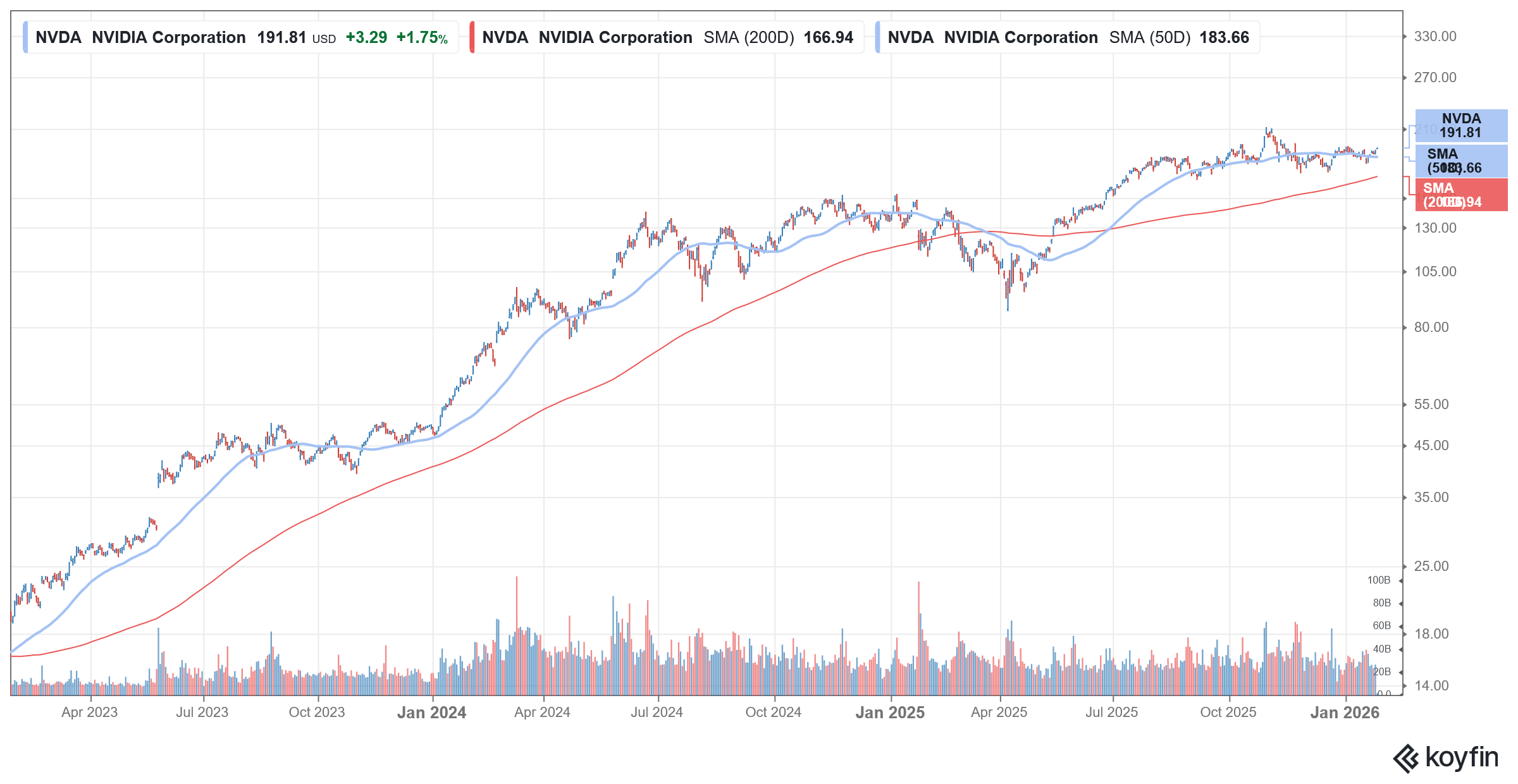
The resumption of exports to China is a positive for Nvidia
Meanwhile, the start of exports to China would be a huge relief for Nvidia, which has been severely constrained in a lucrative market since the initial export controls were imposed. Huang has actively pressured the administration, claiming that overly stringent restrictions only push China to accelerate the development of its own domestic AI chips, ultimately undermining US progress.
Nvidia has lost market share in China, and the company has warned that it is losing competitiveness in the country where it once had a dominant market share. During its fiscal Q1 2026 earnings call in May, Nvidia CFO Colette Kress said: “Losing access to China’s AI accelerator market, which we believe will grow to approximately $50 billion, will have a material adverse impact on our business going forward and will benefit our foreign competitors in China and around the world.”
Nvidia chips were allegedly smuggled into China
Notably, while Nvidia’s top AI chips have been banned from being exported to China, there have been repeated reports of them being smuggled into the country. DeepSeek, which has gained attention for developing cost-effective AI models, allegedly Captive Nvidia Blackwell chips were used. The method of acquisition is described as a complex smuggling operation in which the advanced chips are said to have been first shipped to data centers in countries allowed to purchase them. They were then allegedly stripped from the servers and re-exported, possibly in pieces, to China, bypassing customs inspection and checks.
In response to the accusations, Nvidia issued a strong denial, stating that the company had “seen no evidence or received tips” to support the allegation of trafficking through offshore data centers. Nvidia maintains that it insists that its partners comply with all applicable laws.
The controversy has drawn significant attention to Nvidia’s billing practices in Singapore. Public filings have shown that a significant portion of Nvidia’s revenue, reportedly around 22-28% in some periods, is invoiced through Singapore.
A significant portion of Nvidia’s sales are accounted for in Singapore
However, Nvidia and the Singaporean government have clarified that this number does not reflect the physical destination of the chips. Nvidia maintains that its revenue is reported based on a customer’s billing location. Many major US and European companies have major business entities in Singapore and use them for centralized billing, even if products are ultimately shipped to data centers in the US or other Western countries. “Most shipments associated with Singapore revenue were to locations other than Singapore and shipments to Singapore were minimal,” Nvidia stated.
Singapore’s Ministry of Trade and Industry (MTI) also stressed that the actual delivery of products to Singapore represents a very small portion (reportedly less than 1%) of the revenue invoiced there. Although Singapore is an international trading hub, its government expects companies to adhere to US export controls and local laws, and has launched investigations to ensure its trading system is not being abused to circumvent global restrictions.
Despite the clarifications, the spike in revenues issued through Singapore prompted both the US government and Singaporean authorities to launch investigations into whether Singapore-based brokers were being used to route illegally restricted chips, including those destined for DeepSeek. In fact, Singaporean police have made fraud-related arrests in connection with the illegal re-export of GPUs.
The Chinese Communist Party encourages “civilian-military” integration.
The Chinese Communist Party (CCP) encourages a Military-civilian integration strategywhich seeks to integrate private sector technological innovation, including data and artificial intelligence capabilities, with the People’s Liberation Army (PLA). This reinforces the government’s interest in accessing corporate data for strategic purposes.
The Chinese government has consistently denied that it forces companies to illegally collect or transfer data in violation of laws. Chinese officials usually state that all data collection and transfer are done “in accordance with the law” and emphasize that its laws also include provisions for data protection and user privacy, such as the PIPL law. They view foreign concerns as baseless accusations aimed at hindering the growth of Chinese companies.
China supports its technology companies
China, which has cracked down on its technology companies, especially Alibaba previously, is now supporting its own technology companies amid the AI war with the United States. In February 2025, Chinese President Xi Jinping met with businessmen in the countryincluding Alibaba co-founder Jack Ma, at a seminar. Ma’s participation in the event with Jinping became even more important because the Chinese billionaire has been the face of China’s crackdown on tech tycoons, who the Communist Party believes have become too powerful.
Alibaba is reportedly considering listing its semiconductor division
Alibaba is among the Chinese companies that have developed artificial intelligence chips and electronicsIt secured a major deal with state-owned telecommunications company China Unicom To supply AI chips for a new data center. This move highlights Beijing’s accelerating move toward technological self-sufficiency and represents a major victory for local chipmakers amid rising geopolitical tensions and restrictions on American exports.
It is said that Alibaba Moving forward with rotation plans And include the specialist semiconductor division, T-Head (aka pingtug). The strategic move follows a broader trend among Chinese tech giants to capitalize on massive demand for domestic AI infrastructure.



