
Quick summary
- Brent crude exceeded $111 per barrel, recording gains of nearly 6% during the week
- Washington rejected Tehran’s proposal to restore access to the Strait of Hormuz
- President Trump’s non-negotiable demands focus on halting Iran’s uranium enrichment activities
- Pakistan-brokered diplomatic efforts collapsed over the weekend
- Tehran faces a severe shortage of oil storage capacity and a possible production shutdown
Energy markets saw significant upward momentum this week as diplomatic negotiations between Washington and Tehran over the Strait of Hormuz reached an impasse.
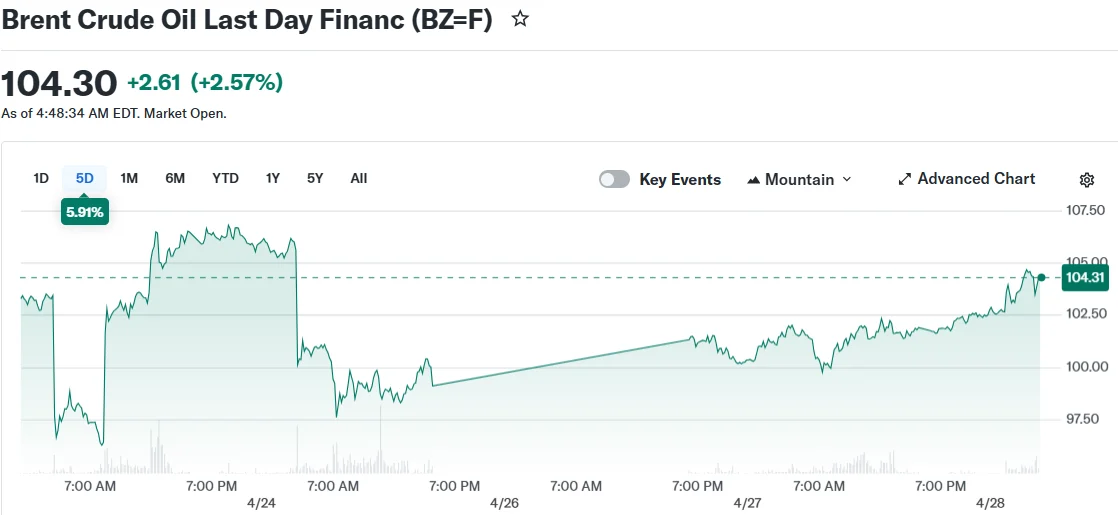
Brent crude futures rose to over $111 per barrel during London market hours. Meanwhile, WTI rose above the $98 threshold. Both benchmark contracts have already registered gains of between 2% to 3% during the previous trading session.
Tehran presented a comprehensive proposal aimed at resolving the ongoing standoff and restoring operations across the strategic waterway. The Iranian plan included provisions requiring Washington to withdraw its naval blockade, establish a new legal framework governing maritime passage through the corridor, and provide guarantees against future military operations targeting Iranian interests.
US President Donald Trump He gathered his security advisors to evaluate the Iranian proposal. But sources from the Wall Street Journal and Reuters indicated that Trump and his national security apparatus rejected the conditions as insufficient.
The main obstacle is Tehran’s desire to postpone discussions regarding its nuclear capabilities. Ending uranium enrichment activities and blocking the way for Iran to develop nuclear weapons are Washington’s primary goals in this confrontation.
Secretary of State Marco Rubio stated that Iran continues to seek to dominate the Strait of Hormuz, and described these ambitions as unacceptable. His statements came during an interview broadcast on Monday with Fox News.
The blockage of the strategic waterway is stressing global energy markets
The Strait of Hormuz has remained essentially closed since early April. Before the escalation, approximately 20% of global oil and liquefied natural gas (LNG) shipments passed through this vital sea strait every day.
Ship traffic through the strait has decreased to almost nothing. This disruption has severely restricted the international distribution of crude oil and natural gas, raised energy costs, and amplified inflationary pressures.
Two Iranian oil tankers intercepted by US naval forces near Sri Lanka last week have reversed course in the Indian Ocean. The US naval blockade targeting Iranian shipping began on April 13, rerouting dozens of commercial ships.
Florence Schmidt, an energy strategist at Rabobank, noted that Iran’s diplomatic offer appears doomed to fail. She stressed that financial markets were moving from a cautious stance toward what she described as a “darker outlook for risk.”
Tehran’s oil sector faces increasing challenges
According to data released by analytics firm Kpler, Iran suffers from a severe lack of crude oil storage infrastructure. With export channels closed due to the US naval blockade, available storage facilities have reached their maximum capacity.
US Treasury Secretary Scott Besent revealed that Iran’s oil industry “has begun to stop production.” In a statement on social media, he predicted that production levels “will collapse soon” and warned that Iran would likely face disruptions to domestic gasoline supplies.
Pakistan played the role of mediator in peace negotiations between the United States and Iran. Plans to hold additional diplomatic sessions over the weekend did not materialize, creating uncertainty about when the parties might meet again.
The confrontation between the American-Israeli coalition and Iran is approaching the two-month stage. Market analyst Linh Tran of XS.com noted that any substantive diplomatic breakthrough could precipitate a major price correction.
Monetary policy decisions issued by the central bank authorities of Japan and the United States are attracting attention this week, with a rise in prices Oil prices This is likely to heighten concerns about energy-induced inflation.




