
Please note that we are not authorized to provide any investment advice. The content on this page is for information purposes only.
Canadian Prime Minister Mark Carney has made clear that his country has “no intention” of pursuing a formal free trade agreement with China and moving to calm the burgeoning trade war with Washington. The statement comes after a weekend of sharp warnings from US President Donald Trump, who threatened to impose 100% tariffs on all Canadian goods if Ottawa deepens its economic ties with Beijing.
Canada rules out a free trade agreement with China
Speaking to reporters in Ottawa, Carney stressed that recent negotiations with China were narrow in scope and were only meant to “correct issues” that occurred over the past two years rather than creating a comprehensive trade agreement.
The tension stems from a trade agreement reached on January 16, 2026, during Carney’s visit to Beijing. The deal is designed to mitigate the series of retaliatory measures that began in 2024. Key terms of the agreement include:
- Electric vehicle import cap: Canada will allow 49,000 Chinese electric vehicles to be imported annually at a significantly reduced tariff of 6.1% (less than 100%). Lowering the barrier to entry-level EVs is seen as essential to meeting national emissions targets, as high costs remain the primary obstacle to Canadian EV adoption.
- Agricultural relief: In return, China will reduce tariffs on Canadian canola oil (from 85% to 15%) and exempt products such as lobster, beef and straw from anti-discrimination duties until 2026.
- Investment: China is expected to begin investing in the Canadian auto sector within the next three years.
Prime Minister Carney described the deal as a “retreat toward predictability” in response to the increasingly volatile trading relationship with the United States.
In response to a question about whether China was a reliable partner compared to the United States, Carney said: “In terms of the way our relationship has progressed in recent months with China, it is more predictable, and you see results coming from that.”
Trump’s reaction: The “51st State” speech.
President Trump has reacted aggressively to Canada opening its economy to China, taking to social media to accuse Carney of trying to turn Canada into a “delivery port” for Chinese goods to bypass U.S. trade barriers.
“If Canada makes a deal with China, there will be 100% tariffs immediately imposed on all Canadian goods and products coming into the United States,” Trump said on Truth Social.
The president also noted that Canada is “systematically destroying itself” and even quipped that the country is being absorbed into the United States, a recurring theme in his recent speech on Canadian sovereignty.
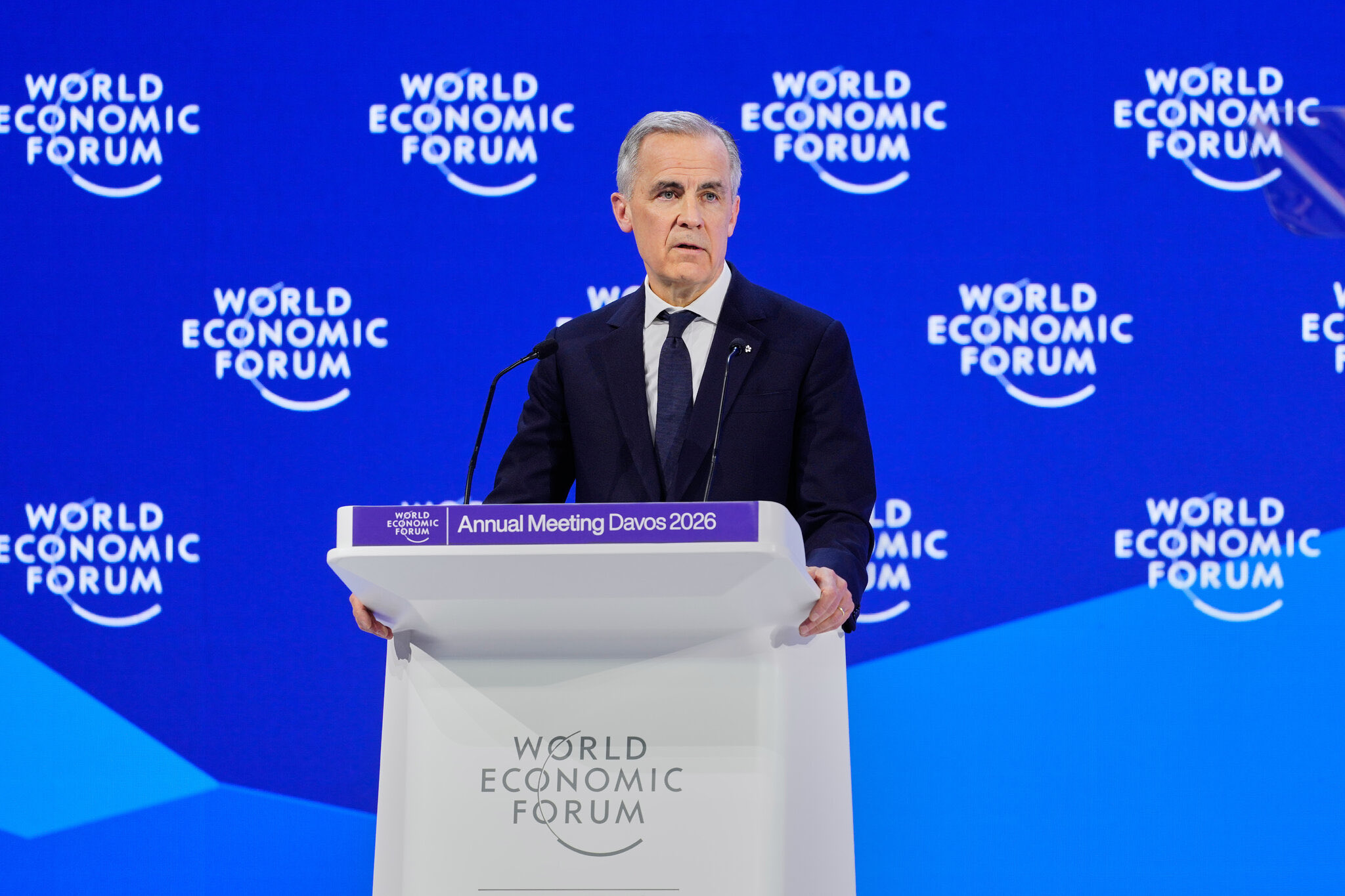
The trade dispute is the latest chapter in the tense relationship between the two leaders. Relations were further strained last week after Carney’s speech at the World Economic Forum in Davos, where he warned against “economic coercion” by great powers, a comment widely interpreted as a criticism of Trump’s “America First” policies and his recent interest in acquiring Greenland.
The USMCA effectively prevents member states from signing free trade agreements with China
It is worth noting that Article 32.10 of USMCA The US-Mexico-Canada Agreement, often called the “China clause” or “poison pill” clause, essentially gives the three member states “veto power” over each other’s ability to sign trade agreements with countries they do not consider “market economies.”
Under this rule, if Canada, Mexico or the United States wants to start trade talks with a “non-market economy” (a term directed almost exclusively at China), they must follow a strict set of rules. They must notify the other two partners at least 3 months before negotiations begin.
They must provide other partners with as much information as possible about potential deal objectives. No later than 30 days before signing, they must submit the full text of the agreement for other USMCA members to review.
Importantly, if one partner signs an agreement with a non-market economy, the other two partners can terminate the USMCA with six months’ notice and replace it with a bilateral agreement between themselves.
The USMCA is under review this year
The primary goal is to prevent China from using Canada or Mexico as a “back door” for products to enter the US market duty-free. It forces North America to act as a unified trading bloc against economic models that rely too heavily on government subsidies and government intervention rather than market forces.
As the USMCA (as it is known in Canada) faces a mandatory review this summer, the risks for the Canadian economy could not be higher. Right now, Carney is walking a tightrope: He’s trying to diversify Canadian trade “to hedge against uncertainty” while trying to prevent the world’s largest economy from shutting down.
China is seeing slow growth
It is worth noting that exports have been a savior for the Chinese economy, which is facing some structural problems, including a worsening real estate crisis and an aging population. Last week, China’s National Bureau of Statistics (NBS) reported that The world’s second largest economy grew by 4.5% On an annual basis in the fourth quarter of 2025. This figure represents a slight deceleration from the 4.8% growth recorded in the third quarter, which represents the slowest quarterly pace in three years.
Despite the cool year-end performance, the Chinese economy grew by 5.0% for the full year of 2025, successfully achieving Beijing’s official target of “about 5%.” This achievement was largely driven by a record-breaking export drive that offset the ongoing stagnation in the domestic market
The 2025 data highlights a growing K-shaped divergence within the Chinese economy. On the one hand, high-tech manufacturing and exports have reached historic levels; On the other hand, domestic demand and real estate continued to influence the national average.
Chinese manufacturers have defied significant global trade tensions, including renewed US tariffs under the Trump administration, by aggressively diversifying into emerging markets in Asia, Africa and Latin America. China announced a record trade surplus of $1.2 trillion in 2025, an increase of 20% from the previous year.
China is expected to announce more stimulus measures
“The slowdown in the fourth quarter is the ‘indicator’ – suggesting that China enters 2026 with fading momentum rather than a new rebound,” noted Charu Chanana, chief investment strategist at Saxo Bank.
To sustain growth in 2026, Beijing is expected to move toward more aggressive fiscal stimulus. The central government has already signaled a “proactive” stance, and is likely to focus on strengthening the social safety net to encourage households to trade in their “precautionary savings” for active consumption.
China has now entered its new 15th Five-Year Plan period with a decisive shift towards a “moderately loose” monetary policy. Reeling from a multi-year real estate downturn and tepid domestic consumption, Beijing is doubling down targeted stimulus measures to start the year.



