
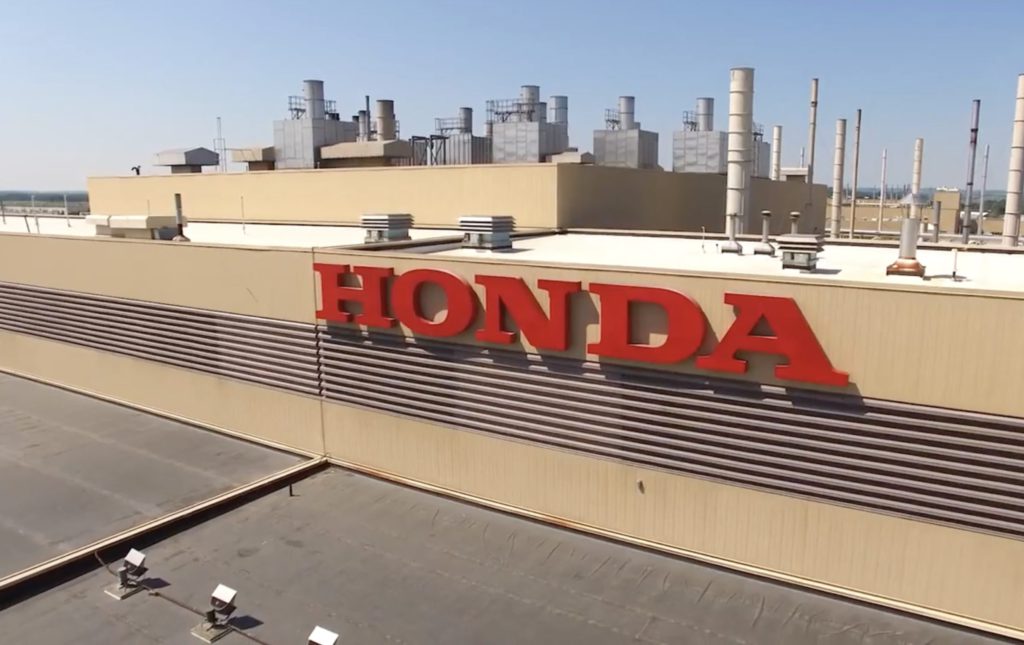
Honda Motor Co. has decided to postpone its planned $US15 billion ($11 billion) electric vehicle and battery complex in Ontario indefinitely, a setback for Canada’s ambitions to build a domestic electric vehicle supply chain as demand declines and the trade war with the United States intensifies.
The news has been reported By CBC Wednesday afternoon, citing Japanese media reports. This has not been independently verified. This comes after Honda’s decision in May 2025 to postpone the project by two years until 2030. CBC said Honda declined to comment, saying only that it would make an announcement within two weeks.
“The sector is facing challenges because of these global shifts, and what we are committed to doing is trying to help protect and preserve the jobs associated with the American business side,” Karim Pardesi, parliamentary secretary to Industry Minister Mélanie Joly, told CBC News Television. “We are in regular communication with Honda and will continue to put the interests of Canadians first.”
The project was intended to expand the company’s operations in Alliston, Ontario, with a renewable assembly plant, an independent battery facility, and two component manufacturers. The site is designed to produce up to 240,000 vehicles annually by the end of the decade while maintaining approximately 4,200 jobs and adding about 1,000 more.
According to reports in Japan, Honda said it is reevaluating the timing of the investment as market conditions evolve, citing a slower-than-expected uptake of electric vehicles across North America and a shift in consumer demand toward hybrid models.
EV strains
The delay highlights mounting pressures in building electric vehicles, as automakers ease spending plans amid rising costs, mixed political signals, especially from the US Trump administration, and weaker-than-expected sales growth. It also comes after the Ontario government this year shifted its strategy away from electric vehicles To embrace defensive minerals After suffering delays following a series of large, high-profile investment promises.
LG Energy Solution briefly halted and restructured its $5 billion NextStar plant in Windsor in 2023 when Stellantis pulled out while Volkswagen’s $7 billion PowerCo plant in St. Thomas was progressing more slowly than initially envisioned. Ford chose to produce pickup trucks in Oakville, Ontario, rather than electric vehicles while General Motors stopped manufacturing the BrightDrop electric delivery truck last year in the province.
The province supported the establishment of a battery minerals corridor that would directly reach electric vehicle factories. However, it still supports important EV projects, such as Canada Nickel’s (TSXV: CNC; US-OTC: CNIKF) Crawford and Frontier Lithium’s (TSXV: FL; US-OTC: LITOF) PAK fast-track project, as well as several processing plants, including cobalt.
Trade issues
The trade battle between Washington and Ottawa could be an obstacle to building the plant because Honda Motor Company’s main market is the much larger United States compared to Canada. The two countries have begun reviewing their free trade agreement and how to exempt cars.
Separately, the Trump administration Tariff adjustments on April 6 The number of products subject to a 50% rate on basic metals such as steel, aluminum and copper and 25% on most of their derivatives expanded.
Ottawa and Ontario have allocated about $5 billion in incentives to secure the Honda project, part of a broader push to anchor battery manufacturing and downstream processing in Canada.
“Sometimes there is a kind of delay in these projects dealing with consumer preferences, technology and different policies around the world,” Finance Minister François-Philippe Champagne told reporters in Ottawa on Wednesday. “But I’m still confident that electricity is our north star.”
Source link



