

GBP/USD settled at 1.3528 on Thursday after falling overnight. The pound remains under pressure, near its lowest levels since late April, amid media reports of a possible competition for the leadership of the ruling party. According to The Times, British Health Minister Wes Streeting is preparing to launch a campaign against Prime Minister Keir Starmer.
Despite pressure from parts of the government and more than 80 Labor MPs, Starmer reiterated that he had no intention of resigning after the party’s poor performance in local elections. The composition of the government remains largely stable, despite the resignation of a few junior ministers.
External factors still affect the pound. Talks between the United States and Iran remain inconclusive, while restrictions on the Strait of Hormuz are causing oil prices to rise. Against this backdrop, the market continues to price in nearly three rate hikes from the Bank of England by the end of the year.
Investors are also awaiting the release of new UK macroeconomic data, including first-quarter GDP figures.
Technical analysis
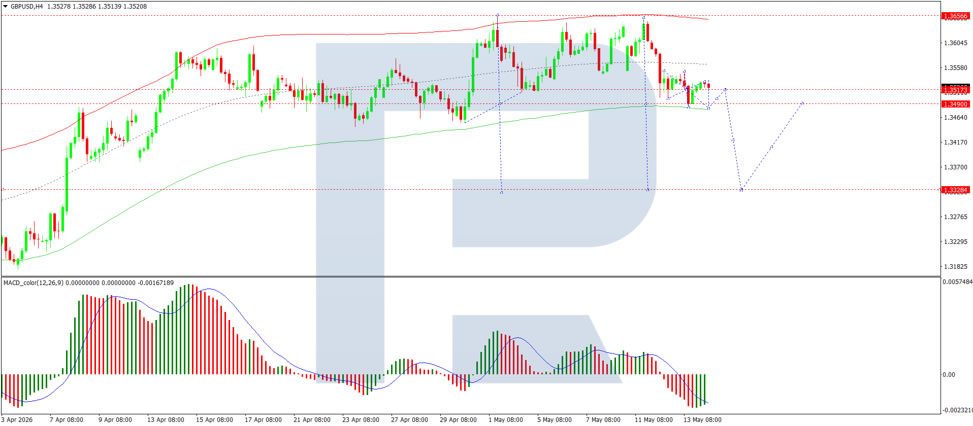
On the 4-hour chart, GBP/USD is trading within a broad consolidation range above 1.3515, currently extending to 1.3530. A move down towards 1.3480 is possible. After that, the pair may consolidate before trying to rise towards 1.3650 or further decline towards 1.3340. The MACD indicator supports this scenario, as its signal line is below zero and strongly pointing down.
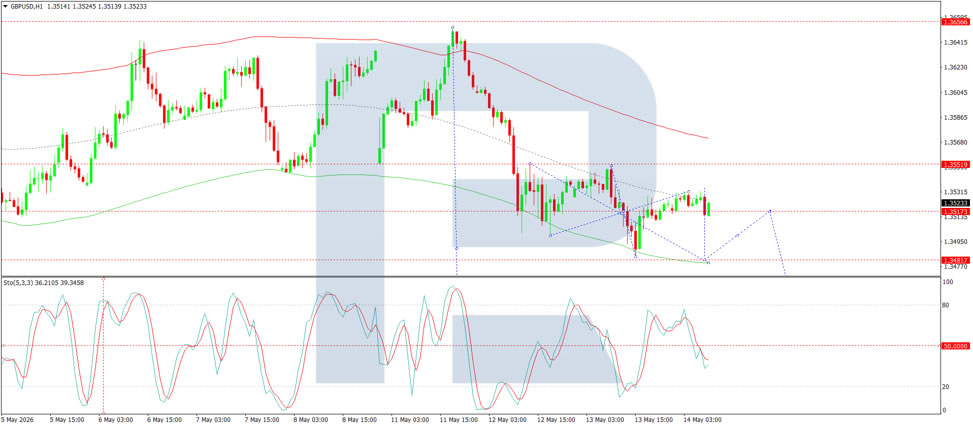
On the hourly basis, the GBP/USD pair is trading within a consolidation range around 1.3515, currently extending to 1.3483. A bounce towards 1.3530 (test from below) is possible, followed by a possible move lower towards 1.3480. The Stochastic indicator confirms this scenario, as its signal line is below the 50 level and points strongly down towards the 20 level.
conclusion
The GBP/USD pair remains under dual pressure due to domestic political uncertainty and global economic risks. Further weakness in sterling is possible if leadership concerns and geopolitical tensions persist, while UK GDP data could act as a catalyst for short-term volatility.



