
Following the launch of The Great Canadian Treasure Hunt, explorers from coast to coast have been delving into Canada’s mining past—hunting down clues, revisiting forgotten camps, and rediscovering places that helped build the country’s resource wealth.
This month, your fishing trip heads east into the forests and rivers of northern New Brunswick, to one of Canada’s largest—and least widely known—mining areas: Bathurst Mining Camp.
Hidden beneath the fir trees and rolling Appalachian hills lies the story of tenacious prospectors, visionary geologists, and the minerals that quietly fuel modern life.
To get the latest idea, read the article below; Here is the French version.
And watch the video: English | French
Keep your eyes (and ears) open. The proof is in the content – no tricks, just careful attention…
Treasure Hunt: Bathurst – The camp that supports the modern world
In the early 1950s, northern New Brunswick was not a place where most prospectors expected to strike it rich.
The area was known more for logging camps and fishing villages than for mines. Narrow roads cut through forests of spruce and birch, and the gentle rivers flowing into the Gulf of St. Lawrence carried far more timber than raw material.
But for geologists studying ancient rocks in the Appalachian Mountains, the region held promise.
These rocks formed hundreds of millions of years ago beneath a long-vanished ocean, where marine volcanoes spewed mineral-rich fluids across the seafloor. In other parts of the world, such environments have produced enormous deposits of zinc, lead, copper and silver.
The question was whether northern New Brunswick possessed the same hidden wealth.
Searches in the bush
One of the men determined to find out was a young geologist named Ken Ritchie, working with the Brunswick Mining and Smelting Company, a company linked to Noranda’s growing mining empire.
Ritchie and his colleagues spent long days scrambling across outcrops, hammering away at rock samples, and drawing geological maps of an area that few have closely studied. Prospectors working with the company tracked creeks and ridges, looking for rusty spots on rock faces — the telltale sign of buried sulfide minerals.
One of these prospectors, Murray Brook, is remembered in local stories as a tireless wanderer of the boreal forest. Like many prospectors before him, he embodied a combination of science, instinct, and stubborn perseverance.
First discovery of sulfide
In 1952, exploration teams made significant progress.
The drilling intersected a sulphide body later known as Brunswick No. 6, confirming that the area contained significant mineralization. No one has yet realized how amazing this camp is.
The real discovery came a year later, when diggers working near the community of Belledon came up with something amazing. The core samples that emerged from the depths were loaded with zinc and lead, and fired with copper and silver. The deposit would become known as Brunswick No. 12 and would eventually grow into the largest underground zinc mine in the world.
Rush to Bathurst
Almost overnight, the quiet forests around Bathurst began to transform.
Geologists arrived from all over Canada and beyond. Prospectors fanned out across the forest, digging up the same layers of volcanic rock that had produced Brunswick No. 12. Drilling rigs appeared on the hills and in the muskeg tracts. Bathurst Mining Camp was born.
The discoveries attracted a variety of personalities to the area. There were experienced prospectors who had worked in camps from the Yukon to Sudbury, and young geology graduates eager to make their first big discovery. Mine builders, engineers and drilling crews arrived from across the Atlantic in Canada. They included men like veteran prospector Joe Mann, who spent decades hunting mineral deposits across northern Canada, and Noranda prospecting geologists who believed the Bathurst shales might contain much more than just a single ore body.
Their instincts proved correct.
Throughout the 1960s and 1970s, new deposits were discovered throughout the region. Mines such as Caribou, Halfmile Lake and Restigouche have joined Brunswick Mine No. 12 and the former Heath Steel Mine in transforming the area into one of the world’s largest base metal camps. Each discovery added new chapters to the story.
Support growth
In mining towns and small communities across northern New Brunswick, families built their lives around underground mines. Miners went underground every day to work in the ancient mineral layers beneath the prehistoric seas.
The communities of Bathurst, Belledon and Newcastle grew alongside the mines. For many families, mining has become a generational calling. Fathers, sons, and daughters found work associated with the camp—underground, in mills, on drilling rigs, or in the engineering offices that ran operations.
The metals produced here have rarely made headlines like gold, but they have proven just as important to modern society.
Zinc protects steel from corrosion, helping maintain bridges, buildings and infrastructure. Copper carries electricity through wires that power homes, cities, and entire industries.
Lead has long been essential in batteries and energy storage. Silver plays a vital role in electronics and solar panels.
These concentrated minerals were loaded onto trains that headed toward smelters and refineries, sending these essential minerals into the global economy.
The rise and fall of Bathurst
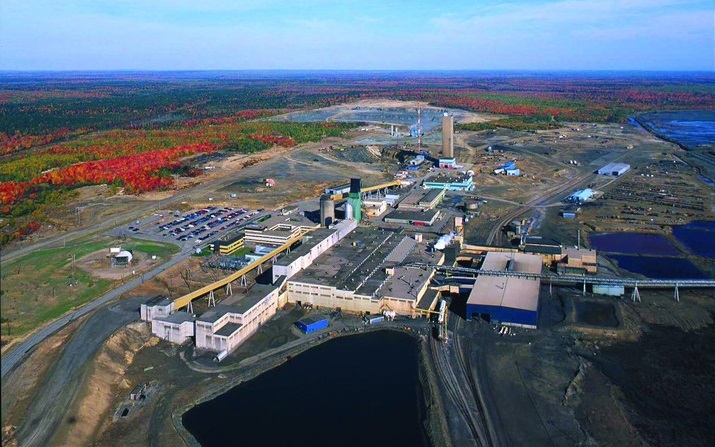
The giant of them all remained Brunswick No. 12. When the mine officially opened in 1964, few could have predicted how long it would last. For nearly half a century, miners worked in its vast underground chambers, extracting hundreds of millions of tons of ore. The mine became the economic backbone of northern New Brunswick.
But like every mining story, Camp Bathurst also faced the inevitable reality of depletion. Raw bodies, no matter how rich, are finite. In 2013, after nearly five decades in production, Brunswick No. 12 finally closed its doors.
For many in the region, it seemed like the end of an era. However, geologists studying the area are quick to point out that Camp Bathurst has not yet been fully explored.
The same ancient volcanic rocks that hosted the great mines extend for miles beneath forests and glacial deposits. Modern exploration tools – from atmospheric geophysics to deep drilling – give geologists new ways to search for hidden deposits.
Companies continued to explore the area, revisiting old targets and looking for new ones that previous generations of prospectors might have missed.
The history of mining has shown time and again that great camps rarely reveal all their secrets at once. Sudbury, Timmins and Flin Flon all produced discoveries over the decades after opening their first mines.
Many geologists believe Bathurst may still hold similar surprises. Beneath those quiet boreal forests lies a geological story that began hundreds of millions of years ago on the floor of an ancient ocean. Somewhere within that story – hidden in the rocks, waiting for the right set of eyes – the next discovery may still be waiting for us.
This campaign is proudly presented with the support of industry sponsors including Agnico Eagle Mines, Sprott Money, EarthLabs, Iamgold, Kinross Gold, The World Gold Council, Alamos Gold, Ernst & Young, MINING.COM, Ceef.CA and The Canadian Mining Journal.
For more information, including full contest rules, FAQs and updates, visit treasure.northernminer.com.Follow @northernminer (X/FB/YouTube) | @thenorthernminer (IG) | @mining (X) | @miningdotcom (IG/FB/YouTube) | @ceodotca (X/IG/FB/TikTok) | @ceocafilm (YouTube) for ongoing guides and community updates.
Source link



