

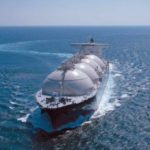
TThe LNG shipping market is undergoing major changes. In its latest weekly report, shipbroker Intermodal said that “in recent years, the EU has intensified efforts to reduce its dependence on Russian gas by developing a credible exit strategy. Following the large-scale Russian invasion of Ukraine in 2022, Brussels has introduced successive sanctions packages and diversification roadmaps and has increasingly turned to US LNG as its main supplier, with US shipments accounting for more than 60% of EU LNG imports by 2026, up from 29% in 2021.”

Source: Multimedia
According to Intermodal Senior Analyst, Mr. Nikos Tagolis, “At the heart of this strategy lies EU Regulation 2026/261, adopted in January, which bans imports of Russian pipeline gas and LNG under new contracts while phasing out existing agreements during a transition period extending to 2027. The regulation underscores Brussels’ determination to cut the bloc’s long-term dependence on Russian gas. Despite opposition from member states such as Hungary and Slovakia, the EU moved In April to ban spot purchases of Russian LNG as part of its broader strategy to phase out Russian gas imports by the end of 2027, a full ban on Russian LNG imports is set to come into effect from January 2027.
“However, market developments have revealed a more complex picture. Following the escalation of hostilities in the Middle East during March and April, Russian LNG exports to Europe increased by 29%, while imports during the first four months of 2026 rose by 23% year-on-year, according to LSEG data. This increase was primarily led by Belgium, France and Spain, with most volumes coming from the Yamal LNG project. All natural gas was exported LNG from Yamal was delivered in early 2026 to European importers via the Russian-controlled Northern Sea Route, underscoring the continued interdependence between Europe and Yamal for LNG. At the same time, the structure of EU gas supplies has shifted dramatically and the share of Russian pipeline gas in the European supply mix has collapsed from 47% in 2019 to just 7% in 2025, largely replaced by seaborne LNG imports. Its share increased from 36% to 47% during the same period. Mr. Tagulis pointed out that this structural transformation led to an increase in the volume of LNG trade and demand for LNG tankers, while reinforcing Europe’s increasing dependence on imported LNG, including Russian shipments, despite the long-term decoupling strategy pursued by the European Union.

He added, “Besides the initial purchases before the 2027 embargo, this divergence between political ambition and commercial reality was also driven by the most severe disruption to global LNG flows in years. US-Israeli strikes on Iran, restrictions on transit through the Strait of Hormuz, the effective removal of large volumes of Qatari exports from the market following force majeure declarations in Ras Laffan and damage to infrastructure due to missile attacks, have led to the removal of approximately 20% of natural gas.” The loss of Qatari shipments has led to a sharp tightening of the global gas balance and intensified competition among importers for available supplies.
“At the same time, historically low European gas storage levels have further complicated the bloc’s energy situation. Market estimates increasingly suggest that achieving winter refill targets may be difficult even under the revised and more flexible gas storage regulation, which targets minimum storage levels of 90% between October and December while allowing a decline to 75% under adverse market conditions. Against this background of lost volumes from Qatar, reduced LNG availability, intensifying Asian competition for US LNG and mounting concerns about ENERGY SECURITY Europe appears increasingly forced to buy LNG wherever supplies remain available, despite its stated long-term goal of eliminating Russian energy dependence,” the Intermodal analyst said.

Source: Multimedia
“Ultimately, the current market landscape reveals a reality that is difficult to reconcile with Brussels’ political objectives. Amid severe energy supply disruptions and ongoing geopolitical uncertainty, Russian energy retains great strategic importance for Europe. LNG revenues continue to flow into Moscow, supporting a material source of income. Beyond the immediate financial gain, Russia’s vast energy reserves and operational control over the emerging Northern Sea Route, at a time when security in the Strait of Hormuz remains uncertain, are enhancing its geopolitical influence. Against this background, the EU’s goal of complete decoupling from Russian energy is under increasing pressure.
Nikos Rousanoglou, Global Hellenic Shipping News



