
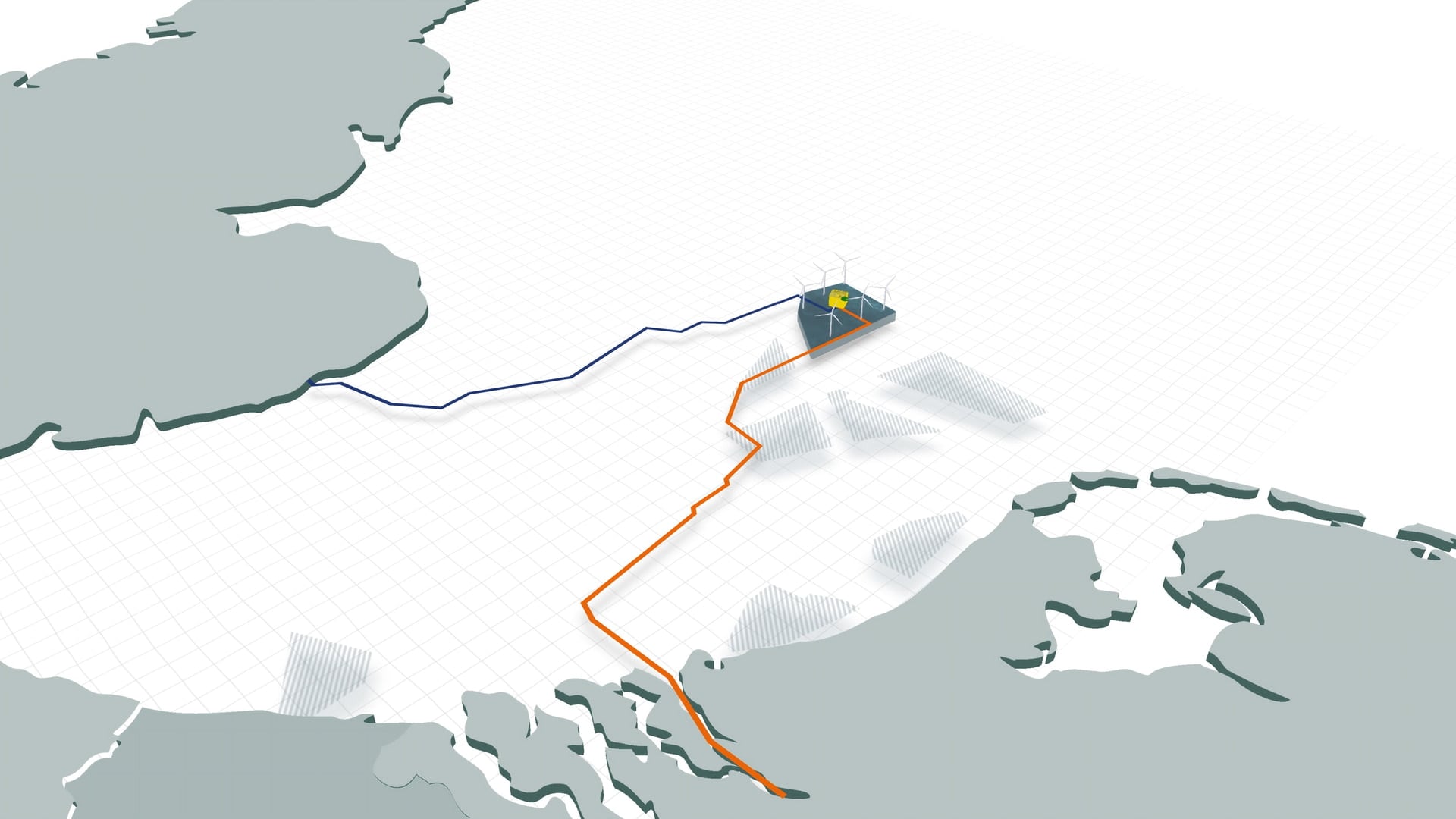
Transmission system operators (TSOs) TenneT and National Grid Ventures (NGV) have signed a joint development agreement (JDA) to develop LionLink, a hybrid link connecting the UK and the Netherlands via a future offshore wind farm in the Dutch North Sea.
The agreement sets out how the two partners will jointly develop LionLink towards a final investment decision (FID), including arrangements for procurement, governance and planning, while also aiming to increase transparency on project costs prior to construction.
LionLink is designed to integrate cross-border electricity interconnection with offshore wind by creating a direct connection between the two countries through a grid connection to the planned Nederwiek 3 offshore wind farm in the Netherlands. According to the developers, this approach will maximize the use of offshore wind, provide additional system flexibility, and reduce the overall amount of offshore infrastructure required.
The LionLink project was launched in April 2023, when the Netherlands and the United Kingdom revealed their plan to build the Electric Link, the first of its kind to connect offshore wind between the two countries via interconnectors.
Shortly thereafter, National Grid Lion Link Limited applied for the interconnector with the UK energy market regulator Ofgem, requesting a license allowing it to participate in the operation of the interconnector in Great Britain.
In the Netherlands, TenneT contracted GEOxyz in 2023 to conduct geophysical and geotechnical surveys of the export cable route for the Nederwiek 3 offshore wind farm and in May 2024, Next Geosolutions began a cable route survey for the LionLink line in the UK.
At the beginning of last year, Dutch Climate and Green Growth Minister Sophie Hermans included LionLink in the country’s latest offshore wind development framework. In the UK, LionLink expects to apply for a Development Consent Order (DCO) with the Planning Inspectorate in 2026 and receive a decision in 2027.
The interconnection, expected to be operational in the early 2030s, is scheduled to have a capacity of 2 gigawatts, enough to supply up to 2.5 million households, according to transmission system operators.
As the companies move forward with LionLink, their current BritNed connector is celebrating 15 years in operation. Since entering service in 2011, the 1 GW sea link has enabled approximately 93 TWh of electricity trade between Great Britain and the Netherlands.
Over the past five years, Brit Ned has traded enough electricity annually to power approximately 1.4 million households. The 260-kilometre link remains an essential part of both countries’ energy systems and generated around €1 billion in auction revenue on the Dutch side during its operational life, TenneT said in a press release on April 1.

Boost your brand with marine energy ⤵️
Steal the spotlight and establish your brand in the heart of the outside world!
Join us to make a greater impact and grow your presence at the core of the marine energy community!



