

- Fed Chair Warsh’s first meeting is approaching, as key US inflation data could reshape expectations.
- Oil prices remain high as US-Iran talks continue; Tariffs are also back in the spotlight.
- The European Central Bank is expected to raise interest rates; Will it be a one-time move or will it start in July?
- The Bank of Canada will remain steady, the Australian dollar looks to China’s CPI data, while the yen awaits the Bank of Japan meeting.
- Strong US data could maintain support for the dollar. The euro may suffer if the European Central Bank adopts a balanced tone.
Fed meeting is on the horizon but risk events remain
The countdown to the biggest event of the year so far, the first Fed meeting chaired by Warsh on June 17, has officially begun. Next week’s key events could serve as the best appetizer for Warsch’s first press conference, although market participants will likely be distracted by developments elsewhere.
New hostilities in the Middle East have temporarily halted prevailing optimism, but there is still lingering hope for a preliminary agreement between the United States and Iran, addressing Iran’s nuclear future at a later date. It is worth noting that US President Trump disagreed with Israeli Prime Minister Netanyahu, as the recent Israeli operations in Lebanon threaten the agreement with Iran.
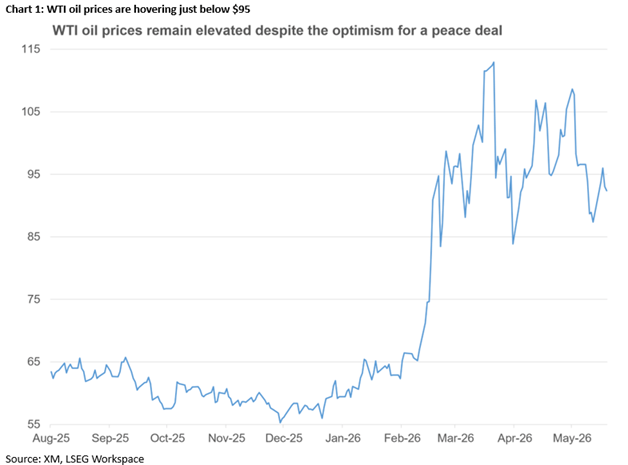
Oil prices remain high, but investors are reacting more calmly to the headlines. However, hopes for a rapid decline in oil prices appear unfounded, as this would require the full normalization of oil supply routes, which could take months to achieve even if an agreement is announced today.
Meanwhile, the US administration announced its intention to replace the 10% global tariff imposed under Section 122, which expires in July, with new tariffs under Section 301. The new duties will range between 10% and 12.5%, with China, India, Japan and South Korea facing the higher proposed rate. These fees are expected to begin during the month of July, after reviewing each country individually.
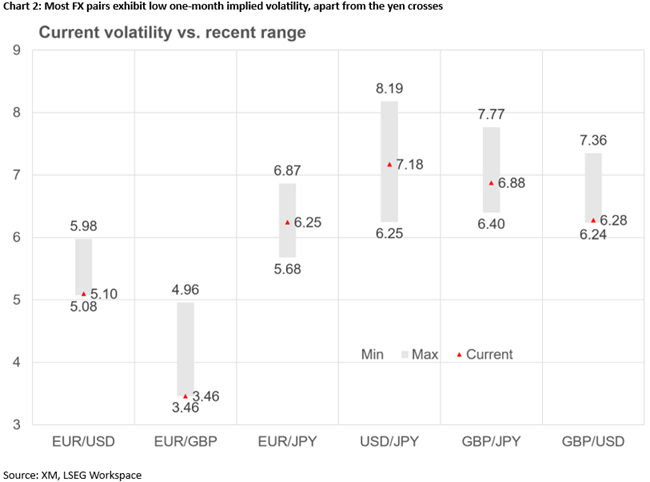
Surprisingly, market volatility remains relatively weak across asset classes. In particular, one-month implied volatility for both EUR/USD and gold has collapsed to the lowest level since mid-January, while S&P 500 volatility is trending lower, approaching February levels. On the other hand, the Japanese Yen and Nikkei 225 pairs are witnessing increased volatility ahead of the crucial meeting of the Bank of Japan.
Pivotal US data releases
A calmer volatility profile could change materially next week, as the June CPI and PPI reports will be in the spotlight on Wednesday and Thursday respectively. Very early forecasts point to a further acceleration in both headline and core CPIs to 4.2% – the highest level since June 2023 – and 3% respectively, sending shockwaves through markets.
While the high inflation report could be seen as temporary by dovish Feds, the producer price numbers remain a real headache. The headline index is expected to jump year-on-year by 6.5%, the highest level since January 2023, potentially opening the door to further CPI acceleration given the time lag between the two reports. Notably, potentially strong inflation readings could be followed by another record low reading in the University of Michigan’s preliminary consumer confidence index on Friday, causing alarms about consumer spending.
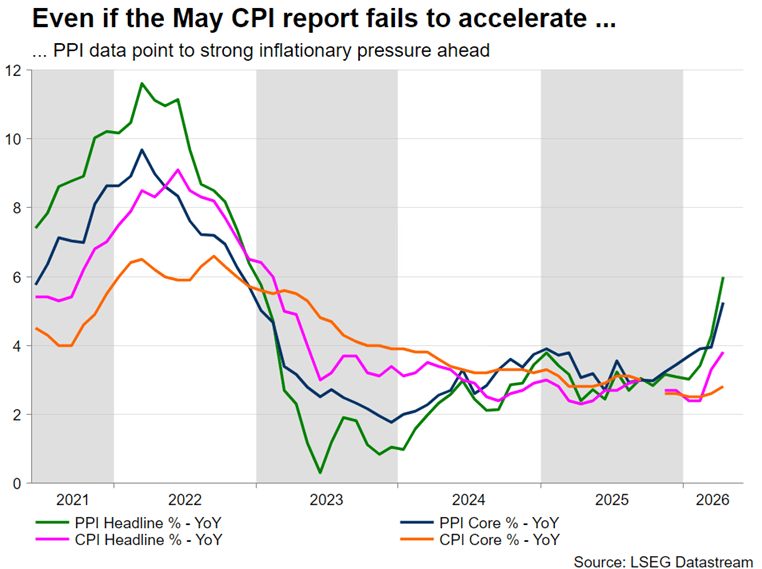
Confirming these early predictions may not appreciably increase the chances of a hardline meeting the following week, but it will certainly seriously complicate Warsh’s first few weeks in office. The new president was chosen by Trump because of his dovish credentials, but it will be difficult for Warsh to ignore amplifying inflationary pressures. At his confirmation hearings in May, he insisted on the need to restore the Fed’s credibility and shrink the balance sheet, raising questions about its true orientation.
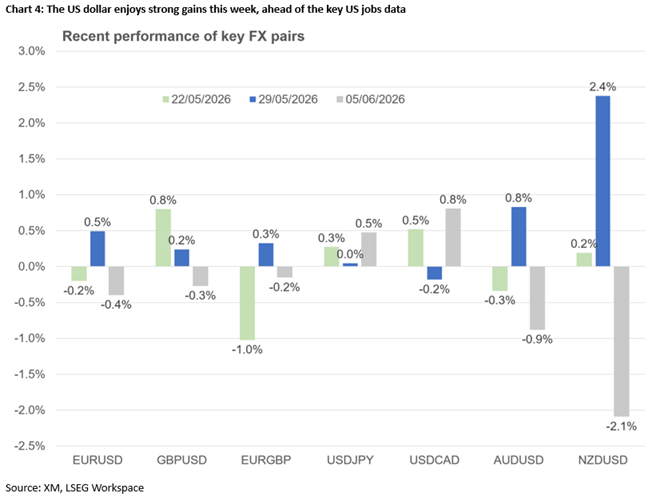
The US dollar was the hero of the week. With Trump seemingly opting for a muted tariff strategy, the dollar may prove more resilient than expected. A resolution between the US and Iran could push the EUR/USD higher, but a favorable yield spread, continued equity flows and a strong economy could protect the dollar from major losses. If the Fed opts for a more hawkish stance, against the backdrop of strong inflation, the dollar could enjoy a strong June.
The European Central Bank will raise interest rates, but will it remain hawkish?
Combined with the US data, the European Central Bank’s meeting on Thursday may raise expectations for a more hawkish Fed meeting. President Lagarde et al. He was widely seen announcing the first interest rate hike since September 2023, essentially acknowledging that the downside scenario was starting to play out. European Central Bank members will welcome the agreement to reopen the Strait of Hormuz, but it will not be enough to stop raising interest rates on Wednesday.
In addition, and based on ongoing comments from ECB officials, the discussion in the ECB Tower in Frankfurt will also develop around the harsh scenario, which, in principle, could justify a series of interest rate hikes. The July rate hike will not be announced in advance, but Lagarde could easily guide expectations if hawks demand such action, while a similar message could also be conveyed through staff forecasts, if headline CPI numbers for 2026 are revised higher. Thus, the usual press conference will attract market attention, increasing pressure on Lagarde to reduce her usual mistakes.
Despite the ECB’s more hawkish stance, the euro failed to rise strongly against the dollar. Thursday’s rate hike may only send the euro higher for a short period if it is accompanied by hawkish comments. But even then growth concerns may eventually dampen appetite for the euro. What may significantly change the outlook for the euro is the end of the Ukrainian-Russian war and the normalization of trade relations between the European Union and Russia.
The Bank of Canada meets, the Australian dollar awaits key Chinese data, and the yen hopes for a miracle
The Bank of Canada is expected to remain steady on Wednesday, as the board is deeply concerned about a weak labor market and declining growth. A weaker April CPI report and first quarter GDP numbers quashed any hawkish thoughts. The Bank of Canada will also focus on the difficult trade relationship between the US and Canada in light of the USMCA review in July and the latest headlines about the US imposing a 10% tariff on some imports from Canada.
There is also a busy agenda for the Australian dollar, but only Westpac’s June Consumer Confidence Survey could attract market interest. However, disappointing CPI and PPI data out of China on Wednesday may also prove to be a market mover. It is possible that both the Canadian dollar and the Australian dollar could be on the wrong foot next week, adding to the decent losses already recorded.
Meanwhile, with USD/JPY trading below the 160 level, the Japanese Ministry of Finance appears to have chosen to wait until the Bank of Japan meeting on June 16. If markets are not satisfied with the Bank of Japan’s expected interest rate hike and public statements, the Bank of Japan will be forced to intervene forcefully.
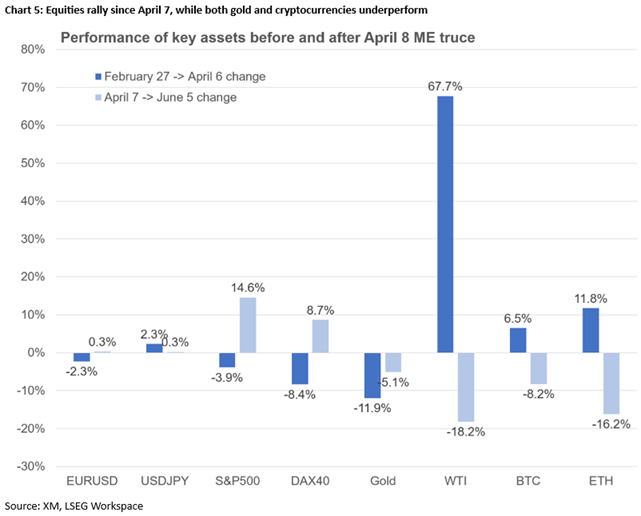
Stocks are pumped, the cryptocurrency market is in chaos, and gold is showing some signs of life
US stock indices continue to monopolize market flows and remain near their record highs. The AI craze has taken a minor hit from Broadcom’s earnings, but it will take more than a modest report to dampen the appetite. However, next week’s earnings announcements from both Oracle and Adobe, and SpaceX’s initial public offering (IPO), may heighten existing concerns, with investors recalling over-inflated valuations. From a trading perspective, the pace of the rally since late March has been tremendous, rising 20% in just over two months. Therefore, a correction may be necessary to strengthen the basis of the current uptrend. But will investors react maturely to a 5% decline towards the 7,000 area?
Finally, the situation is less rosy for gold. The precious metal remains almost exclusively driven by the US dollar, while also marred by continued selling from countries aiming to support their currencies and/or offset their lost oil revenues. A bullish surprise in US data releases next week could support the dollar and undermine current tentative signs of stability.



