
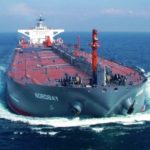

TIt is possible that pressure on oil and shipping markets from the situation in the Strait of Hormuz will continue, long after the war in Iran ends. In its latest weekly report, shipbroker Exclusive said: “The Strait of Hormuz is no longer just a checkpoint. It is gradually being reshaped into a controlled corridor where access is increasingly conditional, selective and political. What began as wartime disruption is now developing into a structural shift, with Iran attempting to formalize its influence over one of the most important arteries for global energy trade. Introduction of an ‘approved corridor’ system, whether through formal coordination, diplomatic channels or even arguably the most important of arrangements.” Finance, signaling a move from disruption to governance, albeit a challenge to established norms of freedom of navigation.

Source: Exclusive
According to Exclusive, “Traffic data already illustrates the scale of the shock. Transport operations have collapsed, and what little activity remains is skewed heavily towards ‘non-hostile’ countries. Asia-linked flows dominate, while West-linked shipments are virtually absent, reinforcing the fragmentation of global trade routes along geopolitical lines. At the same time, reports of ships changing flags or taking routes through back-channel diplomatic channels confirm a market that is rapidly adapting, but at a cost – operationally, financially and structurally, that is striking.” Of particular note is that Iran’s approach is not based on a complete lockdown, but rather on a selective reopening, with countries such as China, India, Pakistan, and increasingly others such as Vietnam and Malaysia, being given the right of passage on a case-by-case basis. Even within Europe, Spain has emerged as a potential exception, highlighting how geopolitical location now directly impacts commercial shipping access. For the tanker market, this has translated into an extraordinary two-stage surge. The first phase, which lasted through January and February, was driven by Fundamental, with VLCC profits rising almost 349% to about $177,000 per day, while Suezmax and Aframax followed at a more moderate pace, up about 70% and 58% respectively. Tonnage, with hundreds of ships running aground or changing course, created an immediate supply shock, tightening availability across all sectors.

The shipbroker added, “From the beginning of the year until March 25, VLCC profits rose by 430%, moving from about $39.5 thousand per day to more than $209 thousand per day, with a peak recorded at $318.7 thousand per day in early March. Suezmax prices rose more strongly in the second phase, rising about 256% overall to nearly $269.7 thousand per day, recording historic highs.” New tankers followed a similar trajectory, rising about 338% to about $216.9k on the day, and also reaching record highs by late March. This divergence highlights a key dynamic: While VLCCs led the initial rally, smaller segments eventually captured the upside caused by the disruption, and at the same time, the broader implications for the industry became clearer, as higher war risk premiums, alternative routing across the Cape, and longer mileage tonnage boosted shipping strength, while also becoming more pronounced. Integrating Higher Costs into the System The market is not just reacting, it is structurally re-pricing to reflect a new level of geopolitical risk.

Source: Exclusive
“Looking ahead, the key question is whether Controlled Hormuz will become a temporary wartime mechanism or a long-term reality. If Iran continues to institutionalize selective access, the industry may be forced to operate in a more fragmented and politically brokered trading environment. In this scenario, flexibility, relationships and strategic location will matter as much as fleet size or efficiency. For now, one thing is clear: the market is no longer pricing risk as an exception. It is pricing it as a baseline,” Exclusive said. That’s it.
Nikos Rousanoglou, Global Hellenic Shipping News



