

short
- OpenAI is considering significant token price cuts in anticipation of similar moves from Anthropic.
- The move comes as both companies race toward initial public offerings.
- Open source inference providers already offer DeepSeek V4 at a fraction of the prices of closed models, giving enterprise customers a viable exit before any price war begins.
OpenAI is considering reducing the prices it charges developers and companies, According to the Wall Street Journalin anticipation of similar reductions of entropy. Discussions are described as still in flux, with both companies filing privately for initial public offerings this month, and neither of them turning a profit.
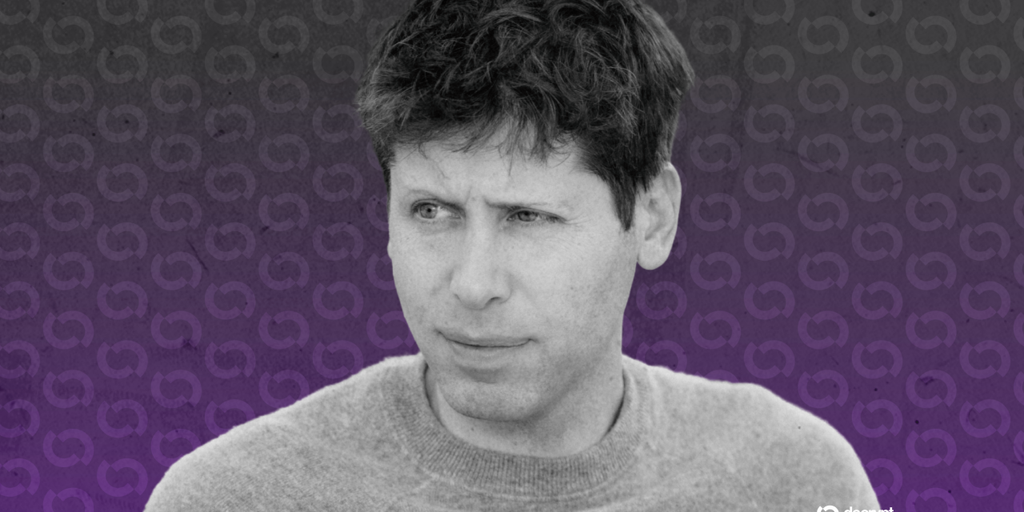
“I think we’ll have a lot of ways we can help people get more value for less,” Sam Altman said at a recent event. Wall Street Journal. This quote came on the back of OpenAI’s publication of -122% adjusted operating margin In the first quarter of 2026, which means it lost $1.22 for every $1 it brought in.
The pressure is real. like Decryption It was previously reported, Share ChatGPT AI-generated global web traffic fell from 77.6% in May 2025 to 53.7% by April 2026. For the first time, more companies tracked by the Ramp AI Index are paying for Anthropic than for OpenAI. Anthropic’s annual run rate increased from $9 billion at the end of 2025 to $47 billion by May 2026– a 422% jump in five months – driven almost entirely by Claude Code, as the second quarter of 2026 was the company’s first profitable quarter ever.
Since then, OpenAI has made its programming tool, Codex, a company priority. But she’s playing catch-up.
The two companies are waging a not-so-silent war to attract as many customers as possible amid the world’s biggest technology fever since the dot-com era. Companies of all kinds are now racing to use AI in one way or another. Uber’s CTO has used up its entire 2026 AI budget by April, as have some JP Morgan employees. Spend more to use AI from their own salaries, according to the bank’s chief data officer for the payments department.
This is a practice Silicon Valley has dubbed “tokenmaxxing” — burning as many AI tokens — pieces of data processed by AI models — as possible, often with no clear return on investment. Palantir CEO Alex Karp comparison It’s Porn Addiction at AIPCon last week. JPMorgan analysts published a note this month titled “AI bills are out of control“The companies most vulnerable to a backlash are those that are now considering a price war.
Tommy Shaughnessy of Delphi Ventures set the structural trap in a large-scale joint operation X Share this week: The flat fee price of $20 per month has always been less than the actual cost of heavy usage, a loss index designed to boost adoption, not to cover computing. Once a real company needs AI at scale, it moves to an application programming interface (API), paying per token, but consuming much more computing power.
Not everyone agrees with this opinion. Some believe that the Western Hemisphere’s AI oligopoly allows companies to charge increasingly high prices for processing their claims – and China’s low-fee models are evidence of that. If this is the case, there may be room for radical price changes while still on solid financial footing.
Quick look: They’re not backed and their margins are crazy. They are completely usurping API clients. Anyone who has used deep search or hosted anything and calculated hardware/power costs knows this https://t.co/XQ477Qw3Vv
– Roy (@usr_bin_roygbiv) June 11, 2026
Real enterprise deployments are moving to metered API pricing, and companies are burning through credit much faster than the flat fees were ever proposed. On the other hand, open source inference providers (companies that provide computing power so AI models can process information) are expanding rapidly, with proxy tools stimulating their growth. These platforms serve China’s leading AI models such as DeepSeek, GLM, MiMo, Kimi, or Minimax, which compete with Cloud Opus in coding standards, at a rate of About a third of ten Closed swing price.
“Chinese Labs Open Source Frontier Models” Shaughnessy books. “The model is the biggest cost to the inference provider, and they get it for free.” As long as this remains the case, the threshold for smart pricing continues to fall toward zero — and any margin recovery in OpenAI or Anthropic becomes a mathematical problem with no clear solution.
Shaughnessy noted that the entire thesis would only fall apart if China became closed source, which would be a positive thing for US labs.
So far, most AI labs in China seem committed to the opposite approach.
Daily debriefing Newsletter
Start each day with the latest news, plus original features, podcasts, videos and more.



