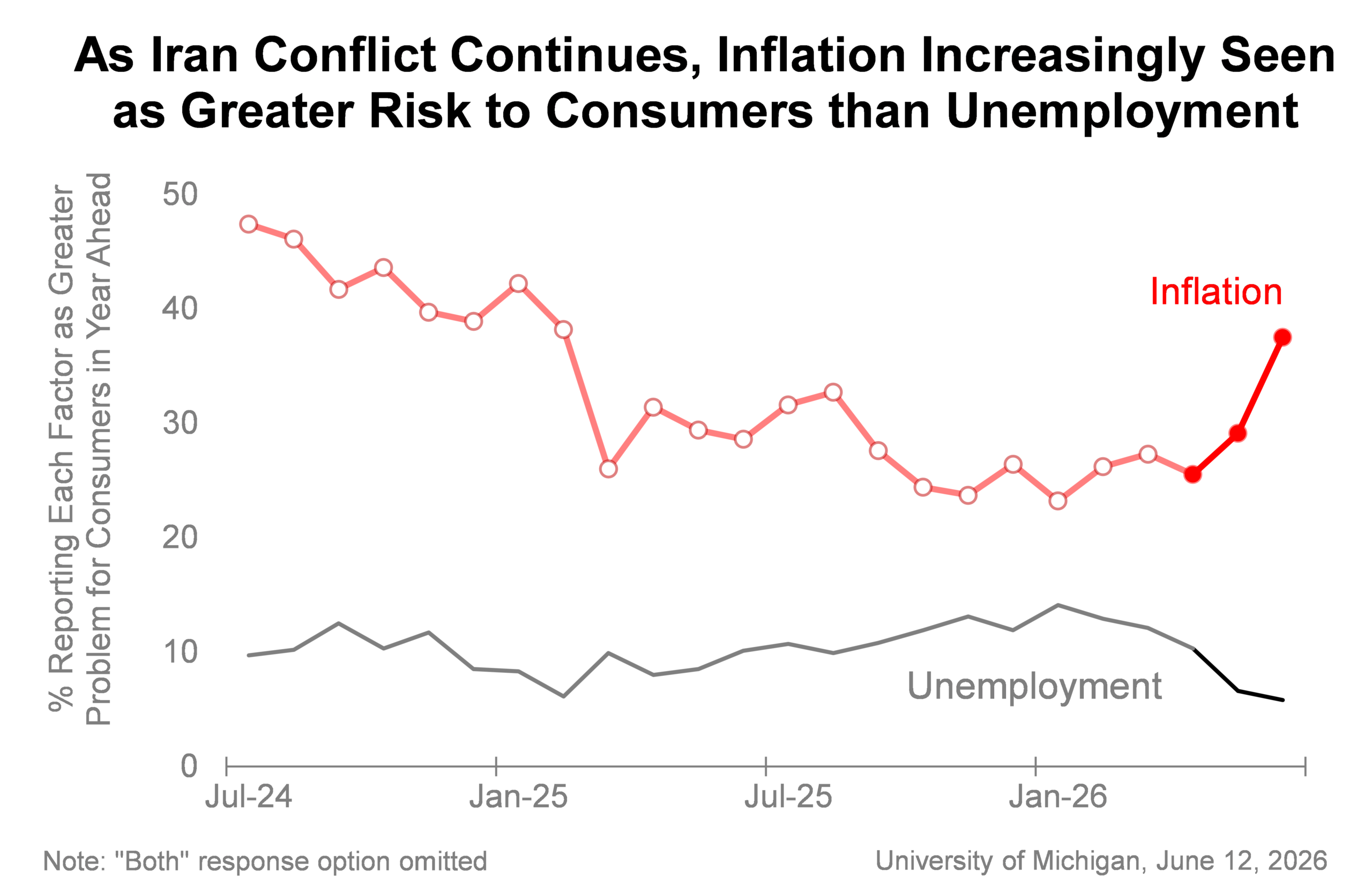
US consumer sentiment improved significantly in June, with the University of Michigan’s leading index rising from 44.8 to 48.9, as lower gasoline prices provided some relief to households. The gain was broad-based, with improvements recorded across age groups, education levels and political affiliations. The Current Economic Conditions Index rose from 45.8 to 48.3, while Consumer Expectations rose from 44.1 to 49.3, indicating that consumers are becoming somewhat less pessimistic about current conditions and future expectations.
According to consumer surveys director Joan Hsu, the improvement was largely driven by lower fuel costs at the beginning of the month. She noted that “consumers felt some relief due to the decline in gasoline prices at the beginning of the month.” Evaluations of personal finances and working conditions also improved. However, Hsu warned that public sentiment remains historically weak. Despite June’s rebound, consumer confidence remains 13% below its level in January, and 19% lower than a year ago, reflecting ongoing concerns about rising costs of living and the broader inflation environment.
Inflation expectations fell modestly but remained high. One-year inflation expectations fell from 4.8% to 4.6%, while long-term expectations fell from 3.9% to 3.4%. However, both measures remain well above the levels seen before the outbreak of the Iranian conflict.
The data suggests that consumers are becoming somewhat less concerned about near-term price pressures as energy costs fall, but fears that inflation may remain stubbornly high are still weighing heavily on household sentiment.
| index | June | maybe | It changes |
|---|---|---|---|
| Consumer sentiment | 48.9 | 44.8 | +4.1 |
| Current economic conditions | 48.3 | 45.8 | +2.5 |
| Consumer expectations | 49.3 | 44.1 | +5.2 |
| One-year inflation expectations | 4.6% | 4.8% | -0.2 ppt |
| Long-term inflation expectations | 3.4% | 3.9% | -0.5 ppt |