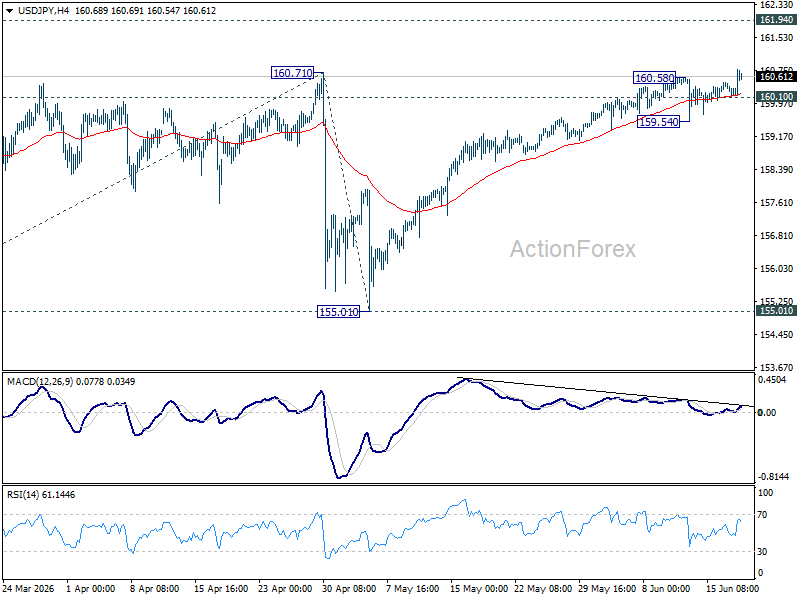
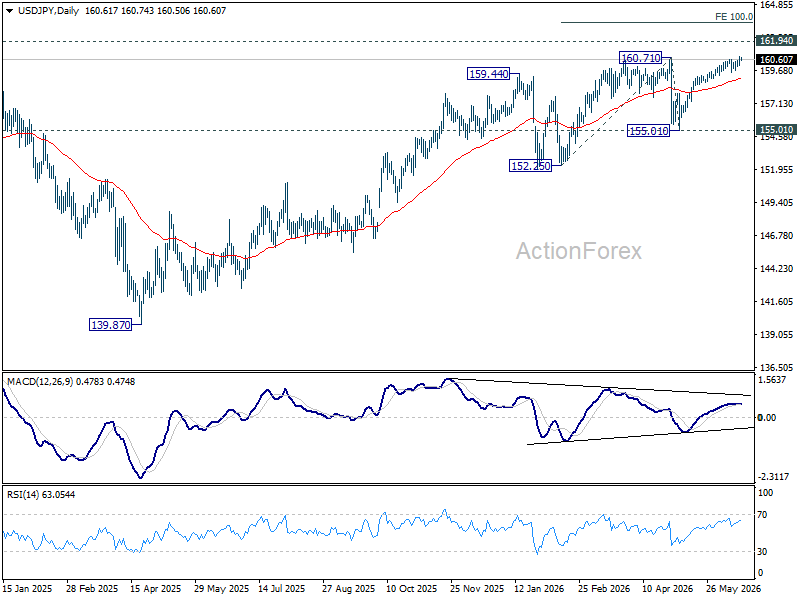
The USD/JPY pair rose to a new two-year high after the Federal Reserve delivered a more hawkish message than markets expected, reviving expectations that US interest rates could rise again before the end of the year. While the Fed left the federal funds rate unchanged at 3.50%-3.75% as widely expected, the updated forecast painted a more inflation-focused picture. The average forecast for the federal funds rate is now 3.8% at the end of 2026, implying another rate hike from current levels.
The biggest surprise came from the new bullet chart. Nine policymakers now expect at least one interest rate increase this year. This compares to eight who see interest rates remaining unchanged and only one who expects a cut. This distribution represents a marked shift from the market narrative, which was largely focused on how long interest rates would remain high rather than whether they might move higher. In support of this hawkish message, the Fed also raised its inflation forecasts, signaling growing concern that recent price pressures may be more persistent than previously expected.
Fed Chairman Kevin Warsh reinforced this interpretation in his first news conference after the meeting. He has taken a hawkish tone on inflationdeclaring that “the continued rise in prices constitutes a burden on the American people” and stressing that the committee was “unequivocal and unanimous” in its commitment to restoring price stability. More importantly, Warsh refused to rule out a rate hike once the July meeting. However, at the same time he declared the end of traditional forward guidance, arguing that the current economic environment makes such signals less useful. The result was that the Fed appeared hawkish without committing to a specific policy course.
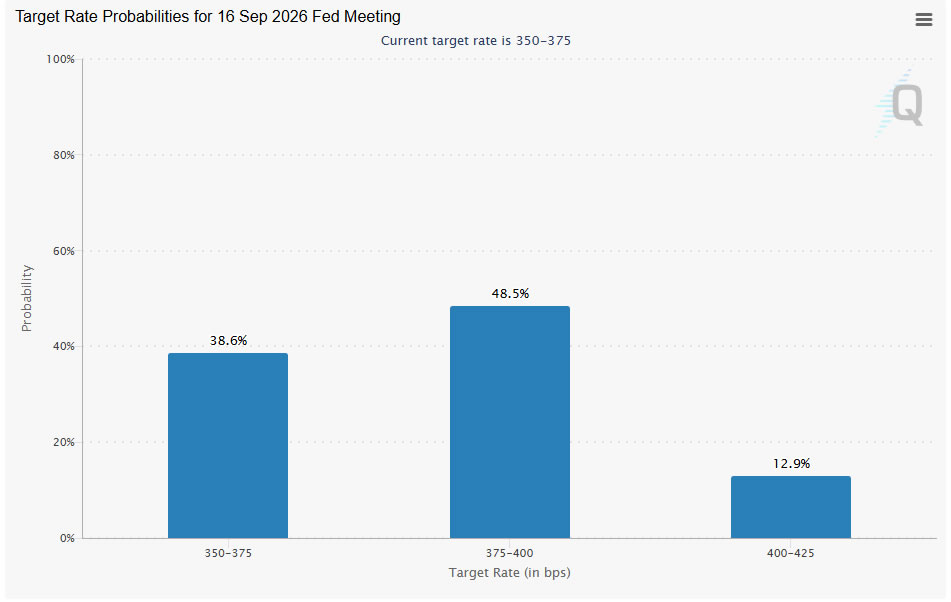
However, markets interpreted the message as opening the door to further tightening. Fed funds futures now indicate a 30% probability of a rate hike in July, rising to 62% for September, 72% for October, and 85% by the end of the year. In fact, investors are looking at September, when policymakers will release a new set of economic forecasts, as the most likely window for another move if inflation remains high.
The reaction in Japan was relatively restrained. Chief Cabinet Secretary Minoru Kihara stressed that the authorities are ready to respond appropriately to excessive currency movements at any time. However, verbal intervention may be less effective when the main driver is a broad repricing of US interest rates, rather than speculative activity alone. The contrast between the markets was clear: while Wall Street weakened due to concerns about rising interest rates, The Nikkei rose above 71,000 as investors welcomed the earnings benefits of a weaker yen.
Technically, the USD/JPY rally remains steady. As long as minor support at 160.10 holds, further gains towards the 2024 high at 161.94 are likely. A decisive break there would open the way for a 100% forecast from 152.25 to 160.71 from 155.01 at 163.47. On the downside, a break below 160.10 could lead to a deeper pullback towards 159.54 and below. However, for now, the combination of renewed hawkish Fed expectations and the Bank of Japan’s gradual normalization still calls for further upward pressure on the pair.