

Written by Peter Kennedy
Graycliffe Exploration Company Limited (ashen-CSE, Grecv-OTCQB, GEO-FSE) is a company that offers investors a window into Ontario’s gold exploration strategy and is led by a management team with a long and impressive track record of discoveries.
 Director Bruce Durham was a key member and leader of various exploration teams and was credited with the discovery of several important mineral deposits including the David Bell and Golden Giant gold mines in Hemlow, Ontario and the Redstone Nickel and Bell Creek gold mines in Timmins, Ontario. He also worked with two of the most well-known figures in Canadian mining, promoter Murray Bezim and Hemlow prospector Don MacKinnon.
Working with Chairman James McIntosh, also a geologist, Durham is focusing on finding high-grade gold near the surface and across a defined suitable horizon over six kilometers of property at the former Shakespeare Gold Mine about 88 kilometers west of Sudbury on the Canadian Shield. It operated from 1903 to 1907 and produced 2,959 ounces of gold from six underground stops.
During the years the mine was in production, Shakespeare Gold Mining Company excavated an 18-metre tunnel and a 91-metre shaft into the mineral hills. The construction of a 96-meter-long column consisting of six levels at an interval of 15 meters was also completed.
In 2019, Graycliff obtained an option to acquire a 100% interest in the property from a group of sellers including Don McKinnon’s daughter-in-law, Don Jr. (He is Graycliff’s technical advisor).
When exploration began in September 2020, the company was working on the theory that there was a much larger gold system at depth below the previously mined areas and heading a significant distance across the property to the northeast.
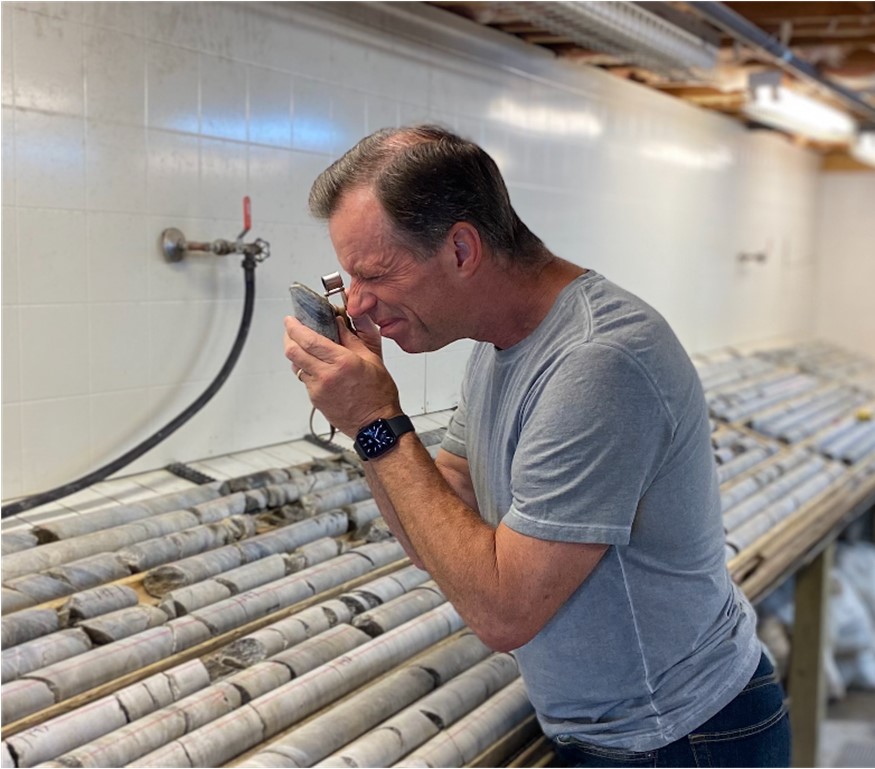 Since then, Graycliff has acquired more land expanding its land site from 1,366 hectares from 517 hectares. Over the four drilling phases completed between 2020 and 2022, Graycliff drilled 61 holes totaling more than 12,500 metres. A total of 38 of the 61 holes had gold mineralization breaks and 40% of those 38 holes included visible gold observations.
At the end of 2023, the company completed three large-diameter holes designed to collect material for a mineralogical study designed to provide further information about the recoverability of gold mineralization at the Shakespeare Project.
The predominant rock types on the property are sedimentary rocks of the Matininda Formation and mafic volcanic metamorphic rocks. Mineralization is hosted by strongly separated quartzite and quartz sericite schists. The gold is present as native gold with some increase in total sulfide content and quartz veining within the gross shear zone.
In a press release dated June 2, 2026, the company said it had received results from the first three metal drill holes drilled using the large-diameter HQ core. Named Hole A, the hole showed an extremely high grade, 7.0m interval grading 454.34 g/t gold at a depth of 123m. The company also said it expects to receive assay results from its two remaining mineral test bays in the coming weeks as it begins to reactivate work on the Shakespeare Project.
 McIntosh said: “While we have drilled this hole close to previous gold-bearing drilling intervals, it is clear that the gold values in this intersection far exceed our expectations. The amount of gold visible demonstrates the strength of the Shakespeare mineralization event. These results are very encouraging, and while we ultimately realize it is all about ‘average grade’, high-grade intersections like this enhance the overall average.” Includes 1.0 meters of high-grade mineralization grading 3,030.00 g/t gold from 124.0 to 125 metres.
On June 2, 2026, in the press release announcing the high-grade inspection results, the company stated that it was core, core and related materials from the three holes that were drilled but not paid for in 2023. The company purchased those materials and settled other debts in March 2026 to the vendors and others for 2.3 million common shares at 14 cents per share.
The company said it will provide analytical data as well as material samples from the three headquarters-sized drill holes as a basis for preliminary mineralogical investigations, mineral extraction analysis and primary mineral concentration studies. These studies will help provide the company with data and parameters to help formulate plans for a bulk sampling program at the project, which is located off the Trans-Canada Highway. Durham said the project’s proximity to infrastructure and other mining operations in northeastern Ontario means there is no shortage of companies with the capacity to process bulk sample material from the company’s Shakespeare Project.
 With the significant rise in gold prices last year, particularly in Canadian dollars, the company embarked on a program to re-evaluate all project data, including data from historical mine workings, field sampling, channel sampling, the four phases of drilling as well as the three mineralized drill holes.
Upon receipt of the results of this audit work, including the results of the mineral holes, the Company will be in a position to better understand the extent of gold mineralization in the context of the current gold price environment. The company will also develop new models of exploration targets ahead of subsequent drilling operations to expand and better define known gold mineralization away from the historic mining area.
McIntosh said the company has spent about $6.0 million on exploration for the project so far, an amount roughly equivalent to the company’s current market value. On June 17, shares were trading at 35.5 cents in a 52-week range of 51 cents and $0.015.
 The Company’s exploration efforts will be enhanced by proceeds from a non-brokered private placement of up to 8.0 million units at 35 cents per unit which could raise up to $2.8 million. Under the terms of the offering, each unit will consist of one common share and one-half of a common share purchase warrant. Each Warrant entitles the holder to acquire one additional share at an exercise price of 55 cents for a period of 12 months from the date of issuance and includes a condition that the Warrants may not be exercised for a period of 60 days from the date of issuance.
Proceeds will be used to fund drilling near the mine shaft and to drill at other regional targets. Graycliff offers investors very experienced and successful management, high-grade gold mineralization, a market value that barely matches the money invested to date in the project and upside both at the historic mine site and across the project.



