With the USD/JPY pair approaching 38-year highs of 2024, traders knew they were entering territory where Tokyo was becoming increasingly uncomfortable. This sensitivity was evident when Japanese Finance Minister Satsuki Katayama revealed that she had held talks with US Treasury Secretary Scott Bessent. The pair fell briefly on the news, but the move quickly lost momentum. The market’s verdict was clear: intervention risks were rising, but not enough to overcome the dollar story.
On the surface, the meeting seemed routine. Katayama said the officials discussed developments in global financial markets, including the risks surrounding the Strait of Hormuz and its potential impact on the global economy. She also stressed that the meeting was not held on an emergency basis but was a follow-up to the talks that took place during the G7 summit in France.
However, it was her carefully chosen language afterward that caught the attention of traders. While Katayama did not confirm whether currency intervention had been discussed, he said Japan and the United States have a “strong mutual understanding that decisive action will be taken if necessary.” She added that their views remain “very closely aligned.” For seasoned forex traders, this is as close to a warning against intervention as Japanese officials are willing to offer publicly.
The challenge facing Tokyo is that threats of intervention compete with increasingly strong dollar rhetoric. Traders are hesitant to resist the currency’s rise driven by expectations of the Federal Reserve tightening monetary policy further, especially with the June non-farm payrolls report due next week. This data could determine whether markets will continue to build bets on the Fed raising again. Until then, fears of intervention may slow the USD/JPY rally, but are unlikely to reverse it.
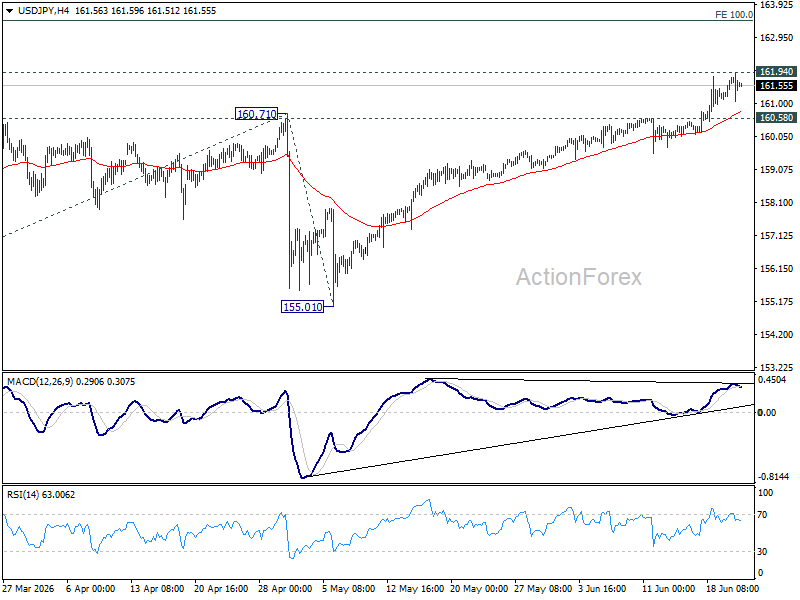
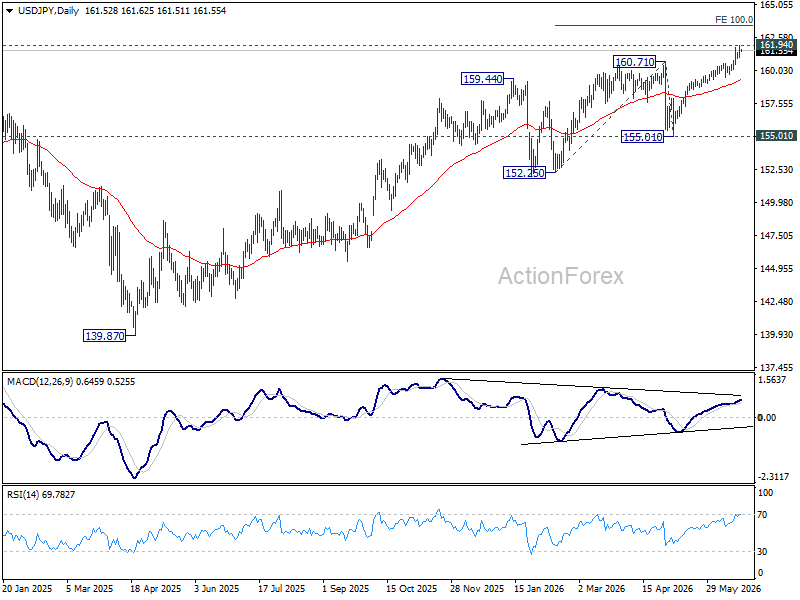
Technically, the pair remains bullish while support holds at 160.58. A break above 161.94 (2024 high) will pave the way towards a 100% forecast from 152.25 to 160.71 from 155.01 at 163.47 after that. However, the higher the USD/JPY pair, the more uncomfortable trading becomes. However, a break of 160.58 would now mark a short-term top, and could trigger a deeper pullback to the 55 D EMA (now at 159.38).