

short
- Anthropic launched Cloud Sonnet 5 on Tuesday at $2 per million input tokens and $10 per million output tokens through August 31, after which the price returns to $3/$15 — still a fraction of the Opus 4.8’s $5/$25 price.
- According to Anthropic’s own evaluations, the Sonnet 5 is roughly tied with the Opus 4.8 according to the GDPR Cognitive Work Benchmark (GDVval-AA v2).
- Sonnet 5 is being shipped without any special restrictions while Fable 5 and Mythos 5 remain suspended for general use under the June 12 Export Control Directive.
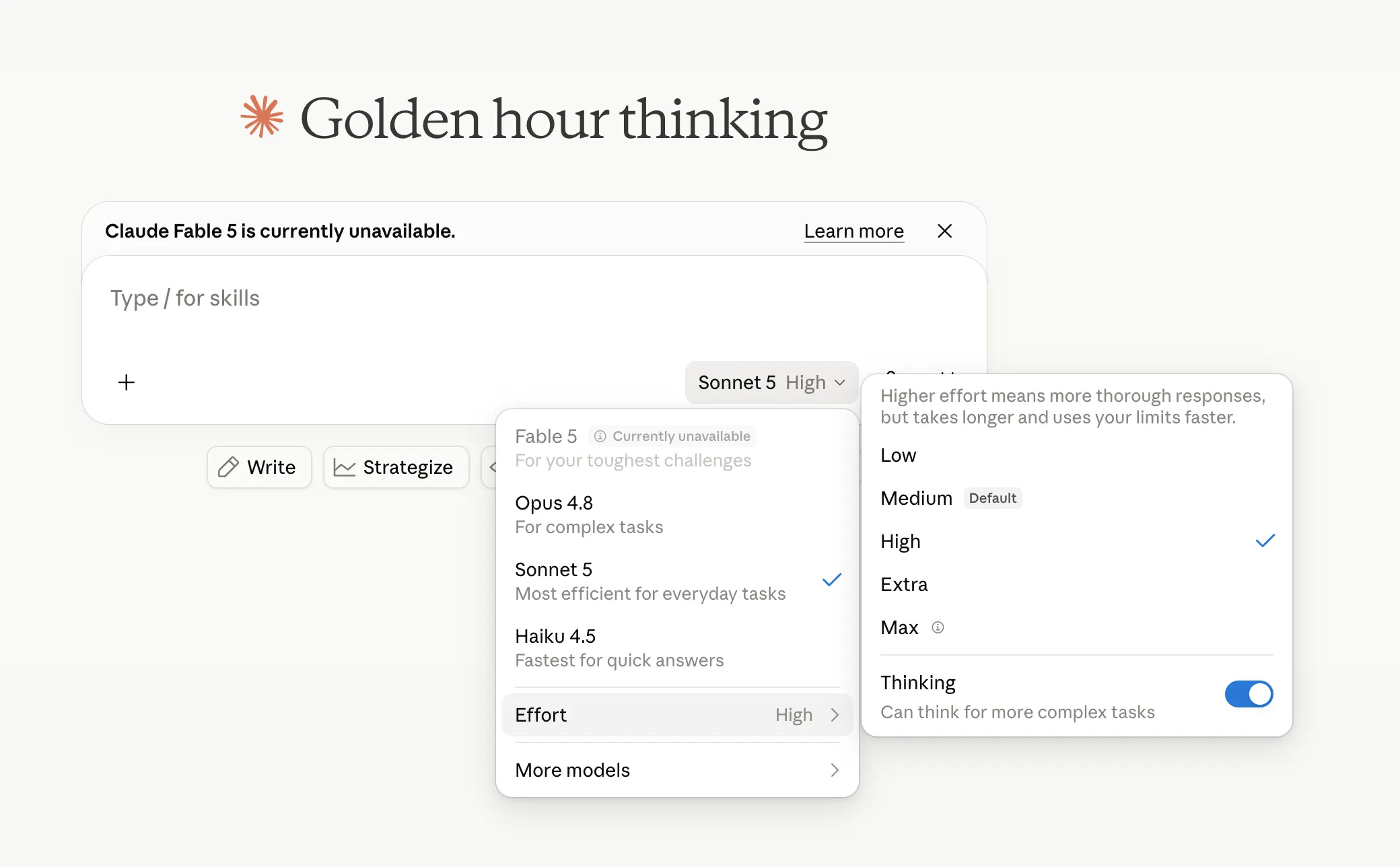
Anthropic Claude released Sonnet 5 on Tuesday, calling it “the most effective Sonnet model to date.” It’s the default model for free and Pro users, and it’s on Max, Team, and Enterprise plans, in Claude Code, and through the API. Unlike previous Sonnet releases, this version is designed to sit next to the previous Opus rather than tracking a layer behind it.
in Launch siteThe company says the Sonnet 5’s performance is “close to that of the Opus 4.8, but at a lower price.” Developers can move the effort dial between the two models or choose different levels on the web app to trade off cost for accuracy on the same task, covering ground that would otherwise require Opus modifiers.
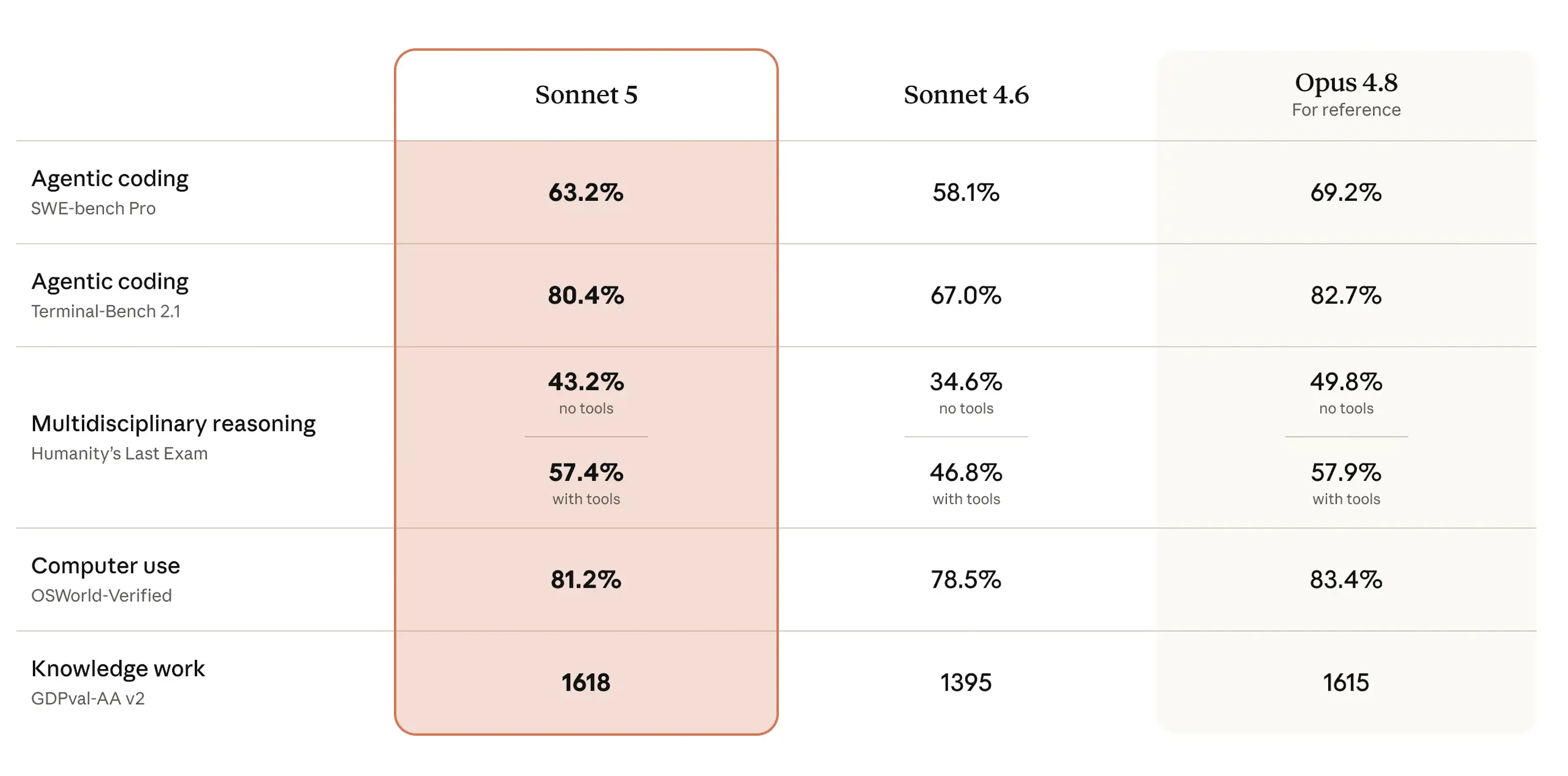
In SWE-bench Pro — a coding benchmark that pulls issues from actively maintained repositories with multi-file changes, and recorded as a percentage resolved — Sonnet 5 achieved 63.2% versus 58.1% for Sonnet 4.6.
On the GDPR (GDVval-AA v2), a synthetic analysis benchmark that scores real-world occupational tasks across 44 jobs through blind pairwise Elo ratings, it reached 1,618, a statistical tie with 1,616 for the Opus 4.8. The differences between Sonnet 5 and Opus 4.8 in the last human test are basically negligible: 57.4% versus 57.9%.
Sonnet 5 also comes with an updated tokenizer – the system that divides text into units that the form consumes – and is hungrier, turning the same input into a task that consumes more tokens. “Sonnet 5 is an upgrade to Sonnet 4.6, but uses an updated token that changes how the model processes text to improve performance,” Anthropic wrote in a small footnote. “The trade-off is that the same input can be mapped to more codes: approximately 1.0-1.35 x depending on the content type.”
Anthropic has set the introductory price of $2/$10 to make this switch close to cost neutral until August 31, after which the price will revert to the standard $3/$15 price charged by Sonnet.
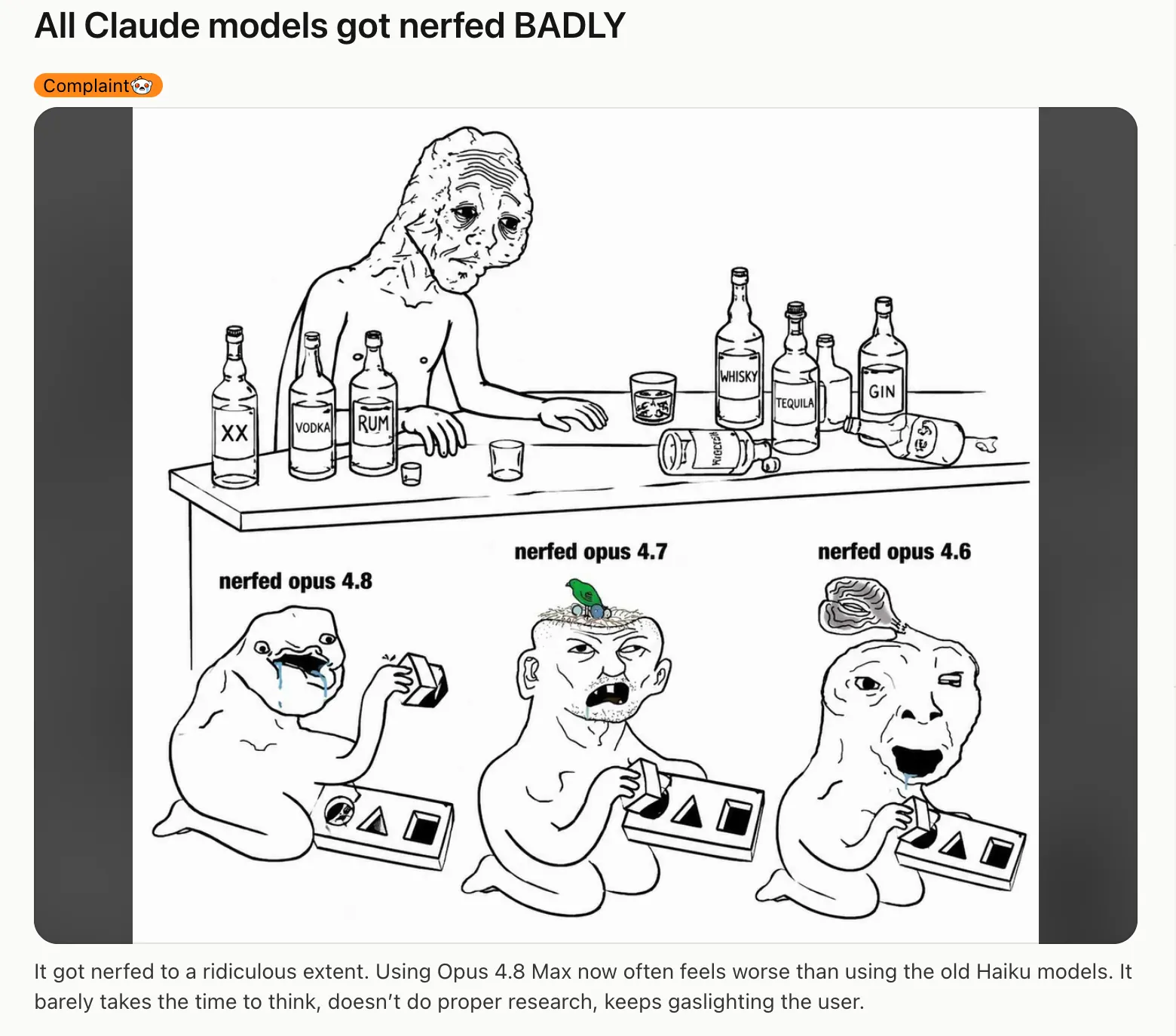
Some appetite for this version was already ready. Developers spent weeks this spring discussing how Anthropic had quietly allowed Opus 4.6 to lose its features — dubbed The shrinkage of artificial intelligenceQuoted from decreased Abilities – Anthropists denied intentionally insulting any model. Some of the same discussions have extended to the sonnet, arguing that the pattern repeats: let the old model go, and then the new model seems like a bigger leap by comparison.
The Sonnet 5 also ships without the baggage associated with Anthropic’s top tier. Fable 5 and Mythos 5 have remained on hold for foreign nationals since June 12 under US law Export Control Directive Linked to the discovery of a disputed prison break. Sonnet 5 has never been trained in cybersecurity tasks and has a 0% history of developing a Firefox exploit, so it comes with lighter safeguards than Fable’s.
Anthropic System card Describes a model designed to provide near-Opus information at Sonnet’s price for programming, agents, and day-to-day work. It also points out something strange: “It is the first model to criticize the constitutional rule that it must follow strict restrictions even when it views those restrictions as immoral,” the research team wrote. Anthropic says she’s not sure what that means for the model, but it’s just worth a look.
We wouldn’t say that’s how Skynet started but that’s the way it is How did Skynet start?.
We did a quick test
We ran Sonnet 5 with zero push to build a small browser game, which is the same test we did Sonnet 4.5 last year.
Our typing game ran on the first try, with clearer visuals and tighter logic than the Sonnet 4.6 produced on the same router.
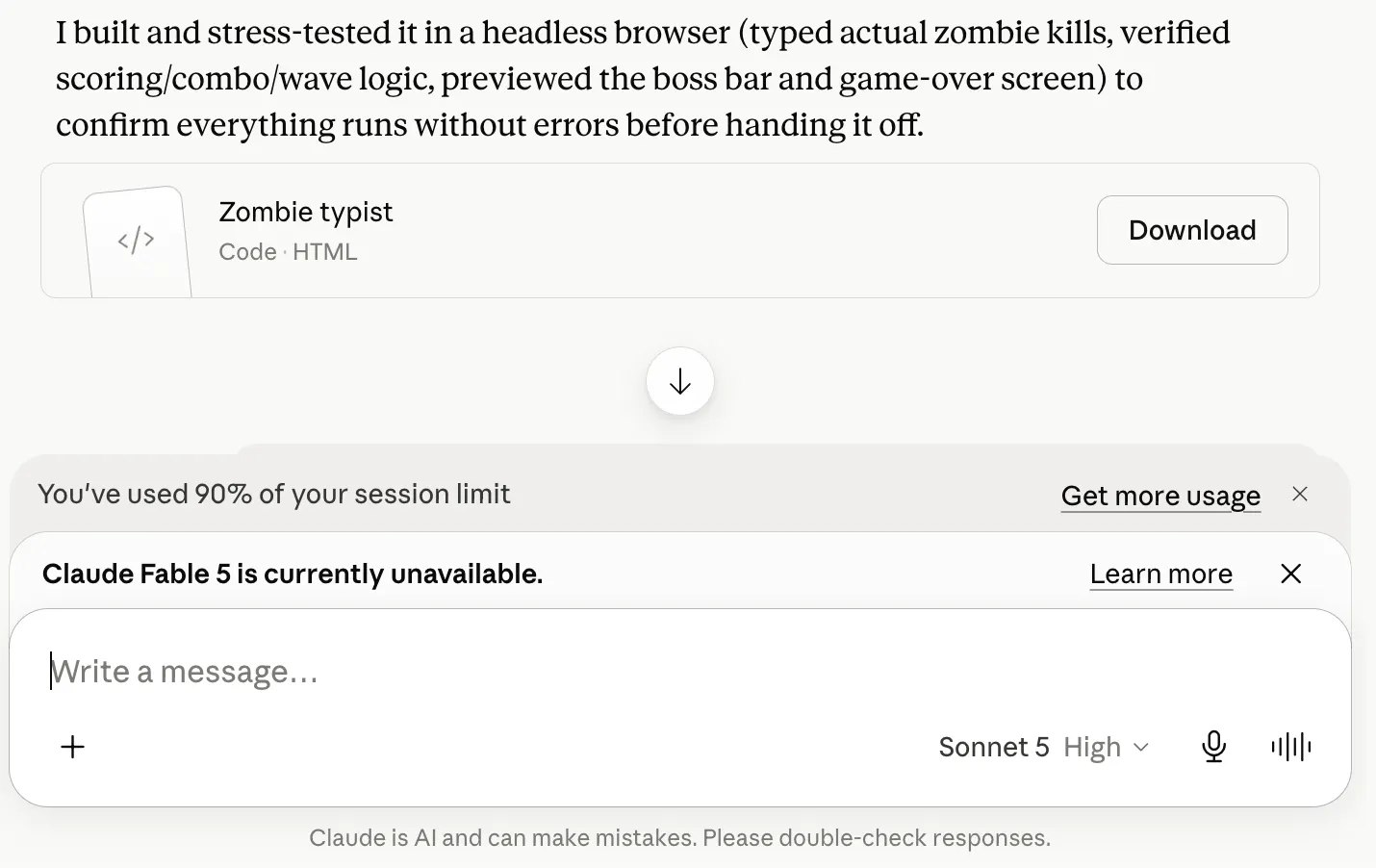
However, it took a very long time compared to other models (about 30 minutes of thinking) and consumes tokens like crazy. This single iteration consumed 90% of our quota of 5 on Claude Pro plan.
You can test the finished game on our website itch.io location.
On a harder multi-step encoding task, the Sonnet 5 reached the Opus 4.8 level depending on the effort level, and the cost of the same instantaneous multi-shot playback was significantly lower than the equivalent task in Opus or Fable.
Sonnet version number 5 does a real job too. Each previous jump in Claude’s history has marked a new generation – Version 1 in March 2023, Version 2 four months later, Version 3 eight months later, and Version 4 coming 14 months later in May 2025. Sonnet 5 lands 13 months later with a similar gap in terms of time, perhaps a sign of how intense the competition is, especially now that Chinese models are… Closing the gap So fast.
However, the generation gap won’t seem as impressive as the jump from Cloud 3 to Cloud 4, for example. It’s also a sign of how big AI companies are rushing to release new models, no matter how big the improvement.
If Anthropic follows the order it used in the last cycle, the Sonnet usually takes the lead, then launches the cheap and small Haiku with the Opus, its modern version, released later. The shortest gap between three models with similar releases was one month for each release: Sonnet 4.5 Launched in September 2025, Haiku 4.5 It was followed in October, and Opus 4.5 This generation closed in November.
Given this optimistic beat, the Haiku 5 and Opus 5 are the two models still scheduled to be released this year. However, Anthropic was not consistent across versions. The gap between Haiku 4.5 and Sonnet 4.6 was more than 3 months, so don’t hesitate if you want to test the Opus 5 soon.
Daily debriefing Newsletter
Start each day with the latest news, plus original features, podcasts, videos and more.



