

- Goldman Sachs expects to achieve a surplus in the oil market of 3 million barrels per day in 2027.
- Without Warsh’s help, Japan will be forced to resort to currency interventions.
Dollar consolidates ahead of Kevin Warsh’s speech in Sintra, Portugal, and the release of key US labor market data. The hawkish surprise from the new Fed chair at the June Federal Open Market Committee meeting sent financial markets into disarray, sending Treasury yields and the dollar soaring. If the head of the central bank hints that he has been misunderstood, everything will turn upside down.
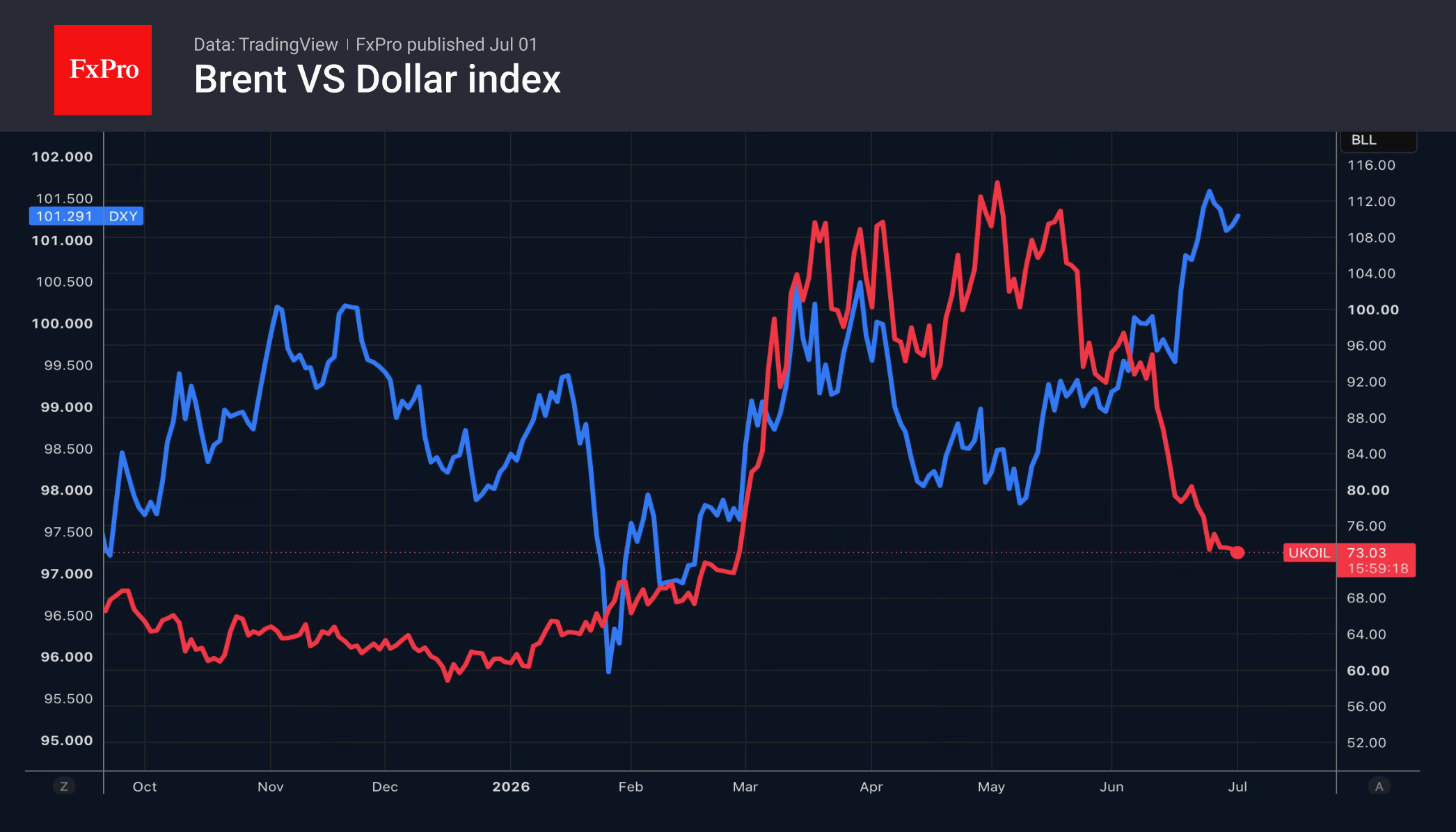
Meanwhile, the dollar’s rise was one of the reasons behind the yen’s decline to 40-year lows and Brent’s rapid return to pre-conflict levels in the Middle East. In the spring, higher oil prices pushed the dollar higher, but now the dollar’s appreciation is putting downward pressure on oil prices. However, there are already a lot of headwinds for “black gold.”
Since concluding the agreement with the United States, Iran has exported about 40 million barrels. Combined with Russian oil supplies rising to 4.13 million barrels per day, the highest level since the start of 2022, this is putting significant downward pressure on Brent crude.
Despite the escalation of conflict in the Middle East, tanker movement through the Strait of Hormuz continues. The resumption of operations there allows Goldman Sachs to forecast a surplus of 3 million barrels per day in the oil market by 2027. Of this amount, 1 million barrels per day will be used to replenish strategic reserves. However, the remaining number will be enough to give crude oil traders confidence.
The only thing likely to bother them is the resumption of large-scale US air strikes against Iran. Donald Trump has not ruled out such action, but he prefers diplomacy.
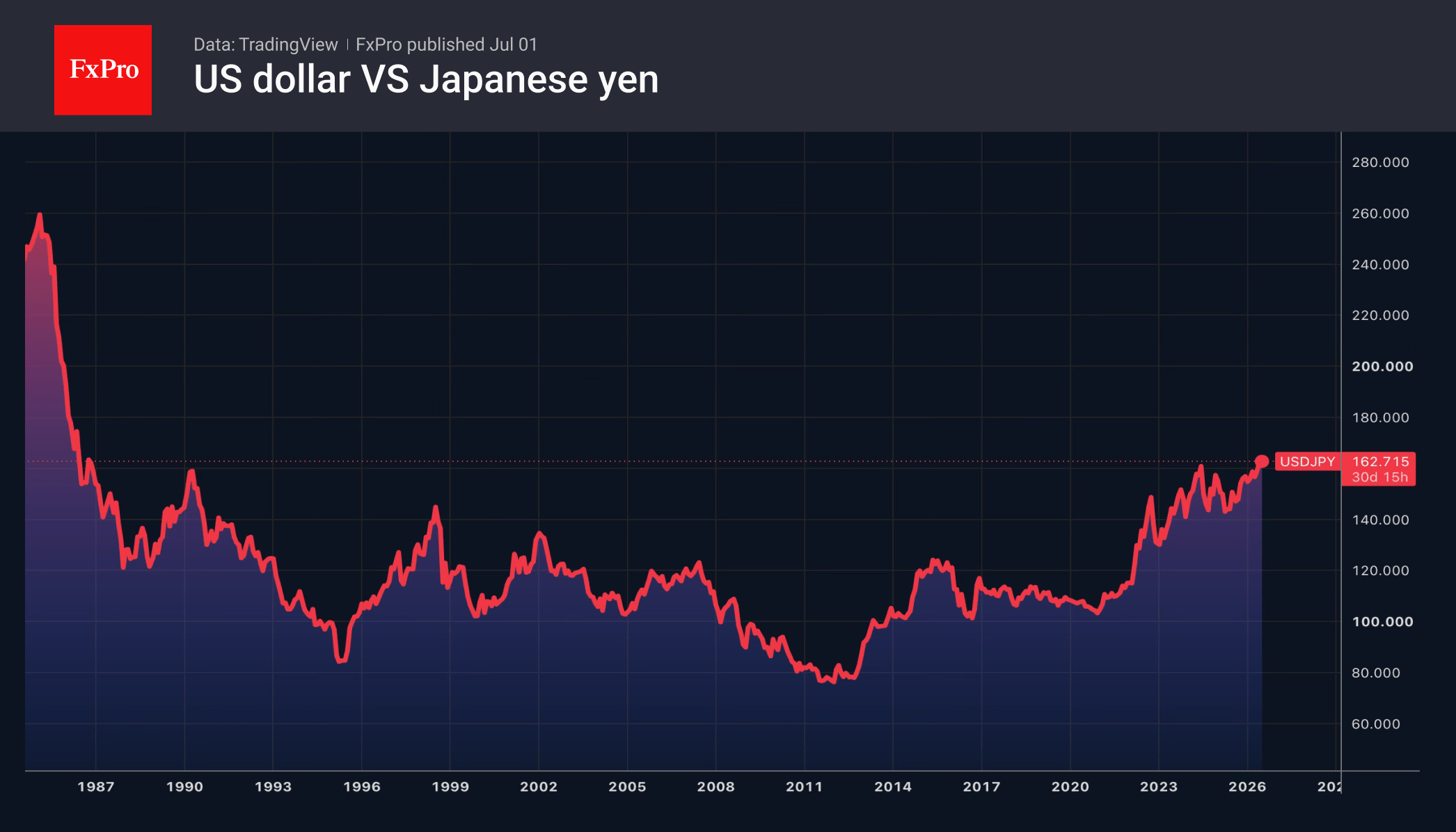
Meanwhile, USDJPY crossed the 162 level for the first time since 1986. Investors are preparing for the resumption of currency interventions, on which Japan spent more than $70 billion in April and May. According to Finance Minister Satsuki Katayama, the government and the central bank stand ready to take appropriate measures regarding currencies at any time as necessary. The official indicated that her American counterpart, Scott Besant, agreed to this.
If Kevin Warsh’s speech in Sintra fails to halt the US dollar’s advance, Japan will have no choice but to intervene in the foreign exchange market.
the So they broke Analyst team



