Brent crude oil is once again approaching the level that has repeatedly separated geopolitical hype from a real shock in the oil market. After jumping above $79 on Monday, crude now faces last week’s high near $80.59. But this time, the backdrop is more ominous: The standoff between the United States and Iran has expanded into a multi-country conflict across the Gulf, while competing claims over whether the Strait of Hormuz is open have left shipping conditions increasingly uncertain.
The escalation began over the weekend with an attack on the Cypriot-flagged container ship M/V GFS Galaxy as it moved through the strait from Friday to Saturday. Iran’s Islamic Revolutionary Guard Corps called for a warning strike against ships using unauthorized routes, while the ship caught fire and one of the 23 crew members was reported missing. Then Tehran announced the closure of the strait until further notice. Washington responded with the largest US strikes yet, targeting about 140 missile, drone, naval, ammunition, communications and surveillance sites overnight and into Sunday. The US Central Command said that the cumulative number of targets struck during three nights had risen to more than 300 targets.
More important than the size of the American operation is the breadth of the Iranian response. The attacks and interception warnings spread across Bahrain, Kuwait, Qatar, the United Arab Emirates, Jordan and Oman, drawing several US-allied countries directly into the conflict. An oil exploration platform was hit in Kuwait, Qatar intercepted a missile attack, the United Arab Emirates faced incoming threats, missiles hit Prince Hassan Air Base in Jordan, and drones targeted Oman despite its mediation role. This geographical expansion represents a clear break from previous exchanges and increases the risk of Gulf governments being drawn deeper into a military response.
Hormuz himself is now caught between two incompatible narratives. The US military says the strait is open and that Iran does not have the authority to close it. The Iranian Ports and Maritime Authority says passage is impossible. Markets do not need either claim to be completely true for oil risks to increase. Shipping can be disrupted by sailing delays, high insurance costs, route uncertainty, and reluctance among crews and operators long before the official blockade takes effect.
This distinction is important to Brent. Previous tensions failed to keep prices above $80 because actual supply conditions changed little and traders expected diplomatic channels to reopen. The weekend’s events create a stronger case for a permanent risk premium. The attack on commercial shipping, Iran’s announcement of a lockdown and simultaneous strikes across the Gulf make operational disruption more likely, leaving $80 as a key test of whether the market will begin to price in a broader regional threat to supplies.
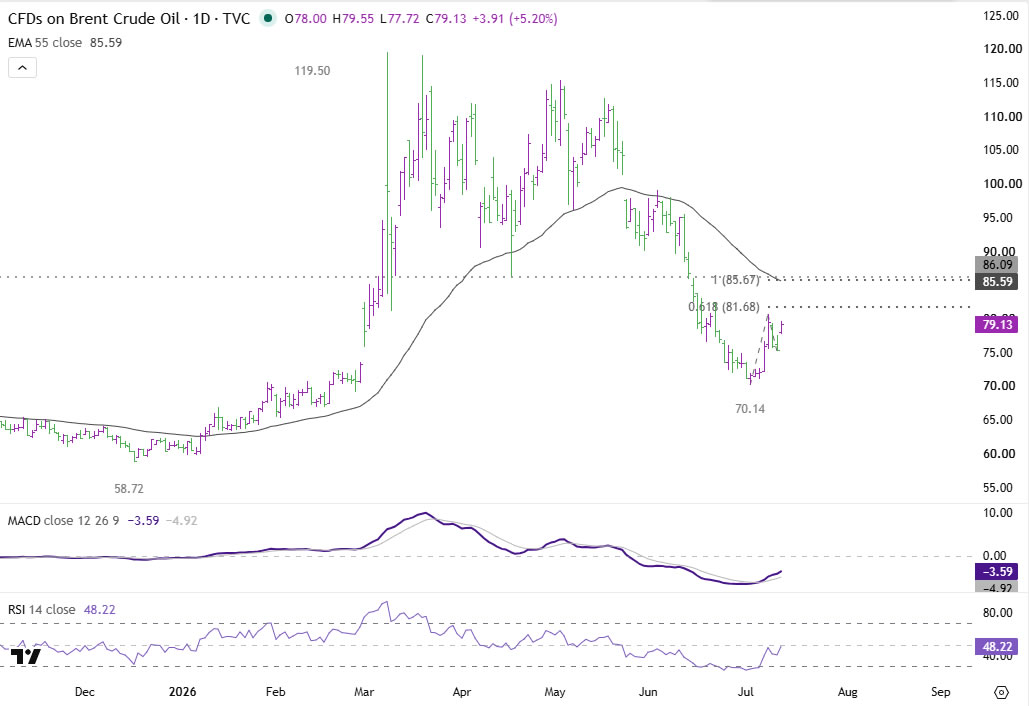
Price action is already showing a stronger structure in the near term. Brent found clear support at the 55 hour moving average (now at 75.60), before rising this week. Immediate resistance is located at the highest level recorded last week at 80.59. A decisive breakout would strengthen the case for a continuation of the bounce from 70.14, bringing the 61.8% forecast from 70.14 to 80.59 from 75.22 to 81.68 in sight, followed by the 100% forecast at 85.67. This target closely matches the 55-day EMA at 85.59, making the mid-80s the logical destination if bullish momentum accelerates.
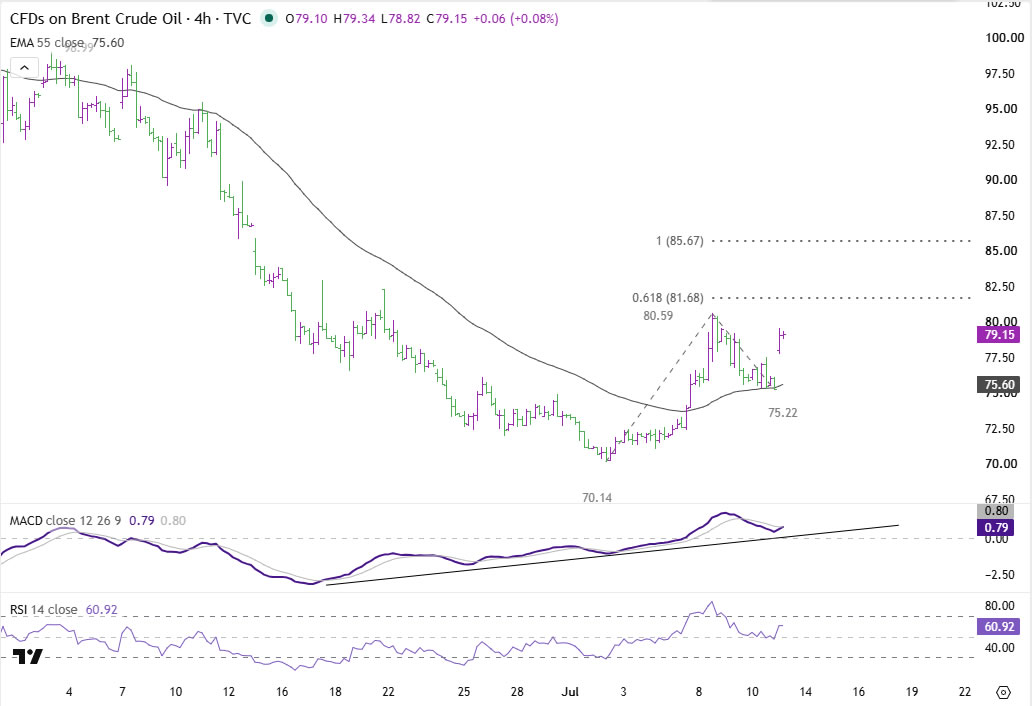
Brent crude does not need to enter a new long-term uptrend to reach that area. A rise towards 85 will remain suitable for a three-wave corrective bounce within the broader decline. But a strong break through 80.59 would show that markets are treating the escalation as more than just another temporary headline. Conversely, remaining below this level may indicate that traders still believe that strait disruption can be contained before physical oil flows are materially affected.