
Key takeaways
- Shifting from outperformance to underperformance: The Nikkei 225 has reversed sharply since late February, turning into one of the worst-performing indices amid growing stagflation fears due to rising oil prices and prolonged tensions between the United States and Iran.
- Overall headwinds intensify: Japan’s heavy dependence on oil imports, coupled with weak corporate earnings expectations (lower earnings revision index), is reinforcing bearish sentiment and downward pressure on stocks.
- Bearish technical structure in play: The indicator remains trapped in a descending triangle below the key resistance level; A break below 52,070 could extend losses towards 50,160 and possibly the 200-day moving average, unless 54,095 is reclaimed.
The Japanese stock market has continued to fluctuate since the start of the US-Iran War on February 28, 2026, fading the initial bullish luster seen at the beginning of the year, with the Nikkei 225 being one of the best performing indices with a gain of 17% from January 1, 2026 to February 27, 2026.
Fear of stagflation has caused the Nikkei 225 to underperform
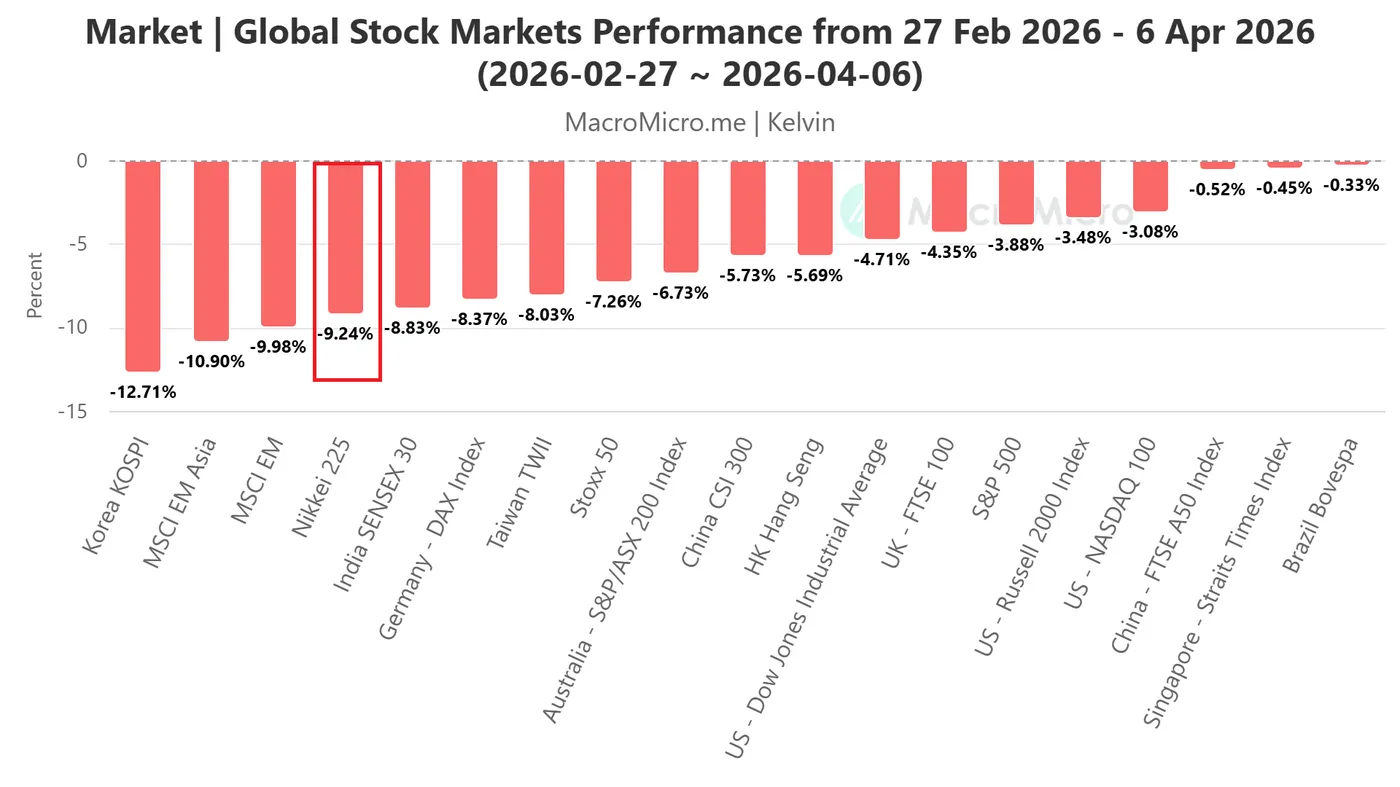
Figure 1: Performance of major global stock indices from February 27, 2026 to April 6, 2026 (Source: MacroMicro).
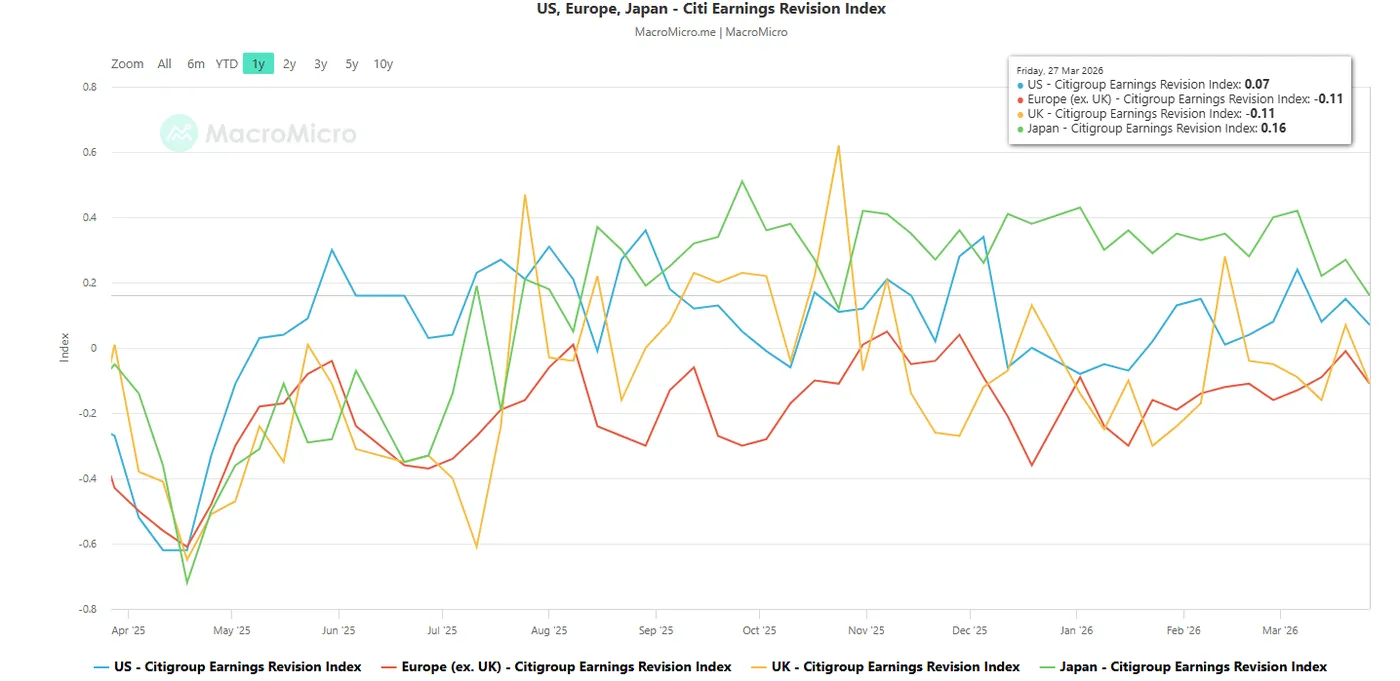
Figure 2: Citigroup Earnings Revision Index for Japan, US and Europe as of March 27, 2026 (Source: MacroMicro).
In a reversal of fortune, the Nikkei 225 has now bottomed out, becoming one of the worst performing equity indices, with a loss of 9.2% recorded from February 28, 2026 to April 6, 2026 (see Figure 1).
Japan is a major oil importer, and the current war between the United States and Iran, which is entering its thirty-ninth day, shows no clear signs of de-escalation at this stage. Iran rejected the ceasefire agreement yesterday following US President Trump’s latest deadline set today, Wednesday, April 7 at 8.00pm ET for Iran to open the Strait of Hormuz ahead of US strikes on Iranian power plants and key infrastructure.
Benchmark crude oil prices continue to trade solidly above $100 per barrel, and market participants following the trend may trigger bullish herd behavior to continue bidding up oil prices.
WTI may rise towards the next intermediate resistance at $124.40 and $131.30/$132.67.
Hence, further rises in oil prices above $100 per barrel increase the risk of stagflation, which in turn triggers a negative feedback loop in the Japanese economy, creating more bearish sentiment in the Nikkei 225.
In addition, the Citigroup Earnings Revision Index for Japan fell to a 5-month low of 0.16 as of March 27, 2026 from 0.42 recorded on March 6, 2026, indicating that sell-side analysts on average are less optimistic about Japanese corporate earnings prospects (see Figure 2).
Let us now take a look at the technical factors to determine the likely path of the Nikkei 225 in the short term (one to three days).
Nikkei 225 – oscillating within a simple “descending triangle” range
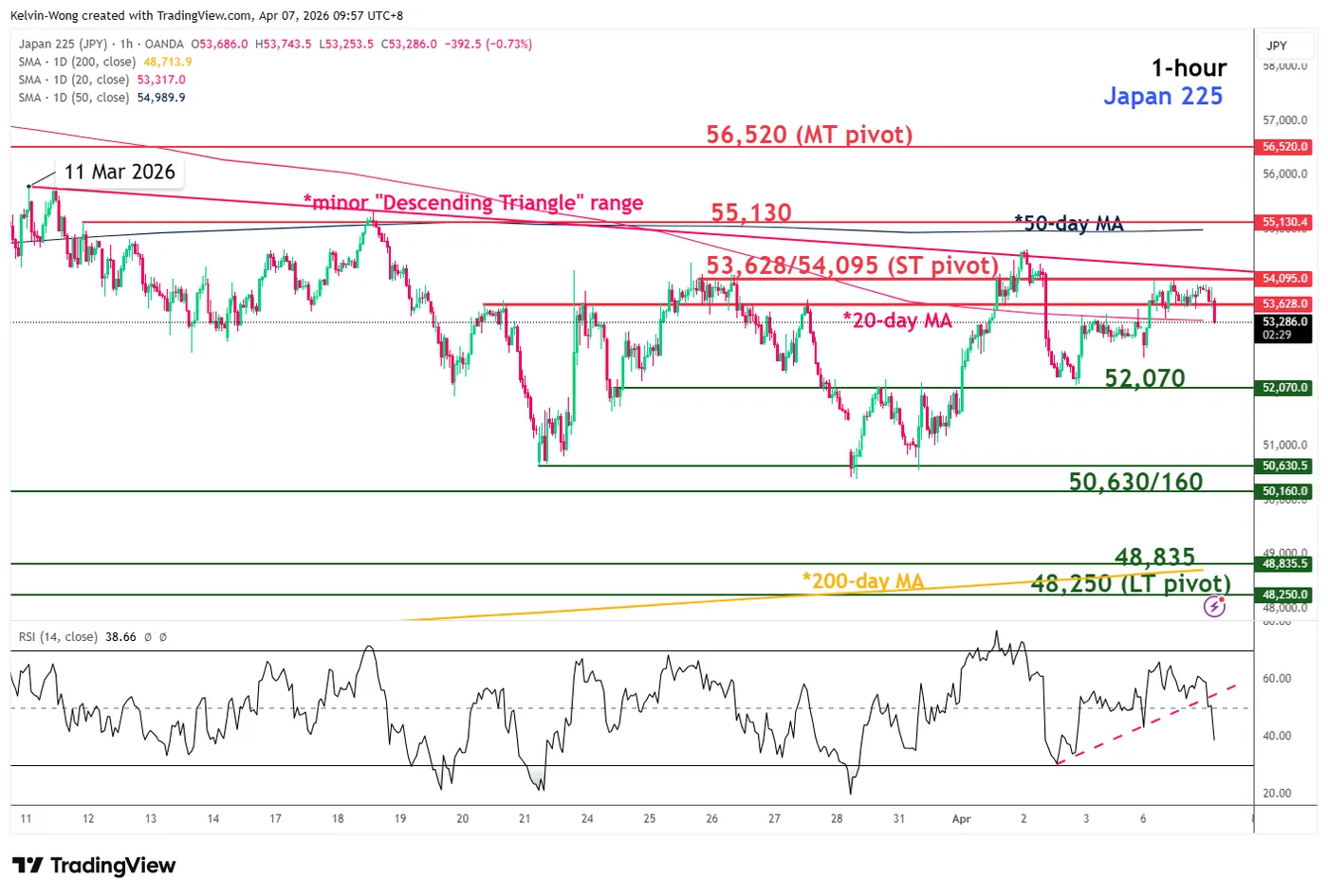
Figure 3: Secondary trend of the Japanese CFD 225 Index as of April 7, 2026 (Source: TradingView).
Since the slight swing high on March 11, 2026, the price action of the Japan 225 CFD has been oscillating within a bearish continuous “descending triangle” range formation.
The recent 8% recovery seen from the low of March 30, 2026 to the high of April 2, 2026 was halted at the upper border of the “descending triangle” (see Figure 3).
Watch the short-term pivotal resistance area 53,628/54,095 for a potential bearish reversal to retest the bottom of the “Descending Triangle” range. A break below 52,070 increases the odds of exposing the next intermediate support at 50,630/50,160 in the first move.
Below 50160 opens the way for a downside breakdown of the “Descending Triangle” range for further potential downward movement towards the 48835/48250 long-term pivot support area (also the key 200-day moving average).
On the other hand, a clearance with an hourly close above 54,095 invalidates the bearish scenario of another phase of the corrective bounce towards the next intermediate resistance at 55,130 (also the 50-day moving average).
Key elements to support the near-term downtrend on the Nikkei 225
- The hourly RSI momentum indicator saw a bearish breakdown below its bullish support at the 50 level.
- Price action in the Japan 225 Index resulted in a “lower high” just below the “Descending Triangle” range resistance.



