

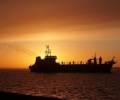
The CAPTURED project has achieved two regulatory milestones that strengthen the business case for on-board carbon capture and storage (OCCS), following its world-first demonstration of the end-to-end value chain of captured and liquefied on-board carbon dioxide (LCO2).
The pilot project, completed in June 2025, showed that CO2 captured on board could be offloaded from one ship to another, transported overland and permanently bonded through carbon mineralization – a process that turns captured CO2 into stable materials for industrial use.
EU ETS recognition of carbon dioxide captured on board
The CO2 captured on board during the CAPTURED project has been officially recognized for compliance under the European Union Emissions Trading System (EU ETS). This means that the verified tonnage of captured CO2 can be deducted from emissions that would require a waiver of European Union Allowances (EUAs).
To qualify for this recognition, carbon dioxide must be permanently chemically bound in qualifying products. The CAPTURED project demonstrated that CO2 captured on board ships can meet this requirement through carbon mineralization.
IMO’s initial support for carbon mineralization
Data and lessons learned from the same demonstration formed the basis of a proposal submitted to MEPC 84. This proposal received initial support from the International Maritime Organization (IMO) to recognize carbon mineralization as a form of permanent CO2 storage.
Complementing geological sequestration, already accepted by the IMO, this recognition expands downstream options for CO2 captured on board ships, and supports the development of marine carbon value chains. Besides providing a permanent storage pathway, carbon mineralization also creates the possibility of using captured CO2 not only as a waste stream requiring permanent storage, but also as a raw material for industrial applications through carbon mineralization, extending emission reductions well beyond the shipping value chain.
Source: Capture Project



