

The proposed merger between Italian engineering, drilling and construction services giant Saipem and Luxembourg-based Subsea7 is facing deeper scrutiny in the EU over offshore market concentration due to… Umbilical and riser networks, subsea flowlines (SURF) and carbon capture and storage (CCS) dominate the market, which may threaten to undermine competition, raise costs and limit innovation.
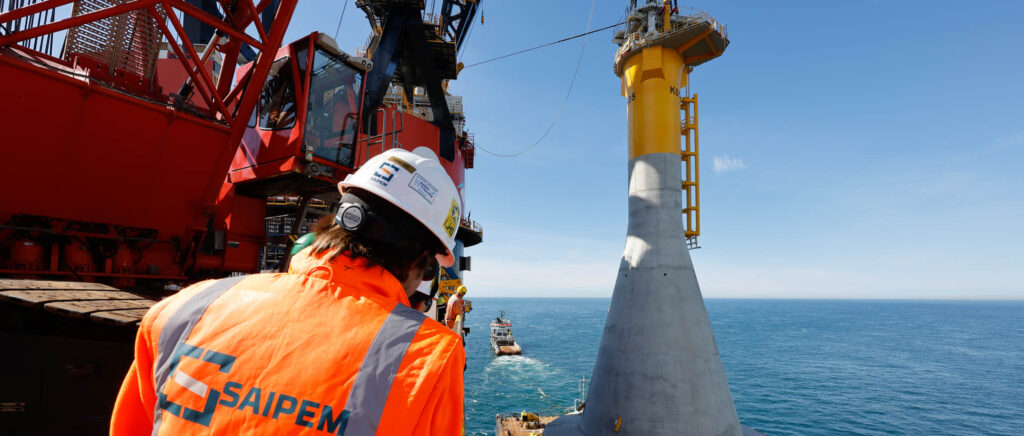
The European Commission has opened an in-depth investigation under the EU Merger Regulation to assess the situation Proposed merger Between Saipem and Subsea7, which aims to give birth Saipem7 like Joint venture companyDue to concerns that the proposed concentration may significantly impact effective competition in certain offshore engineering and construction services markets.
This investigation follows preliminary findings by the European Commission that the merger would be highly complementary in some areas, including Offshore wind Projects and so-called Traditional marine projects; However, it seems that a business combination would further strengthen the company SURF services market At this point.
Because subsea infrastructure connects offshore wells, often located thousands of meters below sea level, to above-surface production facilities, a SURF consists of various types of pipes and cables, which are installed on or near the seafloor.
These services are also used in CCS projects, which involve capturing CO2 emissions from industrial facilities and power plants, piped CO2 and permanently storing it in geological formations often deep beneath the seafloor to prevent its release into the atmosphere.
The global SURF services market is already seen as highly concentrated, with Saipem and Subsea7 being two of the three market leaders with very few reliable alternatives.
Focus on potential risks to competition, pricing and innovation
The European Commission’s preliminary investigation indicates that the deal may significantly reduce competition in the already highly concentrated SURF services market for oil, gas and carbon capture and storage projects. These results confirm that Saipem and Subsea7 are two of the world’s three leading suppliers, and the combined entity will have high market shares and capacity in these markets.
Given that Saipem and Subsea7 compete closely with each other, especially for more complex and profitable projects, other potential competitors appear to be much smaller and limited in their ability to compete across the board, with only one competitor remaining comparable.
Since the barriers to entry and expansion are very high in this capital-intensive industry, where spare capacity is limited, the Commission claims that this is partly explained by the significant investments associated with the highly sophisticated vessels needed, especially for more complex projects.
While customers are in many cases sophisticated and large players that are significantly active in the oil and gas sector, the European Commission notes that they may not be able to resist price increases in the absence of sufficiently credible alternative suppliers.
“The transaction may therefore result in the loss of significant market competition for SURF services, perhaps with higher prices and decreased innovation as a result.” According to the Commission, which will examine whether the deal could lead to coordinated effects in these markets during its in-depth investigation.
It will also be assessed whether the deal may give rise to competition concerns in other closely related markets, such as mainline services markets, which involve the laying of larger export pipelines, and the decommissioning of aging subsea infrastructure that appears to require similar vessels and capabilities as its installation.
The European Commission, which will continue to investigate whether the deal leads to anticompetitive vertical or cartel effects, will conduct an in-depth investigation into the potential effects of the deal to determine whether its initial competition concerns have been confirmed.
Since the proposed deal was notified on June 16, 2026, the Commission has 90 working days, until November 26, 2026, to make a decision, but is adamant that opening an in-depth investigation does not affect its outcome in advance.

Boost your brand with marine energy ⤵️
Steal the spotlight and establish your brand in the heart of the outside world!
Join us to make a greater impact and grow your presence at the core of the marine energy community!



