

to rise recession Concerns in the United States are reshaping Investor Positioning in 2026, as slowing growth, persistent inflation and geopolitical tensions weigh on the outlook.
Great Wall Street Institutions Estimates now suggest there is a 30% to 40% chance of contraction over the next year, marking a shift from previous soft landing forecasts as economic data shows signs of strain.
Indeed, markets are reacting to rising risks, as high oil prices and the Federal Reserve’s aggressive policy threaten growth and increase volatility.
As recession fears grow, investors are shifting toward capital preservation, favoring stable, cash-generating companies.
Against this background, Feinbold was used OpenAI ChatGPT To identify two stocks to hedge against deflation.
Procter & Gamble (NYSE: PG)
The first is Procter & Gamble (NYSE: p), a global consumer goods giant whose product range includes household essentials such as cleaning supplies, personal care products and health goods.
According to ChatGPT, the company’s resilience stems from the non-discretionary nature of its offerings, which maintains demand even as consumers cut back on discretionary spending.
Its size and brand strength allow it to pass higher costs through pricing, maintaining margins in inflationary environments.
This stability is reinforced by a decades-long track record of earnings growth, supported by consistent cash generation across economic cycles.
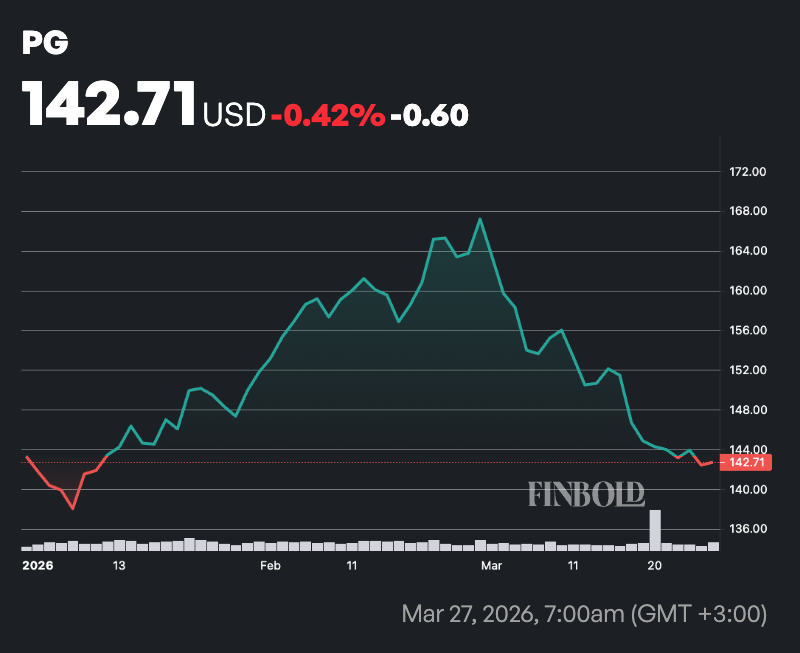
At press time, PG stock was trading at $142, having risen less than 1% year to date.
Johnson & Johnson (NYSE: JNJ)
In second place, ChatGPT chose healthcare giant Johnson & Johnson (NYSE: JNJ). The company, over the years, has emerged as a diversified healthcare leader with exposure to pharmaceuticals, medical devices and consumer health products.
The AI model indicated that healthcare demand remains structurally inelastic, providing a fixed revenue base regardless of macroeconomic conditions.
At the same time, Johnson & Johnson’s diversified business model reduces reliance on any single sector, while its strong balance sheet and defensive earnings profile have historically helped smooth volatility during market downturns.
Its ability to generate reliable income increases its appeal in uncertain environments.
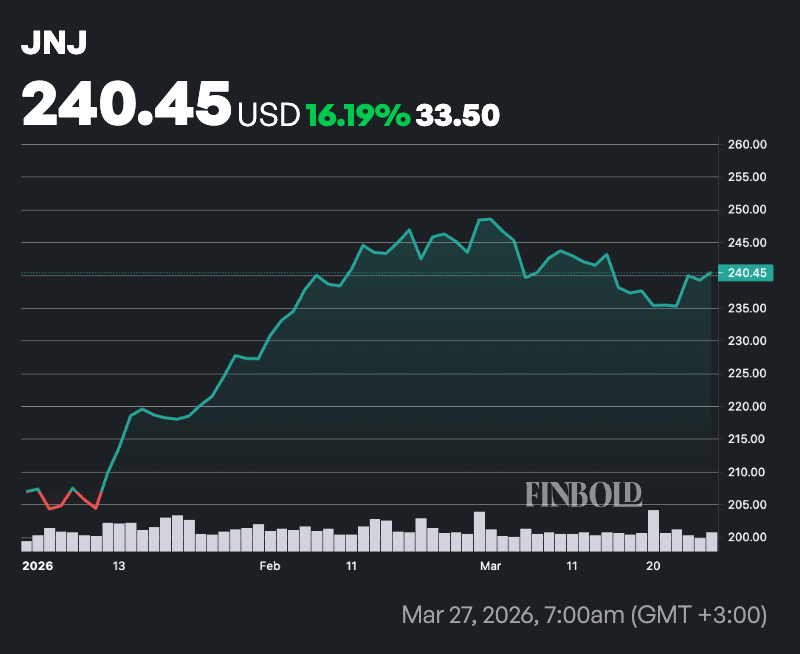
At markets close on Friday, JNJ stock was trading at $240, having gained more than 15% year to date.
Overall, as recession risks increase, the focus on defensive positions becomes more pronounced.
It’s worth noting that while no stocks are immune to broad market declines, companies with core products, consistent demand, and steady income streams are better equipped to weather periods of economic stress.



