
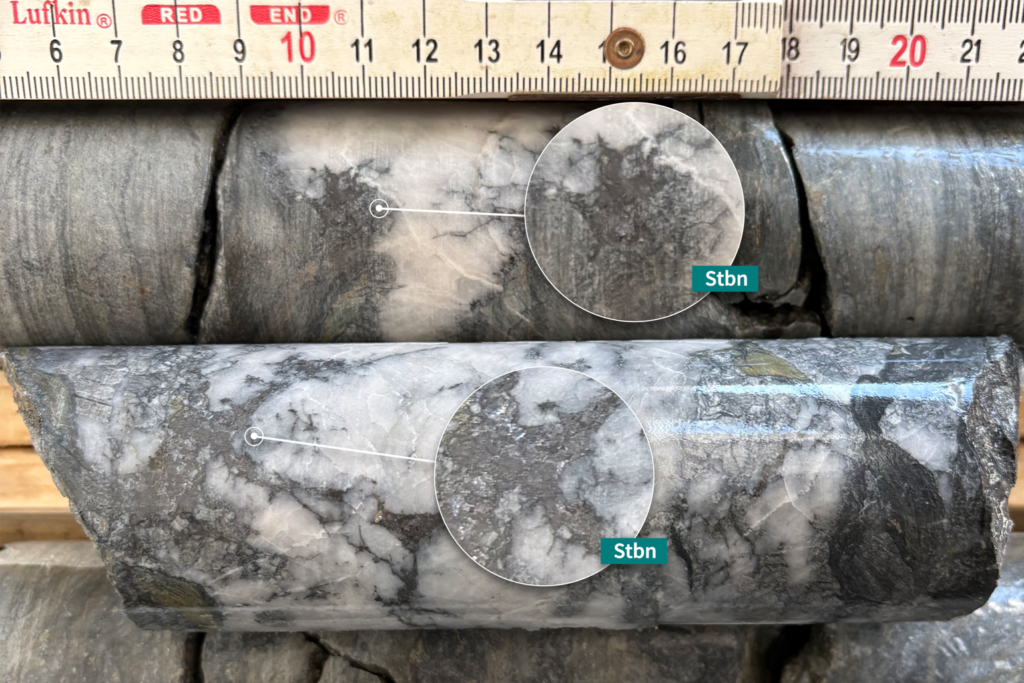
One critical energy(CSE: CRTL, US-OTC: MMTLF) The first recent drill hole at the Howells Lake Project in northwestern Ontario has cut stenite visible from the near surface through about 100 meters of the core, reviving an antimony prospect dormant for nearly four decades.
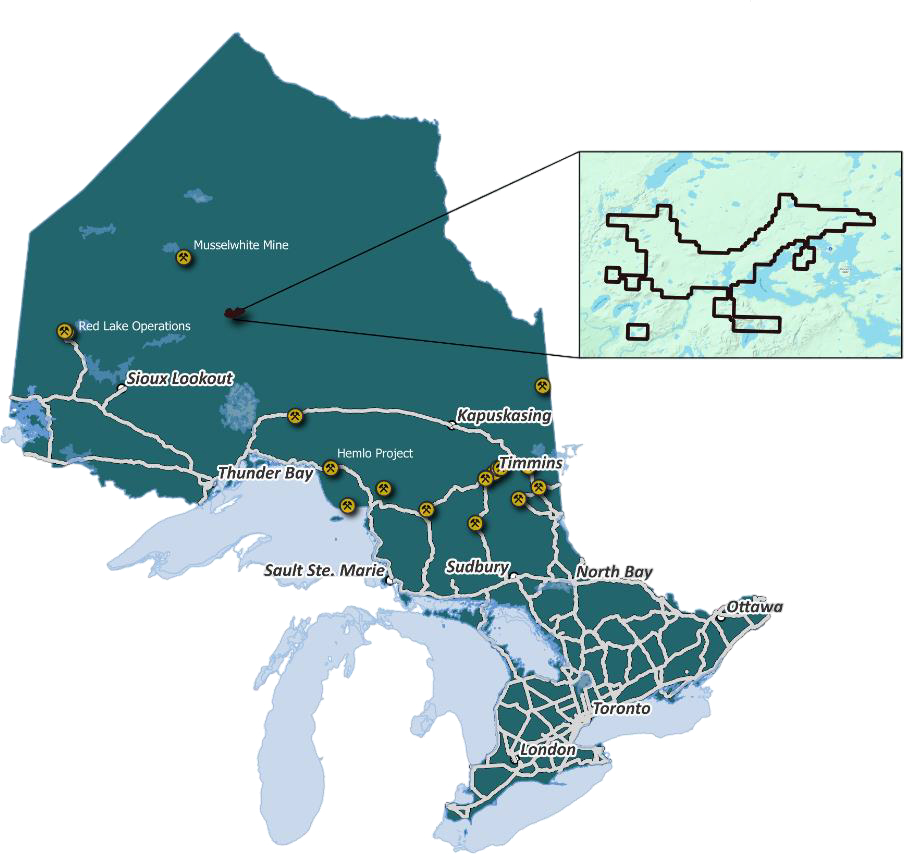
Hole HWL-2026-001 reached 201 meters and showed multiple stibnite-bearing zones within the first 100 metres, starting 24 meters downhole, the company announced on Wednesday. Spacing of 24 to 26.5 metres, 35 to 37 metres, and 75 to 78 metres, has been identified in the eastern area of the Howells Lake Antimony Gold Project, approximately 120 kilometers west of the Ring of Fire access corridor. Tests are pending from AGAT Laboratories in Thunder Bay.
“No one seriously looked at antimony as a product in itself,” said Duane Parnham, founder, chairman and CEO. Northern Miner Wednesday. “Antimony has always been kind of a byproduct of some other gold camp.”
Critical One has budgeted $9 million ($6.5 million USD) for Howells Lake this year, and expects drilling to continue through the summer as it moves from the eastern zone to the western zone and then to the anomalous western zone, Parnham said. The company wants to have up-to-date technical data first and a current technical report by the end of the year, before it rushes to estimate resources.
“This is the right order,” Parnham said. “The story is stronger now than it was a week ago.” “The evidence is still in the testing lab.”
War metal
The new antimony discoveries are significant today given that China tightened export controls in 2024 and then banned exports of the mineral to the United States, helping to sharply raise prices and exposing North America’s weak supply chain. New Brunswick last month A competitive operation has been launched for the old antimony mine at Lake George, another sign of governments’ desire for new domestic supplies.
Antimony has many major industrial uses, including defensive applications such as flame-resistant fabrics, communications equipment, night vision goggles, ammunition hardening, and laser vision.
The United States has no antimony production and thus relies on foreign suppliers such as China for the vital mineral used by its military forces.
Howells Lake remained in private hands for decades after the Canadian New Jersey Zinc Exploration Company drilled the discovery in the late 1970s and then left the project dormant.
the beginning
Matthew Trinkler, chief geology officer, said the Critical One team had a lot more to work on than a typical early-stage play. Miner. He added that historical drilling operations in the discovery area amounted to about 37 holes at a depth of 2,000 meters, which gives the company enough data to test the old model with modern methods.
He added: “We will not ignore this project.”
The total of the first round is about 3000 meters with one drilling rig. The program virtually twins old holes to replicate historical mineralization, while pulling back to test lower levels and look for extensions, Trinkler said. He added that the historical work traced the mineralization to a depth of approximately 200 meters below the surface, and the company plans to go even further.
However, the first hole only answered the first question. Visible stibnite confirms order, not grade, and Critical One’s cited historical estimate of 1.7 million tons at 1.4% antimony with associated gold is incompatible. The true widths are still unknown, and examinations can only show whether the first hole bears the kind of grades suggested by the ancient files.
Critical One last August expanded the land package by 67% to about 250 square kilometres, but the site still faces the long-standing northern challenge of distance. Parnham said any future operation would likely need to be pre-concentrated on site and trucked to Pickle Lake or to a port, a route he described as manageable but more expensive than a project with ready-made infrastructure.
In addition to gold
Howells Lake is larger than the small historic footprint now being excavated.
The property extends for about 30 kilometres, and modern, versatile electromagnetic work, linked to recovered historical data, points to a deeper conductor beneath the ancient find, Parnham said. It also identified a gap between the eastern and western regions and another target about 5 km west of the western region.
Parnham explained that while the eastern region mainly hosts antimony, the western region appears to bring more gold into the system.
“Howells Lake may prove stronger as a gold and antimony deposit than as a pure antimony mine, which could help the economy in a market where many juniors are chasing narrow antimony veins,” he said.
Source link



