
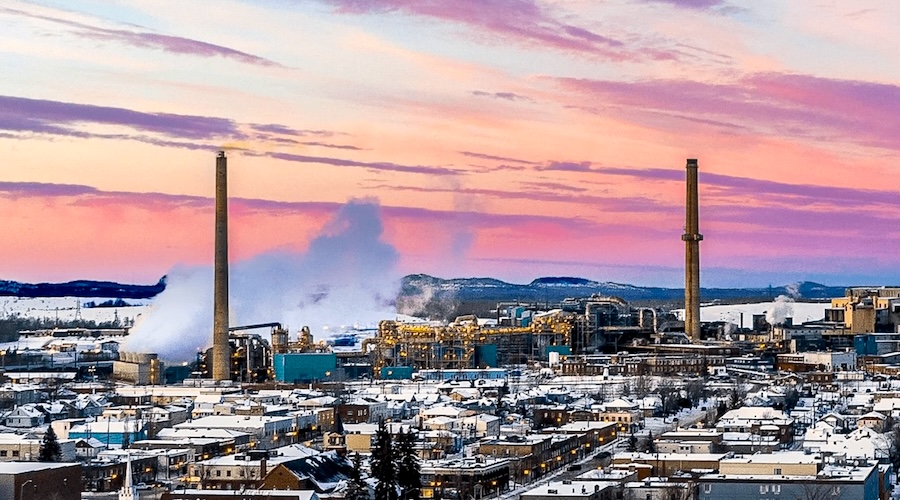
Quebec has opened the door to giving Glencore (LSE: GLEN) More time to ensure the Hoorn copper smelter – the only one of its kind in Canada – complies with environmental regulations, improving the facility’s prospects of staying open in the long term.
Proposed amendments to a wide-ranging bill, now being debated by provincial lawmakers in Quebec City, would delay the new arsenic emissions limit of 15 nanograms per cubic meter for the Horne smelter until 2029 — a two-year delay — and keep it at that level until at least 2033.
Swiss miner and commodities trader Plans are temporarily on hold to invest nearly C$1 billion ($719 million) in its Quebec copper operations last month — including $300 million to cut emissions — after failing to reach an agreement with the provincial government on a plan to secure the facility’s long-term viability. It warned it may close Horne due to stricter pollution rules.
Located in Rouyn-Noranda, about 625 kilometers north of Montreal, Horn is one of the few plants in North America capable of processing copper concentrates and recycled materials such as electronic waste. This makes it an important part of the continent’s copper supply chain — just as Canada and other Western countries seek to reduce their dependence on Chinese imports.
“Glencore Canada welcomes the passage of the amendment to Bill 11 regarding the extension of the ministerial mandate for the Horne smelter until March 15, 2033,” company spokesman Fabrice De Dongou said Monday via email. He added: “This is an encouraging development, and we continue to monitor the situation closely, but we will not comment further while the legislative process continues.”
Federal funding?
At the federal level, Ottawa is considering $150 million to help Glencore pay for pollution control systems. Bloomberg News It was reported Monday, citing people familiar with the request who asked to remain anonymous because the matter is private.
Quebec public health authorities have expressed serious concerns about the proposed legislative changes.
Omobola Subango, head of public health for the Rouyn-Noranda region, said delaying compliance would prolong the exposure of region residents to toxic metals known to increase the risk of serious health effects such as cancer. Message 20 March To her boss. Since current and past emissions have already exceeded regional standards, reducing exposure levels as quickly as possible is critical to protect residents, Subango said.
Glencore has been repeatedly criticized in the province for pollution caused by Horn in Rouyn-Noranda.
Special agreements
Although Horn significantly exceeds provincial standards for arsenic emissions, it benefits from special agreements with the provincial government. Under the latest ministerial mandate, Horne must produce no more than 45 nanograms of arsenic per cubic meter of air for the fiscal year ending in March. This is 15 times the regional standard.
In October, Quebec’s Superior Court allowed a class action lawsuit brought by two Rouyn-Noranda residents against Glencore and the provincial government to proceed. Prosecutors say the emissions produced by the Horn caused various types of damage.
Vulnerable groups – especially children and pregnant women – will bear the brunt of continued exposure, Subango said in her letter. She added that delaying implementation of the stricter standards will mean that additional groups of the population will face avoidable health risks over time.
Horne and another Glencore facility, the Canadian Copper Refinery in Montreal, form Canada’s only complete copper smelting and refining chain. Horn processes copper concentrates from mines, producing approximately 210,000 tons per year of copper and precious metals.
Unions have warned that CCR would also close if Horne closed its doors since the Rouyn-Noranda plant is its main supplier.
Source link



