
The place is based in the United States XRP exchange-traded funds (exchange-traded funds)ETFs) recorded a sharp decline in inflows on a quarterly basis.
With XRP ETFs opening on April 1 with total net assets of $943.73 million, these market-based ETFs saw a quarter-over-quarter decline in inflows of 96.4%, according to Data from SoSoValue. Over the past three months, this basket of securities recorded net cash flow of $42.52 million, a significant decline from the $1.166 billion recorded in the fourth quarter of 2025.
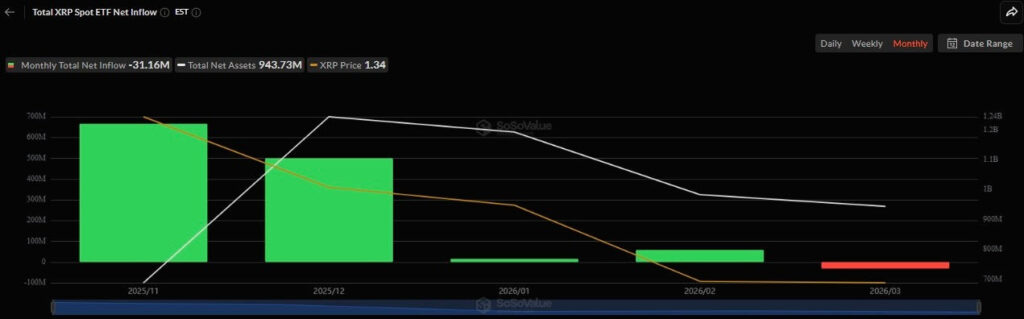
During the first three months of 2026 Canary XRP ETF (XRPC) was the best performer, recording net inflow of $37.46 million and reaching $264.55 million in net assets at the end of the first quarter. By contrast, the 21Shares XRP ETF (Tuxer) experienced the largest outflow, recording a net outflow of approximately $53.2 million and reducing its net assets to $141.96 million.
Why are inflows for spot XRP ETFs declining?
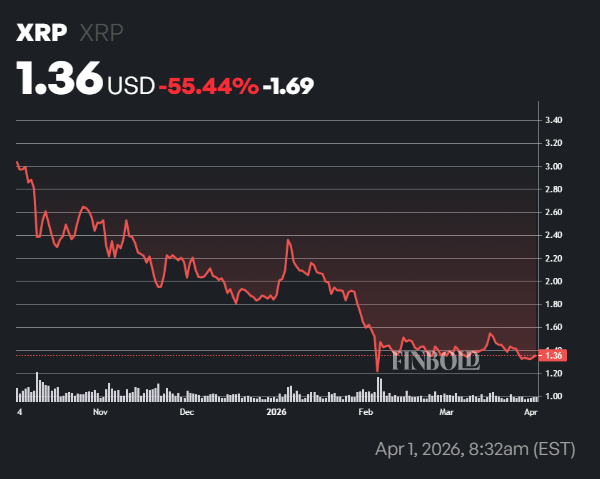
The main reason XRP ETFs recorded a significant decline in inflows on a quarterly basis was the poor performance of the altcoin, which reduced its appeal to institutional allocators. Over the past six months, XRP The price has collapsed more than 55% to trade around $1.36 at the time of writing.
Meanwhile, institutional investors’ initial enthusiasm for spot XRP ETFs, led by Goldman Sachs Group, faded by the end of March, possibly due to delays in the Clarity Act, a legislative proposal to legalize cryptocurrencies in the United States.
What’s next for funds listed on this altcoin?
Ripple Labs CEO Brad Garlinghouse, anticipation Last month, the odds of the Clarity Act being passed in the US Senate by the end of May were high. If confirmed, renewed regulatory clarity could spur a rebound in institutional demand for these index-tracking funds in the second quarter of 2026.
However, if Congress fails to develop a regulatory framework for digital assets in 2026 under Pres Donald TrumpNet inflows into these pooled investment vehicles may continue to contract in the near term.



