
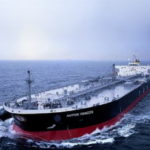

TThe product tanker market has been adapting to the new market reality formed after the war in Iran. In its latest weekly report, shipbroker Gibson said: “The conflict in Iran is wrapping up its eighth week and tanker markets are adjusting to the new reality. In the East, clean exports so far this month are at their lowest levels in more than a decade, largely due to almost no exports from the Middle East Gulf (MEG), but also due to shortages of raw materials, especially for Asian refiners, coupled with protectionist policies that ban exports from some countries. By contrast, exports are Cleanliness west of Suez is very low.” near record monthly highs.
According to Gibson, “The MR market has proven quite resilient to the loss of volumes in the East, recovering from a significant drop in profits a few weeks after the Iran War. As mentioned in a report last week, the high diversification and low dependence on the MEG market has helped insulate this volume. Since the war, clean volumes carried on MRs have shrunk but have been much less affected than on LR2s in particular. Even profits have shrunk. Freight rates on the route to Australia, the country with the highest per capita diesel consumption in the world, have risen in particular.” Due to the above factors.
The shipbroker added: “In the West, a large number of MRs have been taken out of the Atlantic Basin for a long time and, consequently, the trend of this size class moving west has slowed and even reversed slightly in recent weeks. We now see just over 30 more MRs stationed further west than before the war (about 2% of the main fleet). US diesel voyages to Europe, West Africa and Latin America are currently open and, although volatile, have been supportive of exports. The West African market has also withdrawn MRs.” South from the Mediterranean, with freight rate differentials between UKC to the US Atlantic Coast and UKC to West Africa at more than WS150 over the past two days, this comes as the Dangote refinery appears to be firing on all cylinders, with exports from the refinery totaling 440,000 b/d so far this month, 60% of which on MRs so far remaining strong.

Source: Gibson Tanker Market
“So, what is the outlook for MRs? In the West, in the near term, the market is expected to remain strong, especially in the US. The latest EIA data shows that diesel inventories continue to be drawn down in the US Gulf, keeping exports near record levels. While stocks so far remain within the PADD3 range, exports cannot continue at this pace forever. The US administration today extended the Jones Act exemption for another 90 days; a factor that could be very beneficial for MRs Across the pond in northwest Europe, extremely fast oil prices are impacting refining margins, potentially impacting runs and thus exports So far, exports here have held up well, and with gasoline stocks at healthy levels that could remain supported in the near term, however, there are said to be only six weeks of jet fuel stockpiles remaining in the ARA hub, and demand destruction efforts have begun with a large number of total CPP stockpiles at ARA now at a 12-year low indicating significant pressure on system, and refineries in some cases have deferred maintenance to work hard and earn very high profit margins, increasing the possibility of outages, and in any case turnarounds will have to be implemented eventually. Western ships earn about $6,000 a day more for a one-year charter, Gibson said.
“In the East, as has been repeated ad nauseam, if this conflict continues, more refiners will run out of feed stock, and CPP exports will continue to decline, weighing on the market. News of renewed US sanctions waivers on Russian crude, and the consequent increase in crude oil imports to India and Southeast Asia may keep refining operations here somewhat afloat. If trade normalizes by mid-year, the IEA does not expect Middle East refining operations to return to pre-war levels “In 2026, the rest of Asia will only recover by the fourth quarter,” Gibson concluded. “Trading inefficiency and vessel repositioning will remain supportive factors, but the lack of physical flows will provide continued downward pressure and a negative outlook for this market as long as Hormuz remains closed.”
Nikos Rousanoglou, Global Hellenic Shipping News



