

- USDJPY needs interventions and interest rate hikes.
- Monetary policy divergence is pushing EUR/USD lower.
The USD found no evidence in Kevin Warsh’s comments, and attention turned to the June US labor market report. The Fed Chairman noted lower inflationary risks and reiterated the central bank’s commitment to returning inflation to the 2% target. He did not rule out raising interest rates in July.
Investors interpreted Kevin Warsh’s comments as hawkish, raising the probability of two rate hikes in 2026 to 46%. The probability of tightening monetary policy in September is estimated at about two out of three.
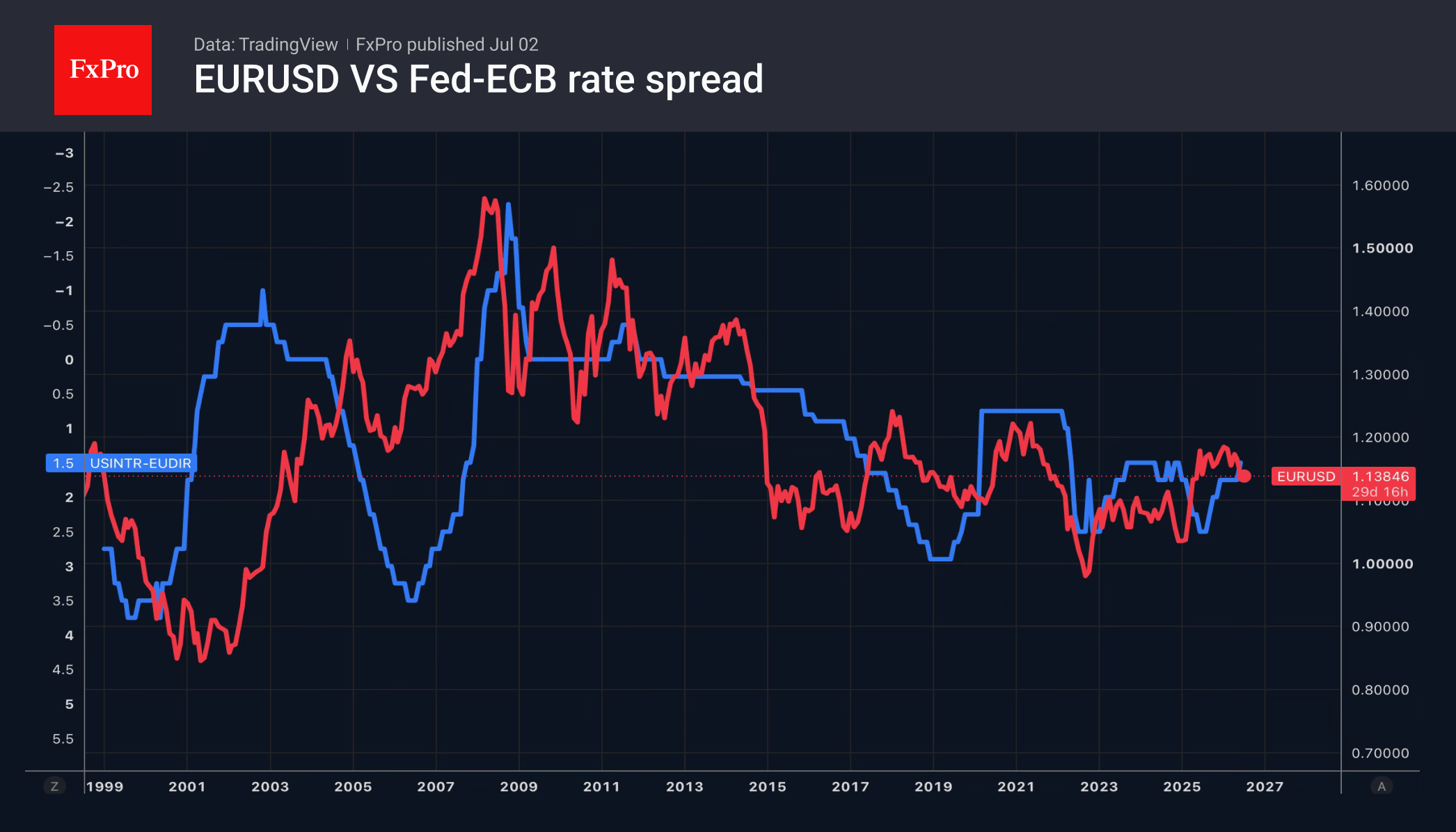
This difference is in the interest of bears in the EURUSD, as there is a division within the European Central Bank. This reduces the possibility of raising deposit interest rates. Hawks believe that inflation permeates all sectors of the eurozone economy. This will be evident in increased demand for wage increases and a delayed rise in food prices. Conversely, doves believe that the CPI has already peaked and will decline due to lower oil prices.
This was confirmed by the latest report, which indicated a slowdown in inflation in June from 3.2% to 2.8%. The futures market anticipates the possibility of a hike in deposit rates in 2026. However, investors believe that if monetary policy is tightened, it will be the last of this cycle, hindering EURUSD buyers.
In Japan, rumors are growing that a weaker yen could accelerate an overnight rate hike. Previously, the market expected the Bank of Japan to tighten monetary policy every six months, but more recently placed a 60% probability of raising interest rates again in October after the June increase. The combination of a weak national currency and strong business activity carries with it the risk of a significant rise in inflation. If the central bank allows inflation to get out of control, it will be forced to resort to tightening monetary policy.
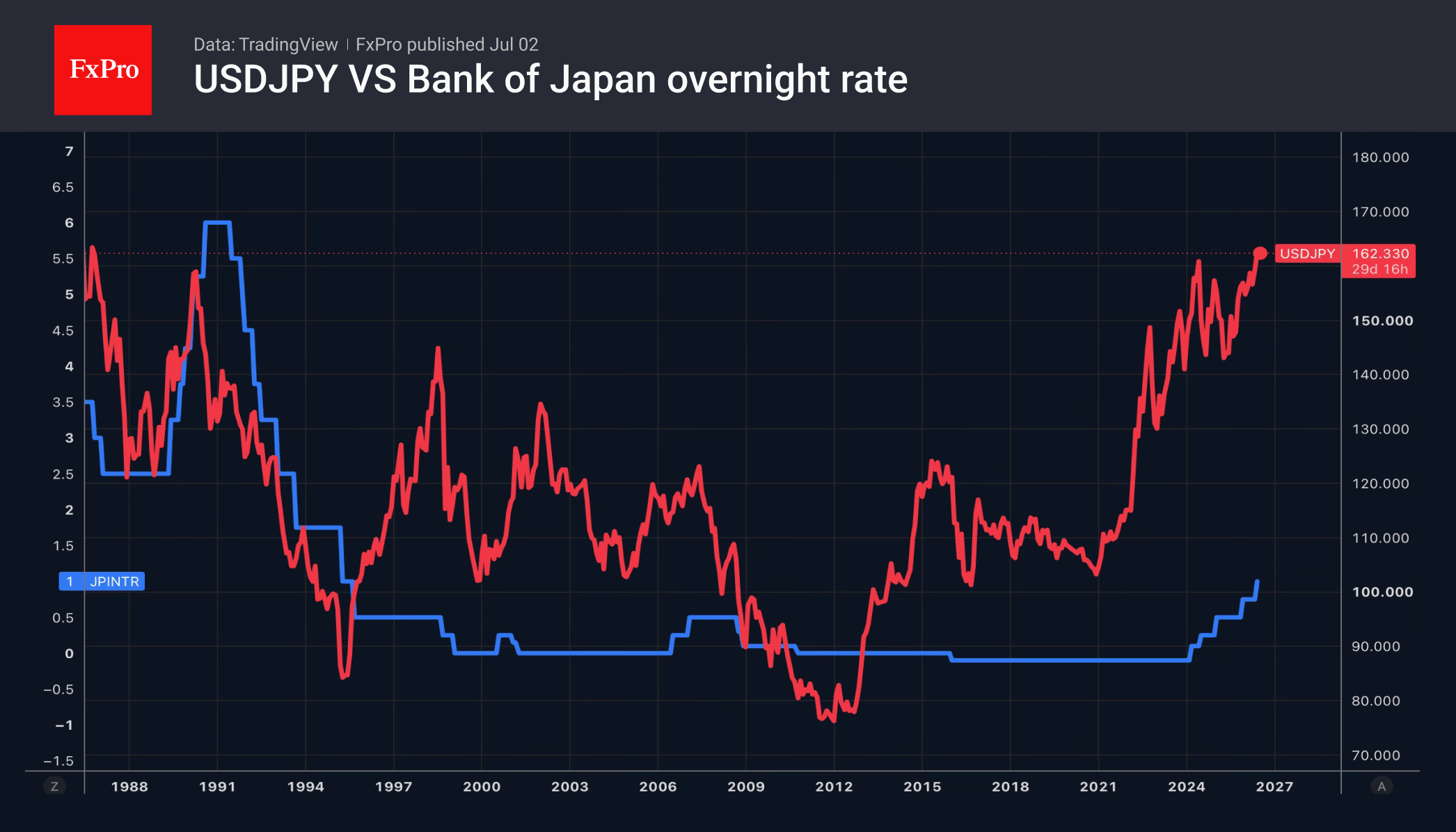
Meanwhile, Mizuho Bank expects USDJPY to reach 170, Sumitomo Mitsui Financial Group expects it to reach 180, while Monex Group and Blue Edge Advisors do not rule out a rise to 200.
The yen rebounded from its lowest levels in 40 years following comments by Atsushi Mimura, Vice Finance Minister for International Affairs. He stated that previous currency interventions in April and May were justified and that the United States had no objection to further interventions in the foreign exchange market.
the So they broke Analyst team



