
Lafleur Metals Company (Private search engine: LFLRor follow: LFLRFFSE: 3WK0) (“LaFleur Minerals” or the “Company”) announces the submission of an independent technical report (“Report”), prepared in accordance with National Instrument 43-101 – Disclosure standards for mineral projects (“NI 43-101”), supporting the results of the Preliminary Economic Evaluation (“PEA”) of the Company’s 100% owned Swanson Gold Deposit and Beacon Gold Mill, located in the Abitibi Gold Belt in Quebec (the “Project”).
The report is entitled “Swanson Gold Project – Preliminary Economic Evaluation of the Delivery of Mineral Material from the Swanson Deposit to the Bacon Plant Located in Val d’Or, Quebec”dated March 27, 2026, with an effective date of March 16, 2026, prepared for LaFleur Minerals by ERM Consultants Canada Ltd. (“ERM”). The report is available on the company’s website at www.lafleurminerals.com And under the company’s issuer profile on SEDAR+ on www.sedarplus.ca.
PEA supports the restart of Beacon Mill and the Swanson development
Independent qualified persons (“QPs”) from ERM were responsible for preparing the PEA technical report, including general format, property description and location, accessibility, project history, mineral processing and mineral testing, mineral resource estimation, mining and recovery methods, infrastructure, operating and capital cost estimates, economic analysis, and project implementation planning.
Readers are advised to review the entire technical report, including all qualifications, assumptions, exclusions, and risks. The report is intended to be read as a whole, and its sections should not be viewed separately.
The Project Implementation Agreement sets out a development scenario that supports the restart of gold production at the Company’s fully permitted Beacon Gold Mill, utilizing mineral material from the nearby Swanson Gold Deposit as part of a vertically integrated mine-to-mill strategy. The PEA study reflects the results of extensive technical work completed over the past year, including drilling verification, mineral testing and optimization, infrastructure planning, and economic modeling.
The Company confirms that there are no material differences between the key results, assumptions and estimates contained in the PEA technical report and those disclosed in its dated news release. March 3, 2026.
The PEA is primary in nature and includes inferred mineral resources, which are geologically too speculative for economic considerations to enable them to be classified as mineral reserves. There is no certainty that the PEA will be achieved. Mineral resources that are not mineral reserves have not proven their economic viability. Additional drilling will be required to convert inferred mineral resources into defined or measured categories. There is no certainty that the development, production or economic projections set forth in the Project Implementation Plan will be achieved.
PEA Highlights
- The PEA specifies a Robust, low-complexity and cost-effective development plan Utilization of the Beacon Gold Mill is fully permitted, demonstrating strong economics with 65% after-tax IRR, C$101 million NPV (5%), US$1,569/oz AISC, Supported by phased expansion to 1,250 tons per day and strong free cash flow generation Gold base case $2,750/oz.
- The base case envisions plant throughput of approximately 1,250 tons per day (“tpd”), with the potential to expand to 3,000-4,000 tpd in long-term scenarios.
- Utilizes existing infrastructure, including the recently refurbished Beacon Gold Mill and fully permitted tailings facility, with an independently assessed replacement cost of $71 million
- Demonstrates the potential to restart gold production in a scalable and capital-efficient manner
- It includes modern confirmation drilling, mineralogical testing and engineering studies
Paul Tenier, CEO and Director of LaFleur Minerals, commented: “The submission of our technical PEA report represents an important milestone for LaFleur Minerals as we progress toward near-term gold production. The study validates our vertically integrated strategy, which combines the Swanson gold deposit with a fully permitted Beacon Gold Mill. With key infrastructure in place and financing secured to restart and restart the plant, we believe the company is well positioned to transition to a gold producer and generate revenue in the near term, with the added scalability and operational flexibility that sets us apart from many start-up developers.”
Project overview
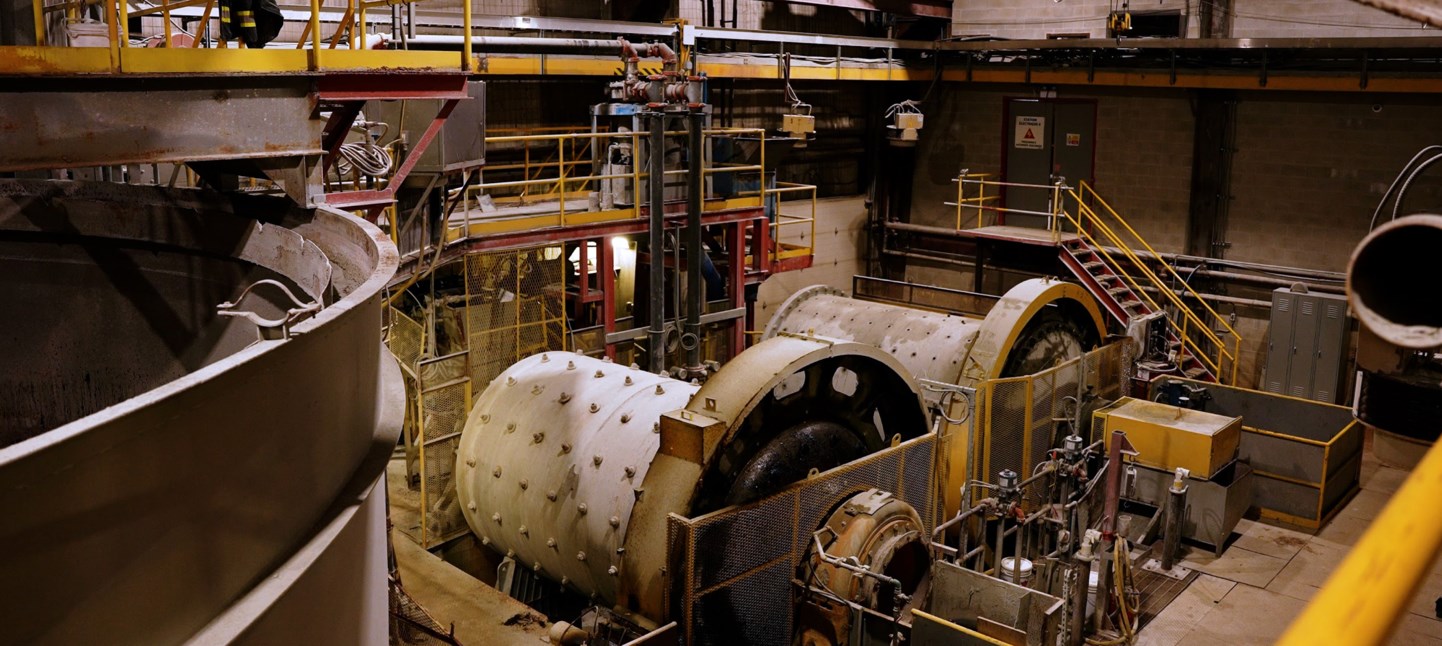
The Swanson Gold Project comprises a 19,214-hectare district-wide land package in the Abitibi Gold Belt, including multiple gold-bearing zones along a major structural corridor. The project is located approximately 60 kilometers from the Beacon Gold Mill, a recently renovated, fully licensed processing facility with a current capacity of 750 tons per day, with the potential to expand to 1,250 tons per day.
PEA is evaluating the economic potential of transporting mineral materials from Swanson Gold Deposit to Beacon Gold Mill, leveraging existing road access and potential rail infrastructure to improve logistics and reduce operating costs as part of an integrated mine-to-mill development strategy (Figures 1 to 3).
After the PEA is completed and submitted, the Company intends to:
- Advanced engineering studies and project optimization, including evaluation of an initial large-scale sample of 100,000 tons.
- Continue mineral testing and drilling to expand the resource at Swanson.
- Allowing progress and infrastructure initiatives to support bulk sampling and future mining operations.
- Progress towards making a production decision for the Swanson gold deposit using the Beacon Gold Mill.

Figure 1: Lighthouse Gold Mill

Figure 2: Beacon Gold Mill

Figure 3: Beacon Gold Mill
Statement of qualified person and verification of data
All scientific and technical information contained in this news release was prepared and approved by James Gardner, P.Eng. (OIQ), the principal consultant and engineer of the ERM and is considered an independent qualified person (QP) for the purposes of NI 43-101. The scientific and technical information contained in this press release has also been reviewed and approved by Luis Martin, P.Geo. (OGQ), the Exploration Manager and Technical Advisor to the Company and is considered a Qualified Person (QP) for the purposes of NI 43-101.
QP’s verified the sampling, analytical and testing data underlying the MRE and PEA results disclosed in this release by reviewing the company’s QAQC protocols, core records and samples, mineralogical test results, original assay certificates, and the assay database. QP noted that there were no sampling or recovery issues with respect to the technical data that would impact the MRE and PEA results disclosed in this press release.
About Lafleur Metals Company
LaFleur Minerals Inc. (CSE: LFLR) (OTCQB: LFLRF) (FSE: 3WK0) is developing district-level gold projects in the Abitibi gold belt near Val-d’Or, Quebec. The Company is developing the PEA-stage Swanson Gold Project and Beacon Gold Mill, which together form a vertically integrated mine-to-mill development strategy. The Swanson Gold Project comprises approximately 19,214 hectares (192 km2) and includes numerous gold-bearing deposits and prospects along a major structural corridor, including the Swanson, Bartick and Jollen areas. The project is accessible by road and is located 60 km from the Beacon Gold Mill, supporting its development potential. The recently refurbished fully permitted Beacon Gold Mill has a current processing capacity of over 750 tonnes per day and is expected to process mineral materials from the Swanson gold deposit. LaFleur Minerals recently completed a positive preliminary economic evaluation for the integrated development of the Swanson Gold Deposit and Beacon Gold Mill (see the technical report provided on the company’s website and under its SEDAR+ profile)..
Neither the Canadian Securities Exchange nor its regulation services provider accepts responsibility for the adequacy or accuracy of this news release.
Cautionary statement regarding “forward-looking” information.
This news release contains “forward-looking information” within the meaning of applicable Canadian securities laws. Forward-looking statements include, but are not limited to, statements regarding the results of the Preliminary Economic Evaluation (“PEA”) of the Swanson Gold Project, the expected renovation and restart of the Bacon Gold Mill, expected production rates, life of the mine, capital and operating costs, economic returns (including net present value and internal rate of return), development timelines, permitting, financing and other economic and technical parameters. Forward-looking statements are generally identified by words such as “expects,” “plans,” “expects,” “believes,” “intends,” “estimates,” “projects,” “potential” and similar expressions.
The EAA is preliminary in nature and includes inferred mineral resources that are considered too geologically speculative to be applied to economic considerations that would enable them to be classified as mineral reserves. Mineral resources that are not mineral reserves have not proven their economic viability. There is no certainty that the results of the EIA will be achieved.
Forward-looking statements are based on a number of assumptions, including with respect to mineral resource estimates, gold prices, exchange rates, capital and operating costs, mineral recoveries, the ability to obtain required approvals, availability of financing, and the successful renovation and operation of the Beacon Gold Mill. Actual results may differ materially due to risks and uncertainties, including those relating to resource estimation, cost escalations, commodity price fluctuations, permitting, financing, operational risks and general economic conditions. Readers are cautioned not to place undue reliance on forward-looking statements. Except as required by applicable securities laws, the Company undertakes no obligation to update this information.
Prepared by Resource World Magazine Inc. This editorial is for general information purposes only and should not be considered a solicitation to buy or sell securities in the companies discussed here. The information provided is derived from sources believed to be reliable but cannot be guaranteed. This editorial does not take into account readers’ investment criteria, investment experience, financial situation, or financial goals of individual recipients and other concerns such as jurisdictional and/or legal restrictions that may exist for some persons. Recipients should rely on their own due diligence and seek their own professional advice before investing.



