

Poolin, which was one of the largest Bitcoin (BTC) mining pools globally, has filed for Chapter 11 bankruptcy in the United States. The filing includes parent company Poolin, which is based in Singapore, as well as its two U.S. subsidiaries, Lonestar Dream Inc. and Lonestar Taproot LLC.
With this announcement, the companies seek to liquidate their remaining assets under court supervision. This will be centered around mining infrastructure in Texas, rather than reorganizing and continuing to operate under Chapter 11.
This, in turn, marks the end of the financial collapse that began during the 2022 cryptocurrency bear market.
Pauline underwater
According to the filesTotal assets and liabilities range from $1 million to $10 million and from $100 million to $500 million, respectively.
A more accurate picture was shared by Chief Restructuring Officer Michael Dufrane’s announcement placing total pre-bankruptcy liabilities at approximately $173.1 million.
Of this amount, approximately $163.7 million is unsecured debt. This amount is owed to Poolin Wallet users whose assets have become inaccessible following the company’s withdrawal freeze for 2022.
What is the real reason behind this?
Here, instead of mining operations, Poolin’s wallet business was the main source of its financial burden. This is because the company allowed users to deposit cryptocurrencies, borrow USDT against collateral, and earn returns during the cryptocurrency boom.
After the market crash in 2022, it suspended withdrawals and gave approximately 11,700 customers IOU tokens worth $163.7 million, making them unsecured creditors.
However, after borrowing $213 million against cryptocurrency collateral from Antalpha Technologies, its problems worsened. In the coming months, Bolin suffered huge losses when Antalfa liquidated the collateral in late 2022 as prices fell. Meanwhile, its mining expansion in the United States also failed.
In addition, mining operations have also been shown to be unsustainable. Finally, after approximately $45.9 million in operating losses for Lonestar Dream and Lonestar Taproot, Poolin closed its Texas mining and hosting sites on July 10.
So far, though, it has failed Bitcoin In mining, it marketed assets to more than 335 potential buyers before declaring bankruptcy. This resulted in 28 non-disclosure agreements and seven letters of intent.
In the past, the company also tried to sell its Texas operations to China Green Agriculture for $49 million. However, the deal never happened.
Poolin is now trying to sell its remaining assets and give the money to its creditors through Chapter 11. However, the amount recovered for Poolin Wallet users is expected to be contingent on the outcome of the auction and will likely be far less than the $163.7 million they are owed.
Bitcoin miner case raises concerns
This news comes on the heels of AMBCrypto latest report On the Miners’ Financial Health Index, which indicated that miners were under significant pressure. In fact, the CryptoQuant chart below confirmed a long period of miner capitulation.
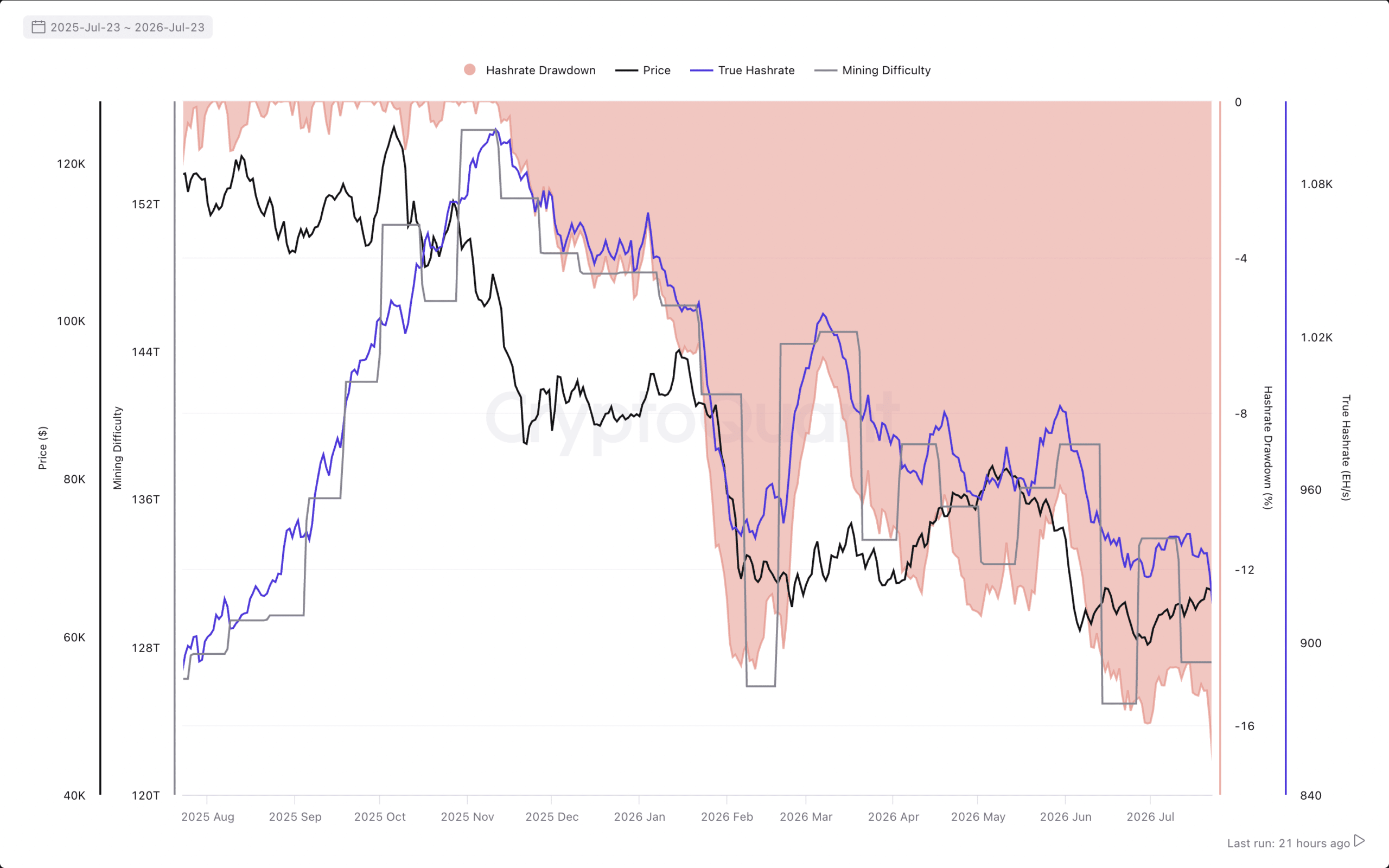
Accordingly, the hashrate decline remained consistently negative, worsening to around -16% by July. Additionally, Bitcoin’s true hash rate also fell to -12 sharply starting in late January and never fully recovered.
Overall, in the broader market as well, miners have been taking machines offline in greater numbers. Especially with low profitability.
Final summary
- The company’s total assets and liabilities range from $1 million to $10 million and from $100 million to $500 million, respectively.
- Despite the challenges, Bolin marketed the assets to more than 335 potential buyers before going bankrupt.



