

Bitcoin (Bitcoin) Realized volatility, a measure of price movement, fell to a multi-year low as of June 1, 2026.
Bitcoin’s one-week realized volatility fell to nearly 17%, down more than 56% from its Q2 peak of about 39%, according to Data from Cryptoquant. As such, Bitcoin’s one-week volatility has taken it back to the 2026 low, which preceded the January and February capitulation.
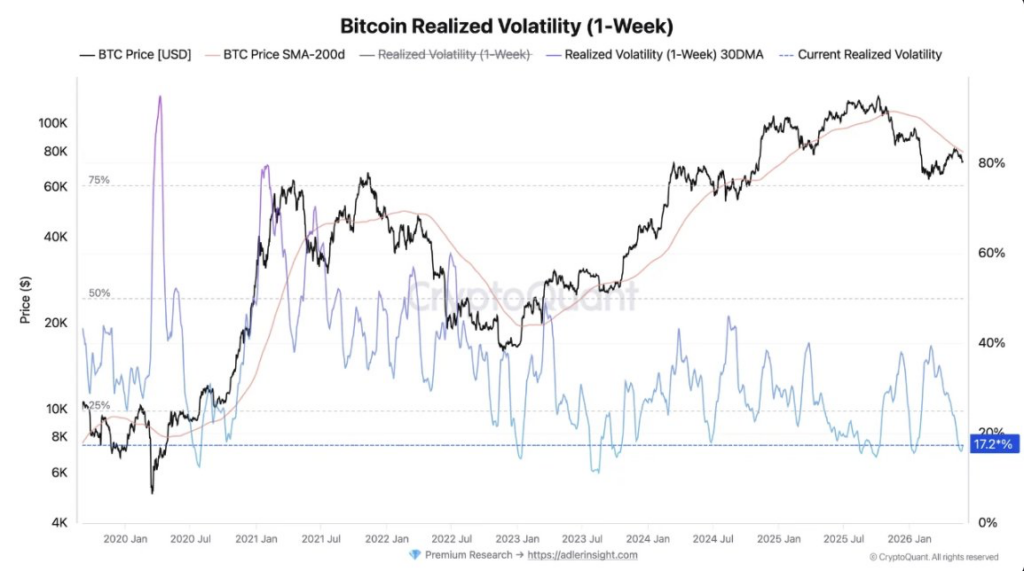
Despite the recent surge in Bitcoin prices from $65,000 to just over $82,000, its one-week volatility has continued to shrink. For context, BTC’s realized volatility over a one-week period rose to more than 90% during Black Thursday of 2020, caused by the COVID-19 pandemic, and more than 75% during the 2021 cryptocurrency bull market.
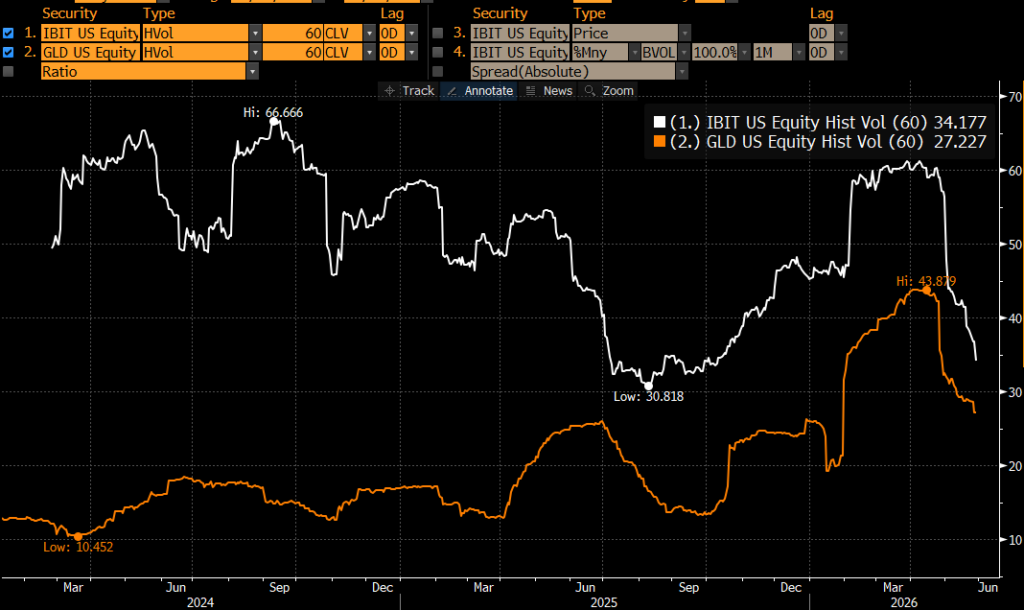
However, Bitcoin’s one-week volatility has hovered around 34% in recent years, due to high adoption by institutional investors. Additionally, BTC’s volatility has been closely linked to gold, despite the underperformance of the major currency for stocks and precious metals, according to analysis It was recently shared by ETF analyst Eric Balchunas.
What’s next for Bitcoin price amid low volatility?
A notable decline in Bitcoin’s realized volatility for a week could indicate the calm before the storm. Historically, major Bitcoin price movements, in either direction, have followed this tool and dropped to around 17%.
“History conforms to what usually comes next. Deep volatility pressure is rarely resolved quietly. It tends to come before large directional moves because the forced calm eventually ends with the release,” Axel Adler male.
As such, if the major currency reclaims its 200-day simple moving average (SMA) amid increased volatility, a risk breakout could be confirmed. However, if the price of Bitcoin continues to decline, perhaps below $70,000 over the coming weeks, amid increasing volatility, a new capitulation could be confirmed.
At press time, Bitcoin was trading at around $71,460 after falling 7.8% over the past seven days.
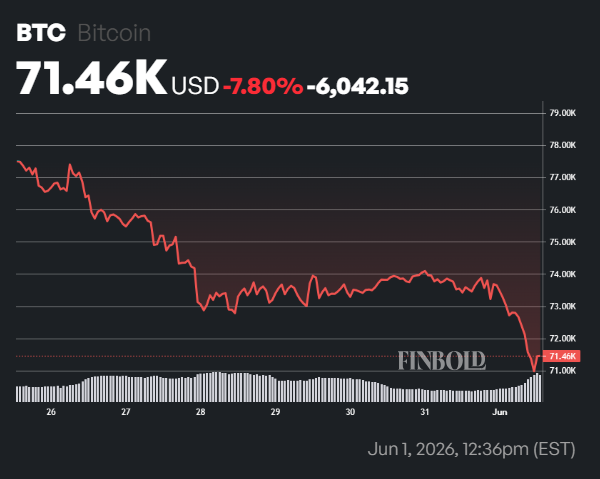
Meanwhile, if BTC realizes that volatility (one week) stabilizes at multi-year lows during the following week, Bitcoin price could fall into a multi-month horizontal consolidation, making the tool vital for mid-term forecasting.



