

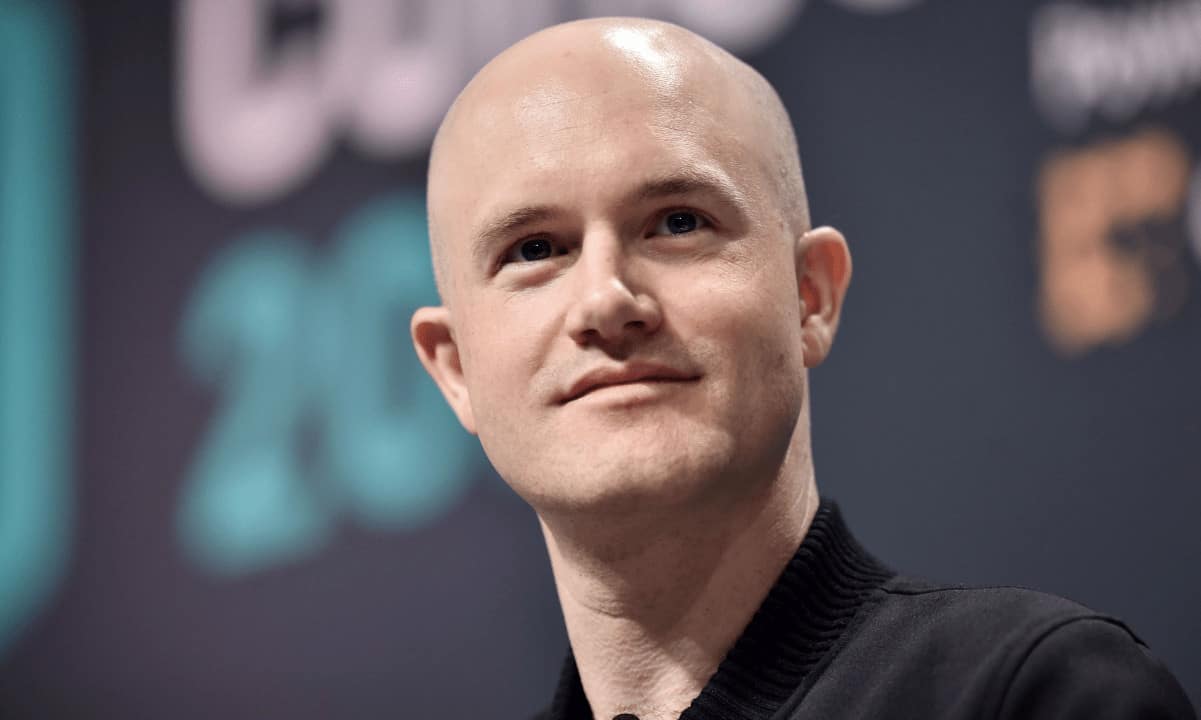
Armstrong believes that market incentives encourage AI companies to build secure products without the need for an additional regulatory framework.
Coinbase CEO Brian Armstrong has rejected calls to create a new AI self-regulatory body, arguing that existing laws already provide adequate protection against malicious AI.
His comments came just one day after the cryptocurrency exchange revealed that artificial intelligence now writes more than 95% of its code, more than double the number the company announced earlier in the year.
Armstrong says current laws already cover AI risks
It all started with a suggestion from Google DeepMind CEO Demis Hassabis on July 14 Named To create a federally supervised standards body to test and certify frontier AI models before they are deployed.
According to him, artificial general intelligence could arrive within a few years, with increasingly capable models possibly leading to cybersecurity and biohazards as well as several national security issues. He therefore proposed the creation of a public-private organization, much like the Financial Industry Regulatory Authority, that would initially conduct voluntary reviews before potentially moving to mandatory testing of more advanced AI systems.
Reaction from Hassabis’ peers was swift, with tech entrepreneur Chamath Palihapitiya calling the framework “well thought out,” and OpenAI’s Sam Altman calling it a “thoughtful proposal.” Microsoft CEO Satya Nadella also chimed in, calling it an “important piece” and adding that the goal should be to avoid “any model that breaks the world.”
However, Armstrong I disagreeEmphasizing that such arrangements often create a dual approval process that forces companies to satisfy both government regulators and industry bodies. He insisted that AI needed neither an SRO nor a government oversight body, because so far no irreparable harm had been done.
“Why design regulation around a hypothetical problem,” the crypto chief posited. “Existing laws that prevent fraud, award damages when victims suffer harm, UDAP (unfair and deceptive acts and practices) laws, etc. provide broad protection if a frontier laboratory issues a form that causes harm.”
Furthermore, he noted, AI developers also have a strong commercial incentive to launch safe products, as users are more likely to avoid tools they consider dangerous.
You may also like:
Coinbase is doubling down on AI across its business
Armstrong’s interest in AI is not just a fad, considering that the company he heads has already ingrained the use of AI in its operations.
This was revealed by a colleague, Coinbase head Rob Witoff, who recently… He said Cointelegraph says between 95% and 100% of cryptocurrency exchange code is now written by or using large language models, more than double the estimate the company shared in February of about 40%.
Recall that in May, exchange Announce Reduced its workforce by 14%, aiming to reorganize around smaller, more experienced teams with artificial intelligence at the center of its operations. According to Witoff, the use of AI at Coinbase varies depending on the task, as sensitive areas like crypto still get detailed human review while internal prototypes can be built almost entirely through automation.
Other cryptocurrency companies, including Gemini, Crypto.com, Kraken, Messari, and Dune, have also reduced Number of employees this year with the expansion of the use of artificial intelligence.
But this rapid adoption of AI has not been without some setbacks, as we saw earlier this month, when Coinbase was forced to… Searching An AI-generated notification incorrectly states the score of the FIFA World Cup match between Norway and Brazil before the match starts.
Limited offer for Bybit’s CryptoPotato readers: Use this link To register and open a free position worth $500 on any currency!



