
Cardano founder Charles Hoskinson said there is a greater than 50% chance that quantum computing will become a real threat to cryptocurrencies before 2033. He warned that the industry should bolster its defenses now rather than wait until the risks become urgent.
Speaking at the Miami Consensus conference, Hoskinson treated the timeline as an engineering deadline, not a distant theoretical problem. Cardano is already moving toward network-based cryptography to prepare its core protocols for a post-quantum future, he said.
Why is the quantum threat important for cryptocurrencies?
Most major blockchains rely on elliptic curve signatures that Shor’s algorithm can break with sufficient quantum processing power. A sufficiently advanced machine can extract private keys, forge signatures, and disrupt consensus Decentralized ledgers.
Advances in neutral atom devices and government-backed standards, such as DARPA’s Quantitative Performance Measurement Initiative, have pushed the timeline forward, Hoskinson said.
He also noted the increasing risks posed by “harvest now, decrypt later” attacks targeting encrypted data today.
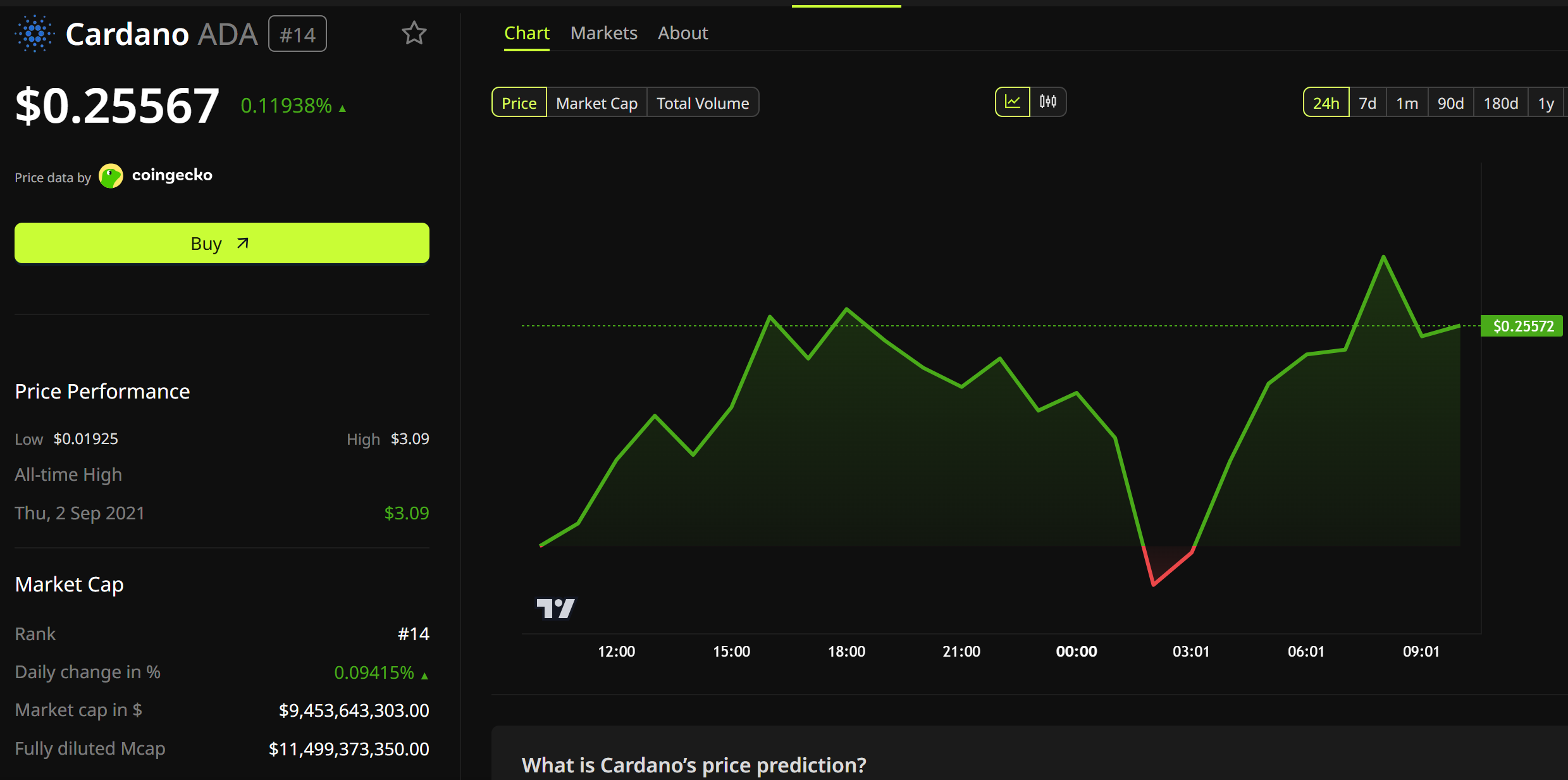
ADA was trading near $0.25 at its 14th market cap, down about 5% over the week, according to BeInCrypto data.

Other networks face the same math. Bitcoin alone Holds billions of exposed coins Sitting at addresses that contain exposed public keys. Previous research on Q-Day forecasts has pointed to the same risk.
“This gives us an average estimate about 10 years before modern public-key cryptography is finally broken. (However, it could happen sooner! It’s not a point estimate, but a fuzzy distribution on both the downside and the upside.)” Haseeb Qureshi, Managing Partner at DragonflyHe said.
Cardano is based on network-based standards
Cardano’s defense focuses on network problems such as learning with errors, which are believed to be resistant to classical and quantum attacks.
The team plans to incorporate US NIST FIPS standards 203 through 206 into its roadmap. This specification formalizes the ML-KEM, ML-DSA, SLH-DSA and Falcon signatures.
Hoskinson compared Cardano’s governance and hard fork cadence to chains that have more difficulty Coordination on immigration.
He pointed to an upcoming research proposal by Cardano on quantum resistance.
Community votes on the broader strategy are already underway. Parallel test network Subtracted from Solana Similar movements are seen elsewhere.
“Quantum computers don’t exist yet, but the Solana Foundation is preparing for the possibility. To that end, we have consulted with Project Eleven to assess our quantum readiness. We are pleased to announce a first step, deploying post-quantum signatures on the Solana testnet.”booksSolana Foundation in publication.
Whether a 2033 frame can be maintained depends on the advancement of hardware, error correction, and fault tolerance. These obstacles remain unresolved to this day.
this post Cardano founder warns that quantum threat to cryptocurrencies may arrive before 2033 appeared first on BeInCrypto.



