

- A decline in the US Dollar Index may mark the beginning of the end.
- Rumors of currency intervention sent the USD/JPY lower.
The US dollar fell to its lowest level in two weeks amid disappointing labor market numbers. Nonfarm payrolls rose by 57,000 in June and were revised down by 74,000 for April and May. The decline in the unemployment rate to 4.2% is due to a decline in the labor force and not to an acceleration in hiring.
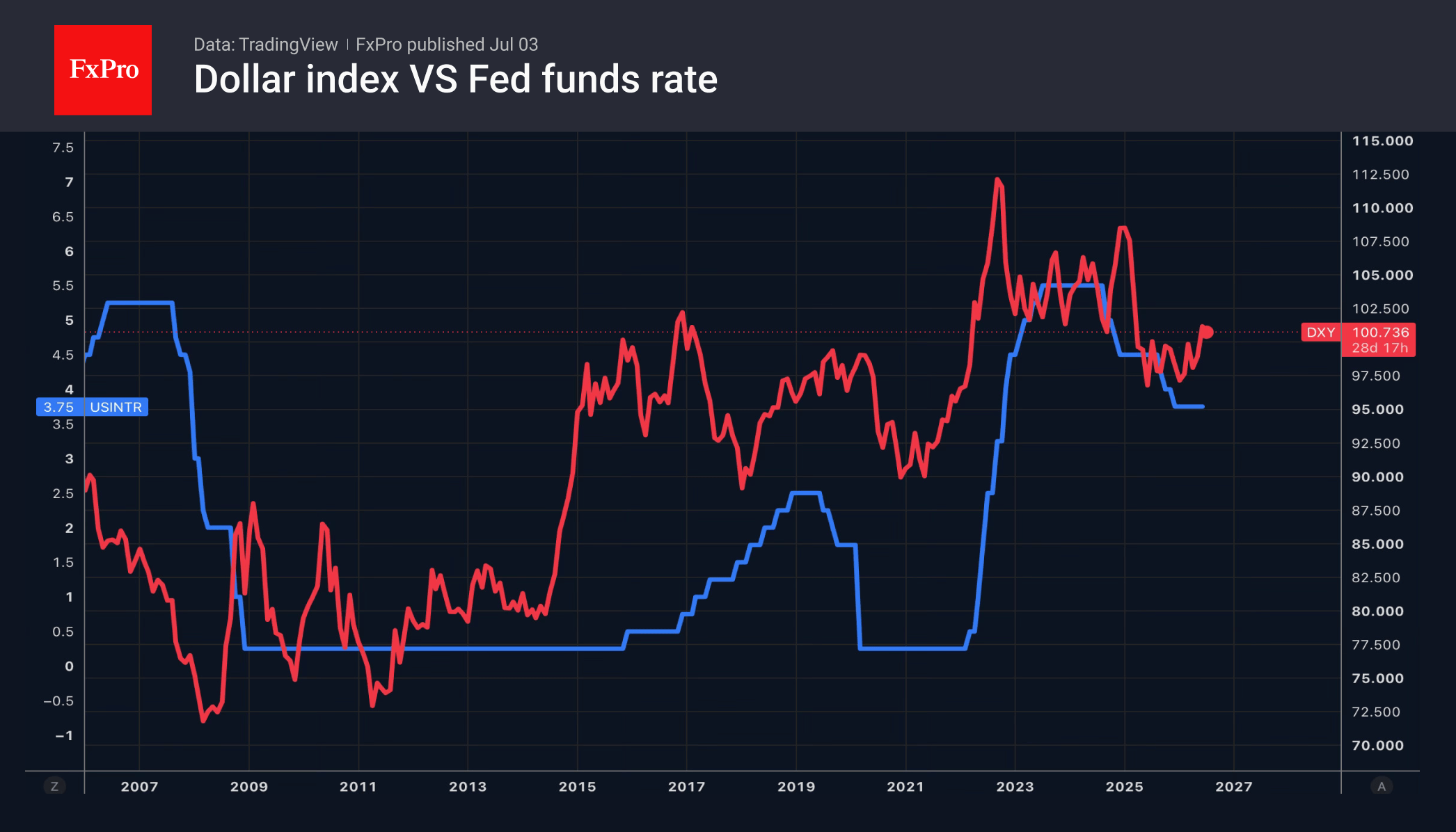
Against the backdrop of these numbers, the probability of raising interest rates in July declined from 30% to 20% in the markets. The probability of a rise by September decreased from 64% to 53%; The probability of an increase by the end of the year decreased from 83% to 78%. This puts pressure on the dollar. Earlier, speculators increased their net long positions in the US currency to the highest level in a year and a half, making this trade highly concentrated. Profit taking became the catalyst for the rise of the euro against the US dollar.
According to Credit Agricole, the US dollar appears to be overbought and overvalued. In fact, the Fed may not be as “hawkish” as markets think. Eurizon SLJ Capital confirms that investors have already extracted everything they can to get out of the rising US dollar index. The positive emotions have been fully priced in; It’s time to make profits.
TD Securities says that as global GDP accelerates and risk premia narrow, the spread in interest rates between the US and the rest of the world will narrow, weakening the US currency in the second half of the year. The stabilization of the international situation following the turmoil caused by tariffs and the conflict in the Middle East could also lead to a decline in the dollar exchange rate.
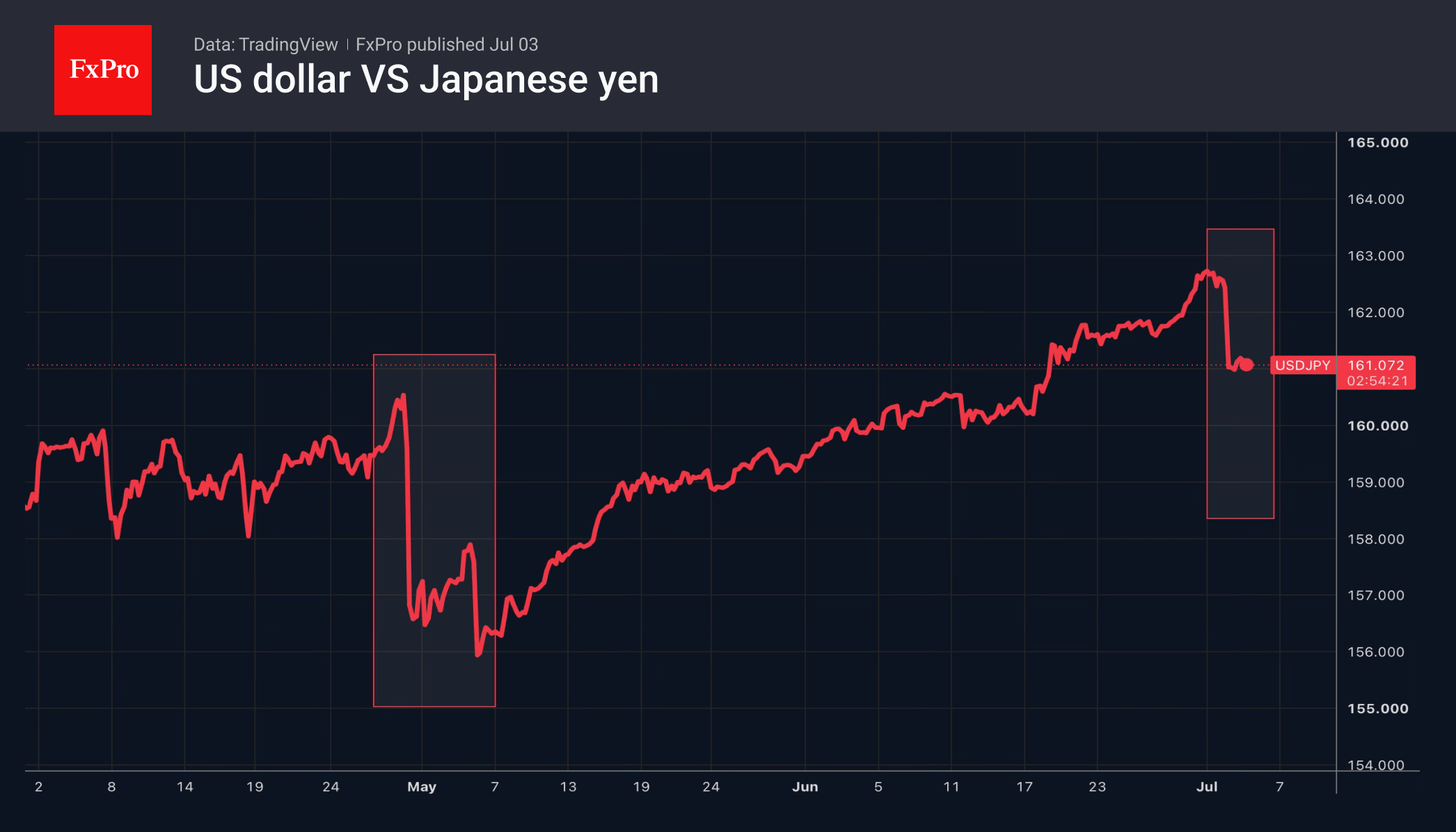
Meanwhile, the sharp decline in USDJPY since Japan’s currency interventions in April and May has raised speculation about whether the authorities have resumed such practices. Was there intervention in the Forex market, or did speculators’ fears prompt them to close selling positions on their own?
The Reuters report and Atsushi Mimura’s speech sparked a broad sell-off in USDJPY. The news agency claims that the government has adopted a new tactic: instead of giving a warning about currency interventions, as it did at the end of April, it will now rely on the element of surprise. The chief currency official and deputy finance minister for international affairs stated that the previous intervention was justified, and that the United States does not object to such actions, but rather supports them.
the So they broke Analyst team



