
Key points
- Greg Brockman, president of OpenAI, revealed that Elon Musk tried to take full control of the organization in 2017.
- Musk has reportedly asked for $80 billion for his Mars colonization project, and viewed OpenAI as a fundraising vehicle
- Brockman recounted his fear of a physical altercation with Musk during a contentious boardroom encounter
- After his ownership claims were rejected, Musk suddenly came out and threatened to cut off financial support
- OpenAI is considering a massive $1 trillion IPO in 2026; SpaceX plans to go public in June
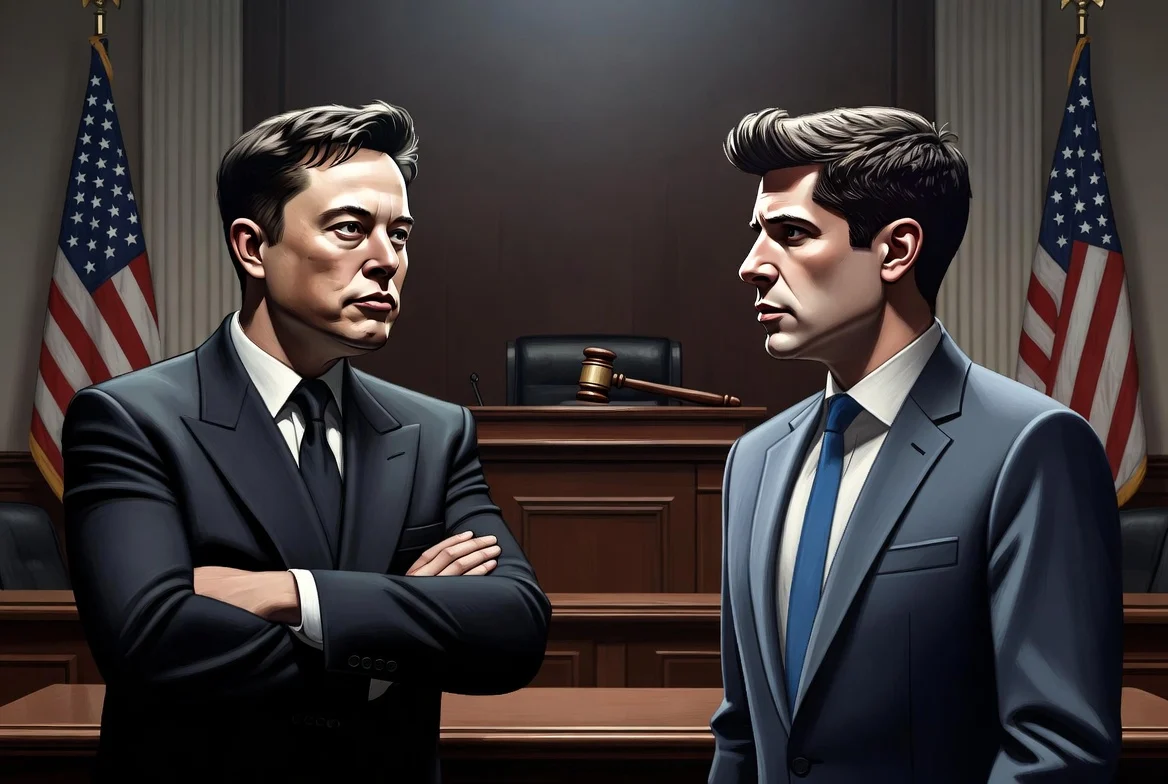
In dramatic court testimony this week, Greg Brockman, co-founder and president of OpenAI, made dramatic revelations about his company’s troubled relationship with Elon Musk. Speaking from a federal courtroom in Oakland, California, Brockman provided an unprecedented view into the legal dispute between the billionaire businessman and an artificial intelligence company.
During his testimony, Brockman described a crucial meeting in August 2017 in which Musk asserted that he deserved control of OpenAI based on his proven business accomplishments. Tesla CEO also expressed his desire to take over leadership of the organization, with Brockman indicating that Sam Altman is considered the only alternative candidate for this position.
As discussions turned to equity arrangements that Musk opposed, the atmosphere became volatile. “I actually thought he was going to hit me,” Brockman recalled in the courtroom. Musk responded by saying “I refuse” before abruptly leaving the room.
After his dramatic exit, Musk announced that he would stop providing funding ((LINK_START_0))OpenAI((LINK_END_0)) until his demands were met. Since the company’s founding in 2015, Musk has been one of its primary financial shareholders.
Brockman’s testimony also revealed that Musk called for turning OpenAI into a for-profit entity during this period. The justification given by Musk was that a non-profit structure would not be able to secure the massive capital required to develop cutting-edge artificial intelligence.
Martian ambition factor
Perhaps the most notable revelation of Brockman’s testimony is the link between Musk’s requirements for control and his interplanetary aspirations. According to Brockman, Musk He revealed he needs roughly $80 billion to create a working city on Mars, and believes taking control of OpenAI will provide a path to raising that money.
This calculation is consistent with SpaceX’s actual management decision as of January 2026. The company’s board of directors authorized Musk to be awarded 200 million super-voting shares on the condition that SpaceX achieves a $7.5 trillion valuation and Musk succeeds in establishing a Martian colony with a population of at least 1 million.
Musk severed his board’s ties with OpenAI in February 2018, leaving before the organization launched ChatGPT and achieved its current status as one of the most valuable companies in the technology sector.
OpenAI asserts that Musk’s lawsuit stems in part from resentment at losing the opportunity to share in such extraordinary success. The company also says the lawsuit bolsters its rival artificial intelligence project, xAI, which was merged with SpaceX in February 2026.
Future paths for OpenAI and SpaceX
Following Brockman’s appearance, former OpenAI board member Shevon Zillis is expected to testify. Zillis, who has four children with Musk, resigned from the board in March 2023, coinciding with Musk’s creation of xAI.
OpenAI has entered preliminary discussions with major investment banks regarding a potential $1 trillion IPO, which could materialize in late 2026. Rival AI firm Anthropic has indicated similar timing for the IPO.
SpaceX has filed confidential paperwork with US regulatory authorities and is preparing for its stock market debut in June 2026.




