

After merging Layer 1 (L1) and Layer 2 (L2) of Ethereum (ETH) into one comprehensive roadmap, the scaling upgrades appear to be successful. For example, Pectra Upgrade expanded L2 blob throughput, while Fusaka Upgrade increased data availability by 8x.
This is not just a fad. It is supported by recent on-chain data. Here are the details:
Peak usage meets minimum cost – what does that mean?
Overlaying the cost of transactions with the number of activities on the blockchain is a powerful tool to evaluate whether scaling upgrades are successful or not.
Number of weekly transactions on Ethereum It reached an all-time high of 1.8 million, and at one point reached 21 million. This indicates peak network usage. This represents a 15% increase in the number of monthly transactions.
On the other hand, the average transaction fee was at an all-time low (ATL) of $0.008. This difference in cost over the number of transactions indicates that Ethereum’s scaling upgrades have been successful.
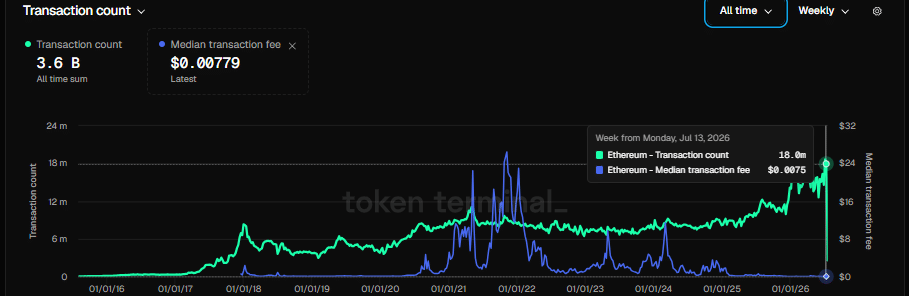
To confirm this hypothesis that Ethereum’s scaling upgrades have been successful, we need to look at the activity on L2s.
Other supporting data sets
For example, the total point fee reached 1.492 million ETH according to Dune analyses. This demonstrates the adoption of upstream Danksharding technology, an upgrade that saves transaction costs through space-saving temporary data points.
It indicates that the increased demand has shifted to L2 while settlement remains on the Ethereum mainnet.
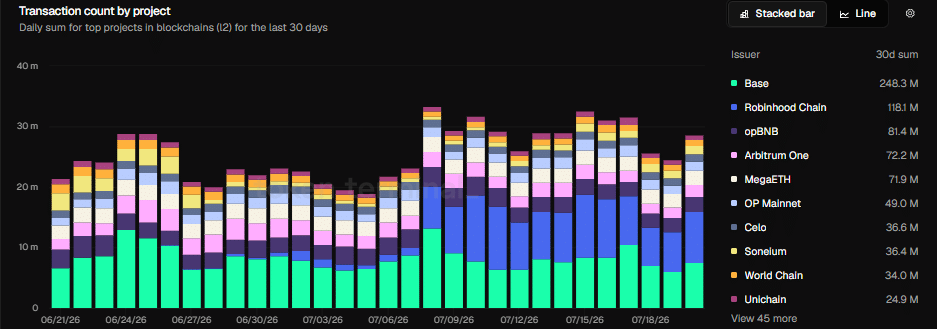
Transactions on L2s have also risen significantly since late June, led by Robinhood Chain. It leads the monthly change in the number of transactions at 30,922% and represents 13.9% of all transactions by L2s.
However, the majority of L2 transactions are on-base, about 248.3 million, accounting for 29.1%. Core chain transactions rose 13.4%, behind Arbitrum One (ARB) and Optimism (OP), at 22.2% and 19.2%, respectively.
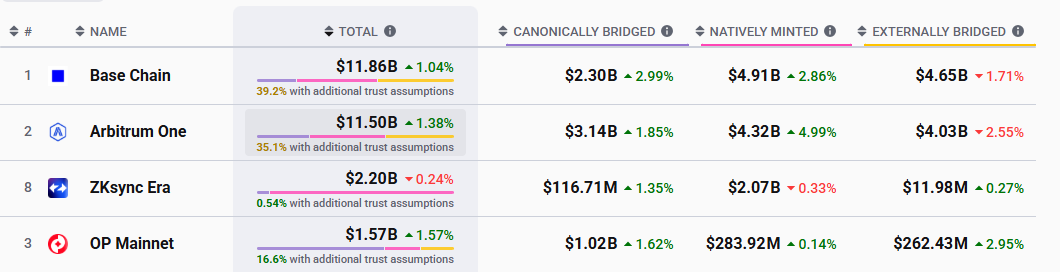
Likewise, the total value locked (TVL) of L2s is growing, indicating that the ecosystem is expanding. For L2, the total is $37.41 billion, roughly half of the total TVL on the ETH mainnet.
For example, the core chain has the highest TVL, which rose to about $11.86 billion, up 1.04%. Followed by Arbitrum One, ZKsync, and OP Mainnet, all of which work except ZKsync.
Finally, the number of monthly active users on Ethereum increased by 2.9% to about 8.3 million. As such, this meant that Ethereum was not only processing more transactions cheaply, but was also attracting new users and securing more capital.
Final summary
- The number of weekly transactions for Ethereum reaches 18 million while fees remain at ATL, a sign of the success of ecosystem scaling upgrades.
- The increase in Blob, transaction, and TVL fees for L2s indicates a comprehensive upgrade across the entire Ethereum ecosystem.



