

Tldr:
- The odds of a Fed rate hike rose to 38% after Brent crude surpassed $100, reversing previous market confidence in near-term interest rate cuts.
- Two-year Treasury yields reached 4.37%, while the 10-year yield approached 4.7%, adding to funding pressure across stocks, housing and cryptocurrencies.
- The June CPI fell to 3.5%, but May PCE inflation reached 4.1%, leaving policymakers divided ahead of a policy meeting scheduled for July 28-29.
- Bitcoin traded near $64,000, as rising bond yields and strong cash yields reduced the appeal of volatile, non-yielding risk assets.
Investors sharply increased their bets on a rate hike by the Federal Reserve after Brent crude briefly rose above $100 a barrel. This increase came in the wake of renewed supply concerns linked to the Iranian conflict and the risks of shipping along major routes in the Middle East. Futures markets are now assigning a 38% chance to a quarter-percentage point increase on July 29, compared to 13% one week ago.
The rise in oil prices also raised Treasury bond yields and tightened financial conditions in global markets. Bitcoin was trading near $64,000 During a volatile trading week. Investors are reevaluating demand for risky assets ahead of the Federal Open Market Committee’s policy decision scheduled next week.
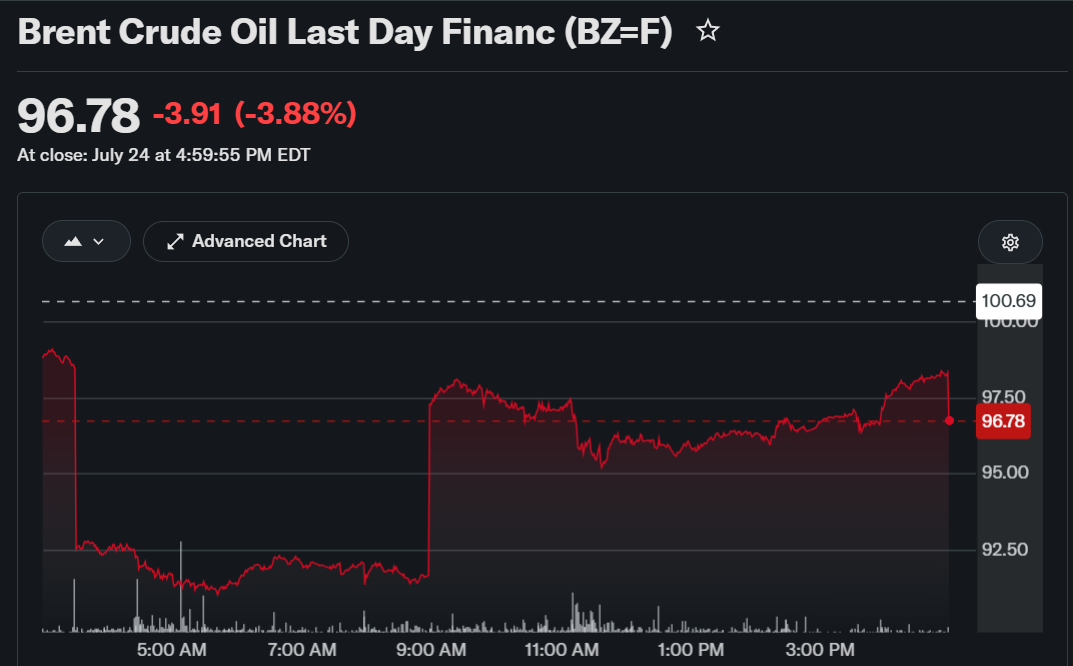
Fed rate hike bets rise as oil-fueled inflation
Brent crude It settled above $100 on Thursday after rising 7% during the session. WTI also rose above $92, as traders priced in potential supply disruptions. The move put Brent crude about 25% above its level at the Fed’s June meeting. High fuel costs can quickly hit transportation, manufacturing, and household budgets.
The inflation picture gives mixed signals to policymakers. Consumer prices in June fell by 0.4% compared to May, while annual inflation slowed to 3.5%. The core inflation rate stabilized at 2.6%, providing support to officials who prefer patience. However, the PCE inflation rate in May reached 4.1%, while the core PCE inflation rate reached 3.4%. Both readings are well above the Fed’s 2% target.
The central bank kept its federal funds target at 3.5% to 3.75% in June. The bank’s statement said inflation remained high due to supply shocks, including energy. A rate hike by the Fed next week would raise the range by 25 basis points. It also represents a rapid response to renewed inflation pressures.

Short-term Treasury yields reflect that policy risk. The two-year yield reached 4.37% on July 23, its highest level since early 2025. The yield on 10-year bonds is close to 4.7%, raising borrowing costs for companies and households. Higher Treasury yields can put pressure on stock valuations, mortgage rates and speculative assets.
The Chicago Mercantile Exchange said trading in federal funds futures was 50% higher than before the similar July 2025 decision. This volume reflects widespread uncertainty about whether policymakers will act immediately or wait for more evidence of inflation.
Risks of a Fed rate hike are weighing on Bitcoin markets
Bitcoin faces a difficult backdrop as yields rise and liquidity expectations weaken. The asset traded near $63,993 on July 25 after ranging between roughly $63,700 and $65,055. An interest rate hike by the Federal Reserve may increase demand for cash and government bonds. These instruments provide income without Bitcoin price fluctuations.
The oil shock also creates a political problem that interest rates cannot solve directly. High borrowing costs may reduce demand, but they cannot restore disrupted crude oil supplies. Which Barter increases Recession is feared if energy prices remain high while credit conditions tighten. Therefore, investors should follow inflation data and geopolitical developments.
Fed officials appear divided ahead of the July 28-29 meeting. Some policymakers have argued that inflation requires faster action. Others prefer to wait until September for more evidence on prices and economic activity. This disagreement leaves markets sensitive to every oil movement, public comment, and inflation release.
The next PCE report will arrive on July 30, one day after the Fed’s decision. Policymakers will not receive this data before voting. They should instead evaluate June’s consumer price index, May’s personal consumption expenditures, energy markets, tariffs, services inflation, and business conditions. This limited information increases the risk of splitting the committee.
Oil prices The price of Brent crude fell below $100 on Friday, but Brent crude is still close to $96.78. A sustained pullback could reduce immediate pressure to raise interest rates on the Fed. Another supply disruption could quickly reverse this easing. Markets will be watching the Strait of Hormuz, shipping in the Red Sea, Treasury yields and the Federal Reserve’s guidance through Wednesday.




