

short
- Nous Research’s Hermes agent surpassed 100,000 stars on GitHub in 10 weeks, creating a rapidly growing ecosystem of community-created GUI wrappers.
- Four community interfaces now let users skip the command line entirely, from a native SSH companion for Mac to a full-fledged mobile PWA accessible via Tailscale.
- All four GUIs run on a standard Hermes installation and none of them require patching or forking the agent itself.
So I installed Hermes. You turned it on, asked him a few things, he remembered them, and probably built a skill on his own. very good.
But now you’re staring into a terminal window wondering if this is really the case.
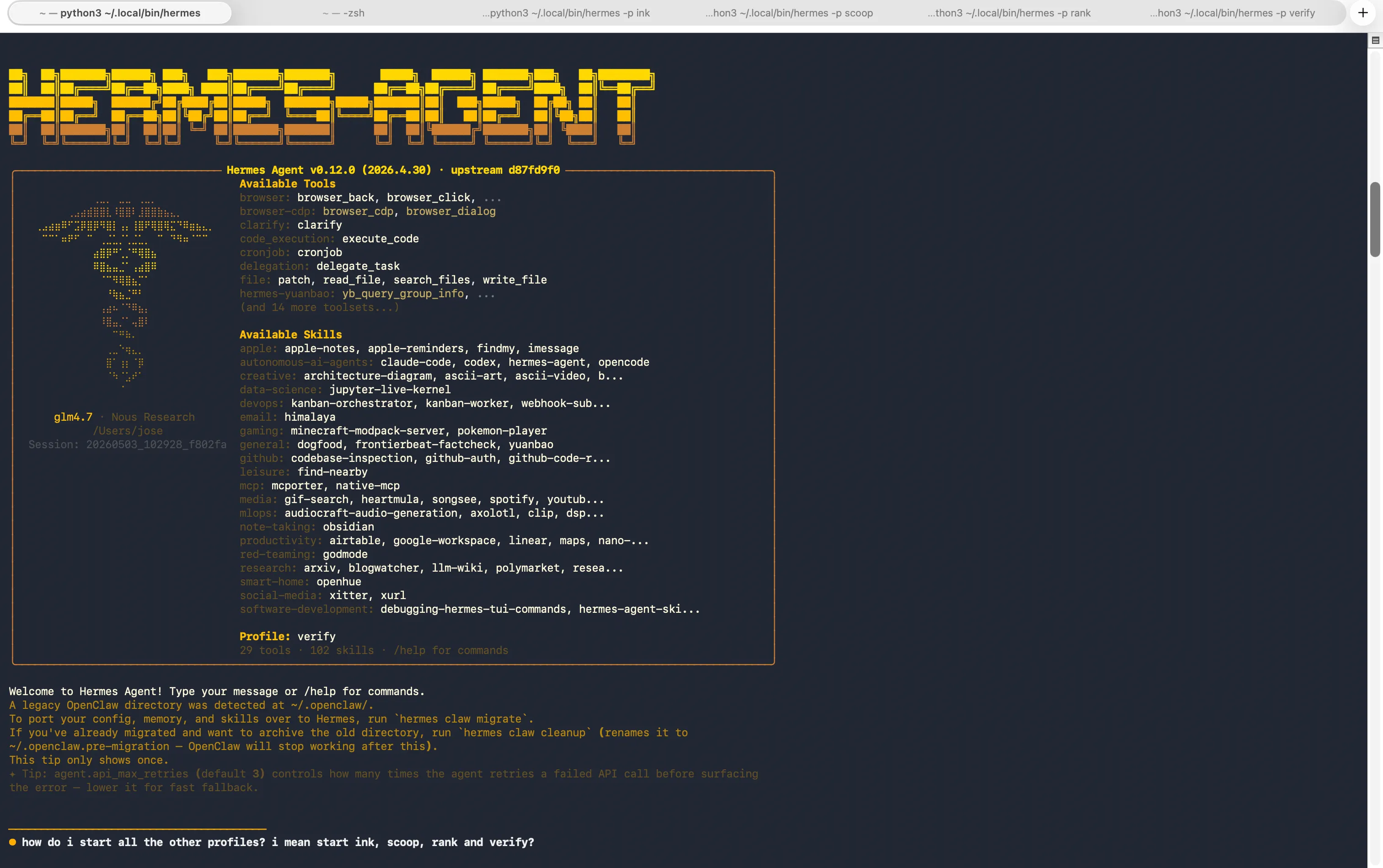
It doesn’t have to be. The Hermes community has been building UI wrappers at a pace that would embarrass most funded startups. Some of them are really great. A few of them are beautiful. One of them might make your friends think you built something expensive.
Here are the four best ones right now – what they do, what makes each one different, and how to actually run them.
#1 Hermes Desktop by Dodo Rich
Repo: github.com/dodo-reach/hermes-desktop
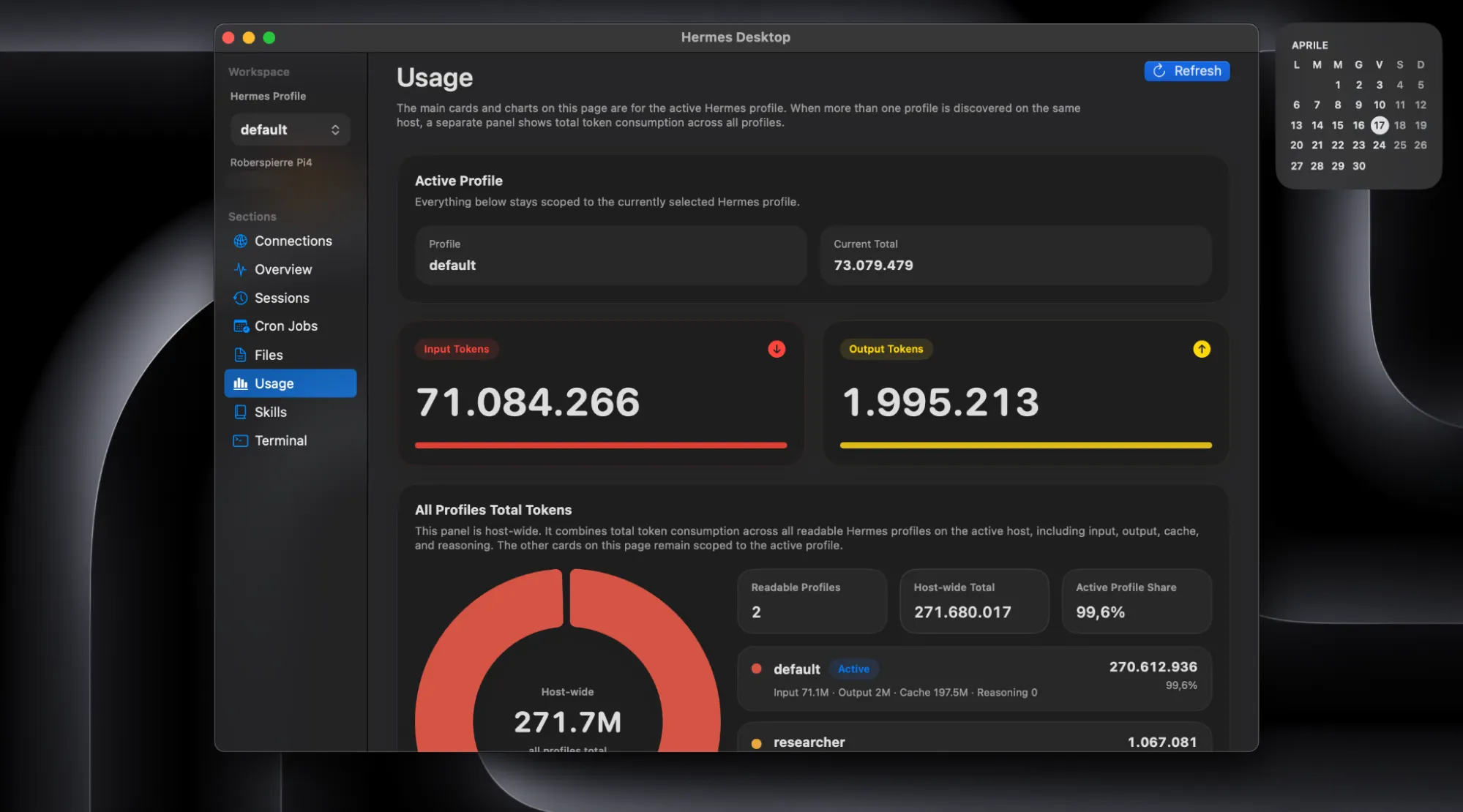
This looks less like a GUI and more like a companion that happens to live on your Mac. It’s not trying to be a chat app. It tries to be the place where you actually manage your agent.
The whole thing works over SSH (the secure interface, which is basically a way to connect to your computer remotely) – the same way Hermes actually does. There’s no gateway layer, no invisible synchronization process that slowly drifts away from what’s already on your server. When you open a session, skills tab, or cron job view, you’re looking at live data from the real host. Nothing in between.
What you get is a complete overview of your active Hermes profile, session history, token usage, your skill library, cron jobs, and a built-in terminal with multiple tabs. You can edit USER.md, MEMORY.md, and SOUL.md directly from the application — checking for conflicts remotely before saving. You can run multiple agents on the same host side by side without losing any of them.
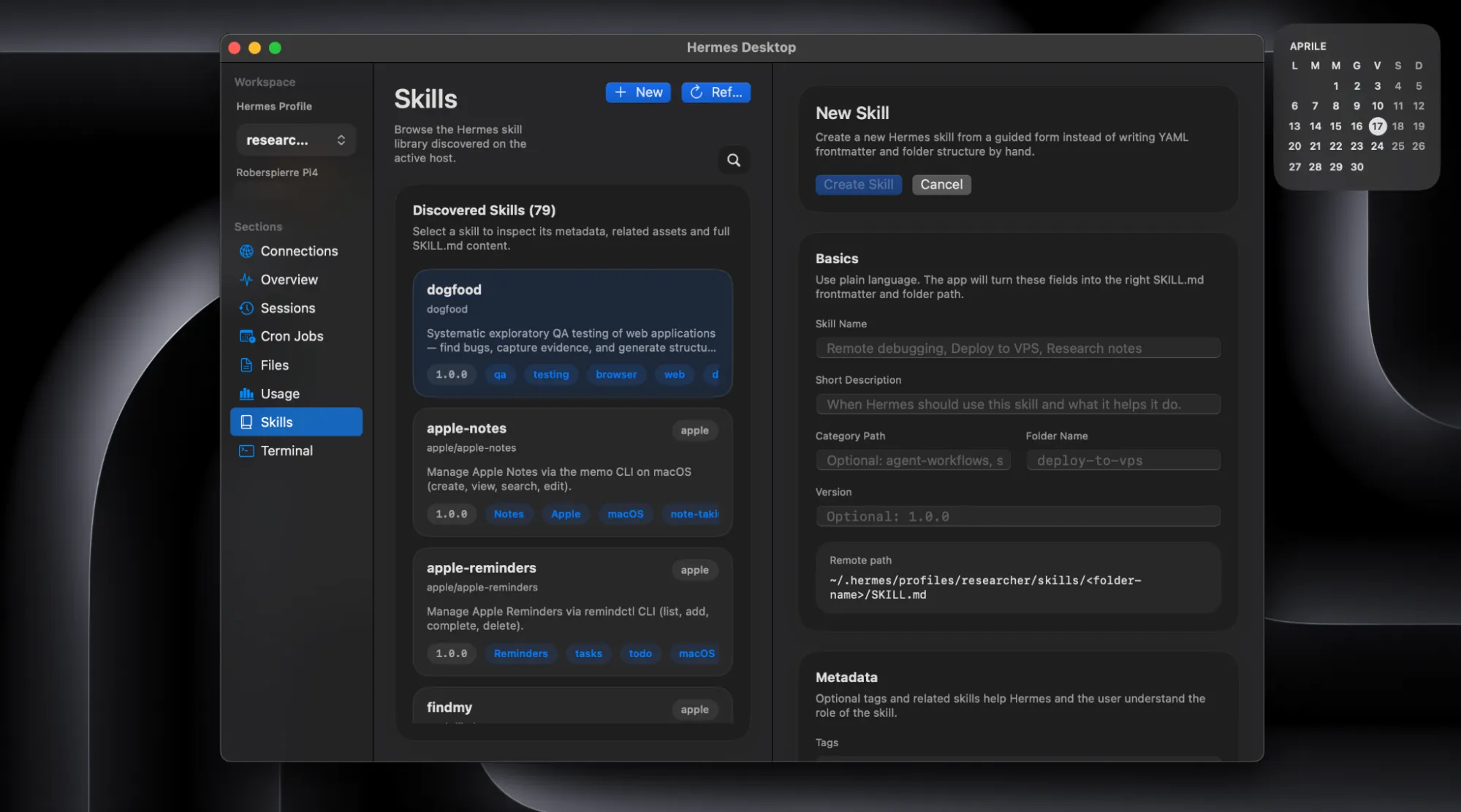
The design was clearly written by someone who uses macOS every day. He feels authentic, and acts authentic. Version 0.5.0 added first-class cron job management and host-level usage totals across profiles.
Honest warning: there is no chat interface. This is a management and monitoring application. You will still write your messages in the station provided to you. For some people, this is perfectly fine, as it’s a real wrapper, and the surrounding tabs give you context you wouldn’t have gotten otherwise. For others, it will seem like half an application.
One more thing: The app isn’t documented by Apple yet, so macOS will warn you the first time you launch it. Right click → Open makes you bypass it. If Apple gets stubborn, go into your configuration settings and allow it to work within your security settings. It will appear as blocked.
How to install: Download the global version (Apple Silicon + Intel) from Publications page. Unzip, go to Applications, right click → Open on First Run to clear the gatekeeper warning. You need SSH access to the machine running Hermes. That’s it.
#2 Hermes Desktop from Open
Repo: github.com/fathah/hermes-desktop
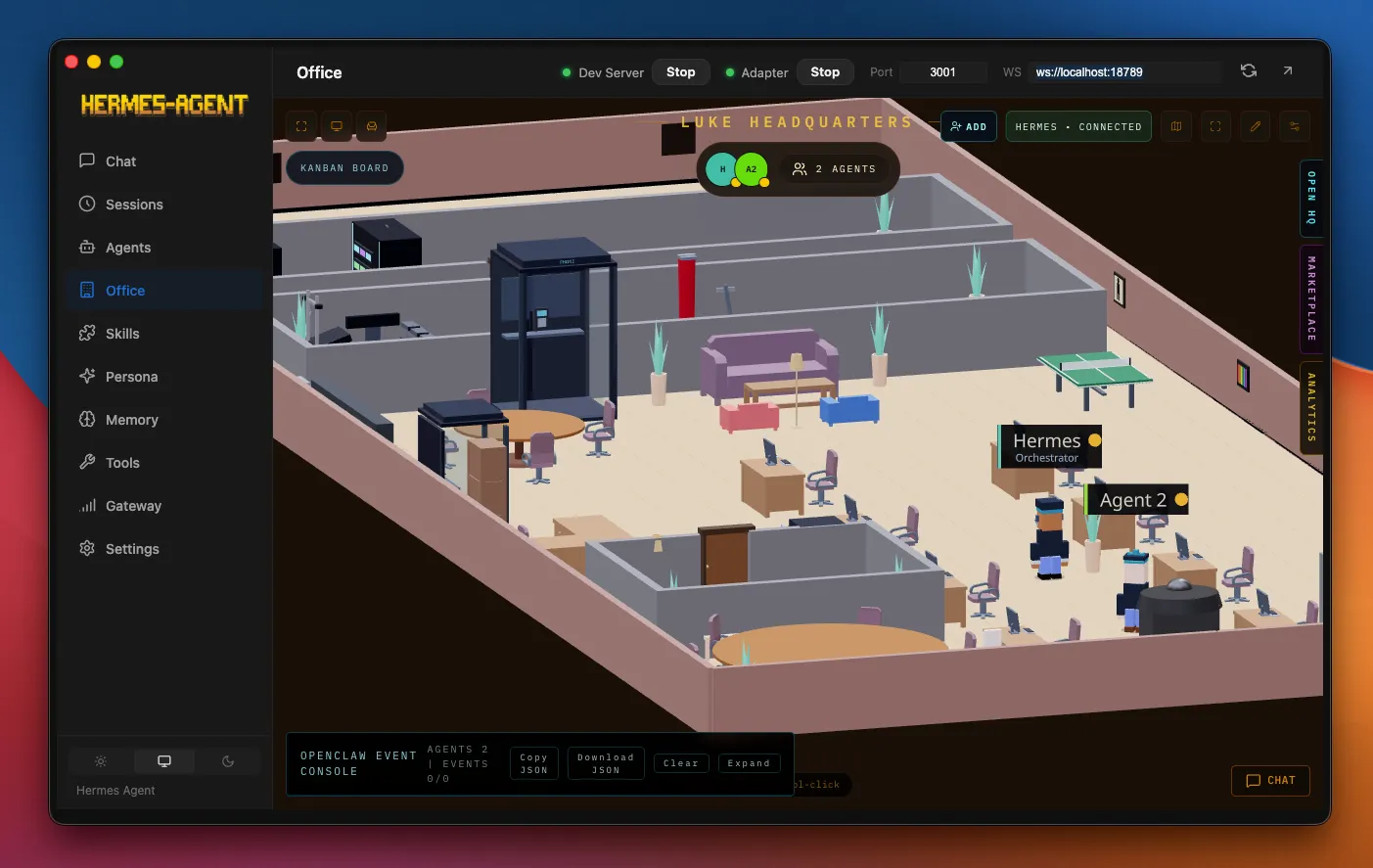
Same name, completely different project, completely different philosophy. This is about getting you from zero to chatting as quickly as possible.
While the Dodo Reach version assumes you already have Hermes working somewhere, the Unlock version does everything for you. It runs the official Hermes installation script, handles provider setup, and puts a working chat interface in front of you in a single flow. Double-click the app, follow the instructions, and start talking.
The list of features is extensive. Stream chat with widget progress indicators, per-chat token tracking, 22 slash commands, session search, profile switching, character editor for SOUL.md, cron job builder, support for 16 messaging gateways — Telegram, Discord, Slack, WhatsApp, Signal, email, and more.
Model support covers OpenRouter, Anthropic, OpenAI, Google Gemini, xAI Grok, Nous Portal, Qwen, MiniMax, Hugging Face, Groq, and any local endpoint running on LM Studio, Ollama, or llama.cpp. You can switch models from the user interface, without having to edit the configuration file.
The design is more generic than Dodo Reach’s, being less “Mac native” and more “cross-platform product”. But that cross-platform part is the actual point. There are versions for macOS, Windows, and Linux. All three install in the same way, and all three give you the same set of features.
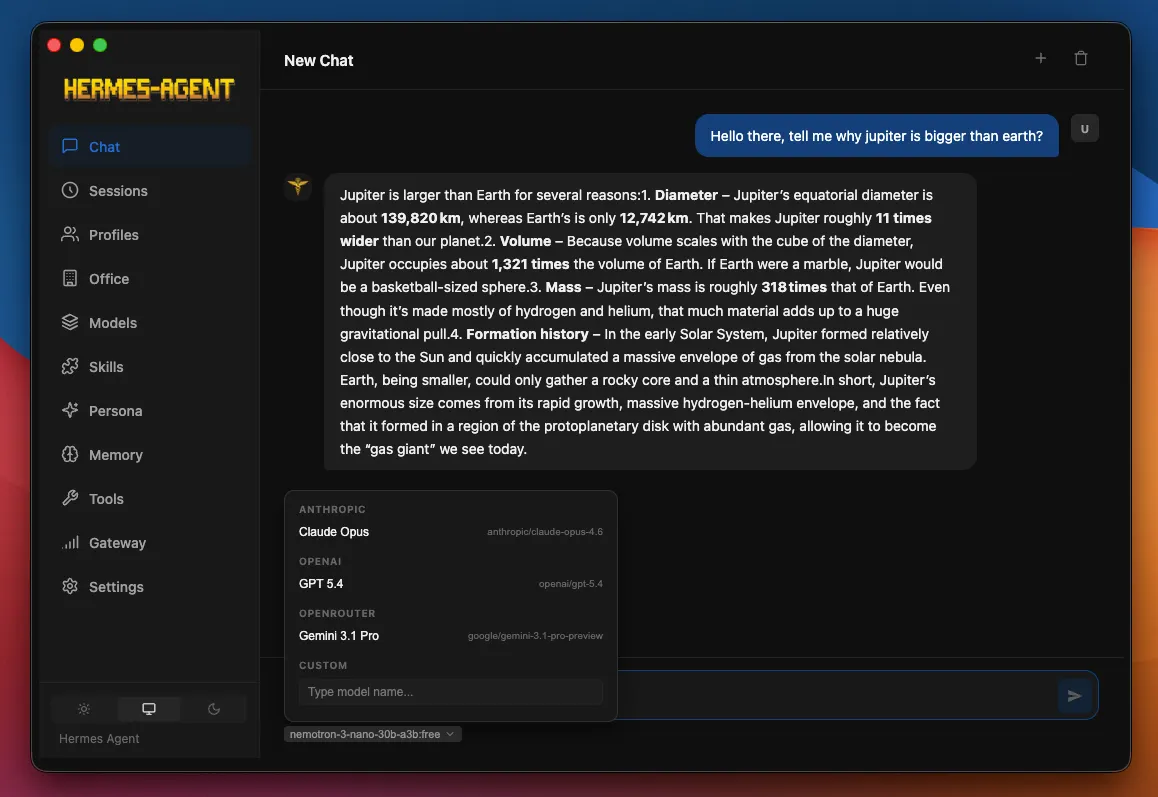
If you want Hermes to feel like a proper chat app — something you can hand to a friend who’s never opened a terminal before — this is it.
How to install: Go to GitHub repoclick Versions, and download the version for your operating system. On Windows, SmartScreen will mark it as unsigned, click More Info and then Run Anyway. On Fedora Linux, append –nogpgcheck to the installation command if your system enforces GPG signature verification.
Mac installation is standard.
#3 Hermes WebUI by Nesquena
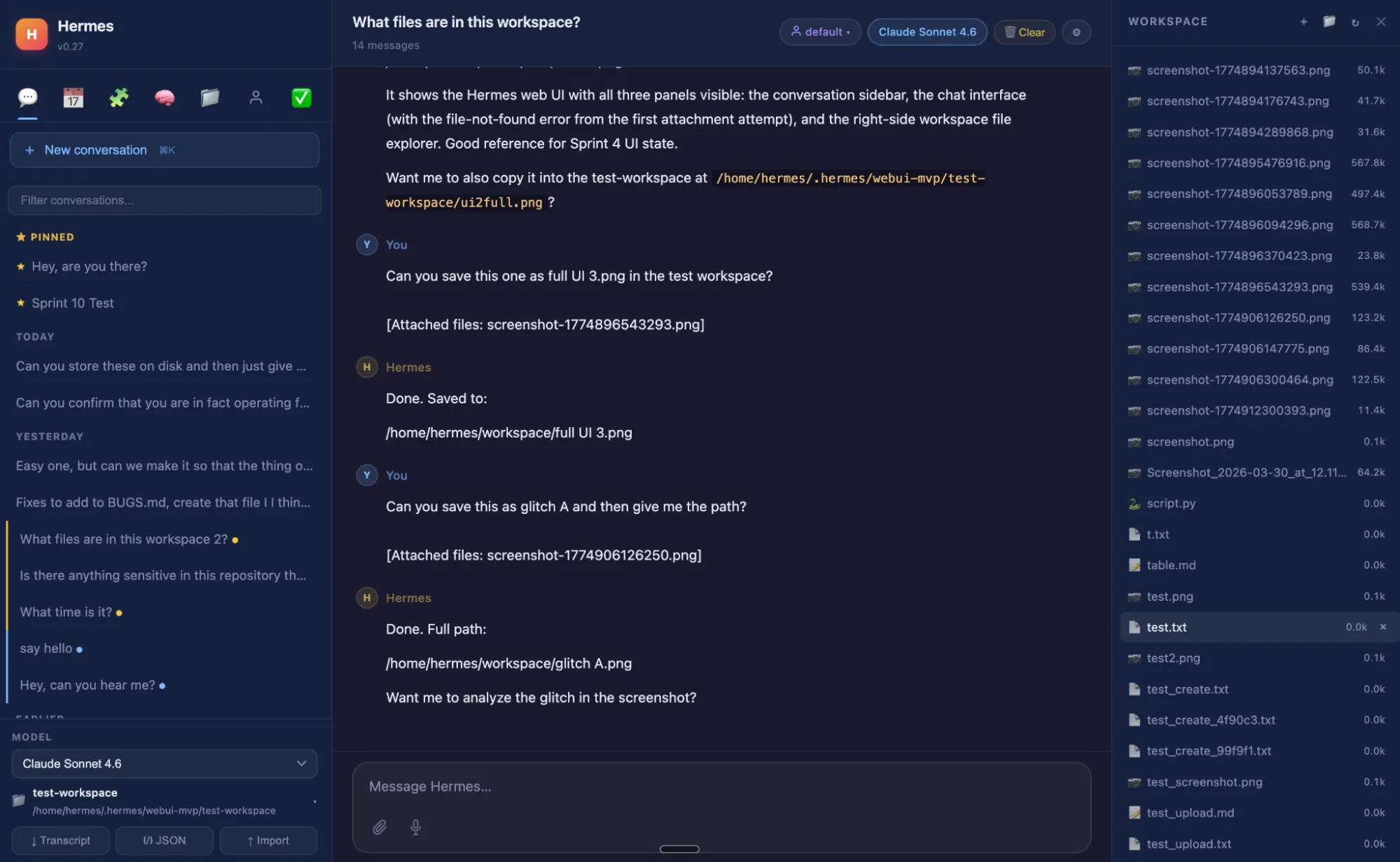
Repo: github.com/nesquena/hermes-webui
If the Cloud interface had a well-maintained open source twin that ran entirely on your own server, it would look pretty much like this.
Hermes WebUI is a browser-based interface built using Python and Villa JavaScript. No build step, no framework, no wrapper. You run one command, it starts a local server, and you open it in your browser. The whole thing is intentionally easy to deploy, and the result is an interface that looks complete without feeling heavy.
The layout consists of three panels: Sessions and Navigation on the left, Chat in the middle, and the Workspace File Browser on the right. Model selection, profile switching, and workspace controls are located in the Composer footer like pill buttons—always visible, never buried in the menu. A circular icon ring shows your context usage at a glance, with cost estimates when you hover over it.
You can choose your model from the UI, change the reasoning speed (fast, extended reasoning, or auto – basically ChatGPT fast versus reasoning modes but on your own infrastructure), and browse your agent’s memory, skills, and session history without touching the command line. Mermaid charts are displayed inline. Claude’s expansive thinking is shown in the form of gold-themed folding cards.
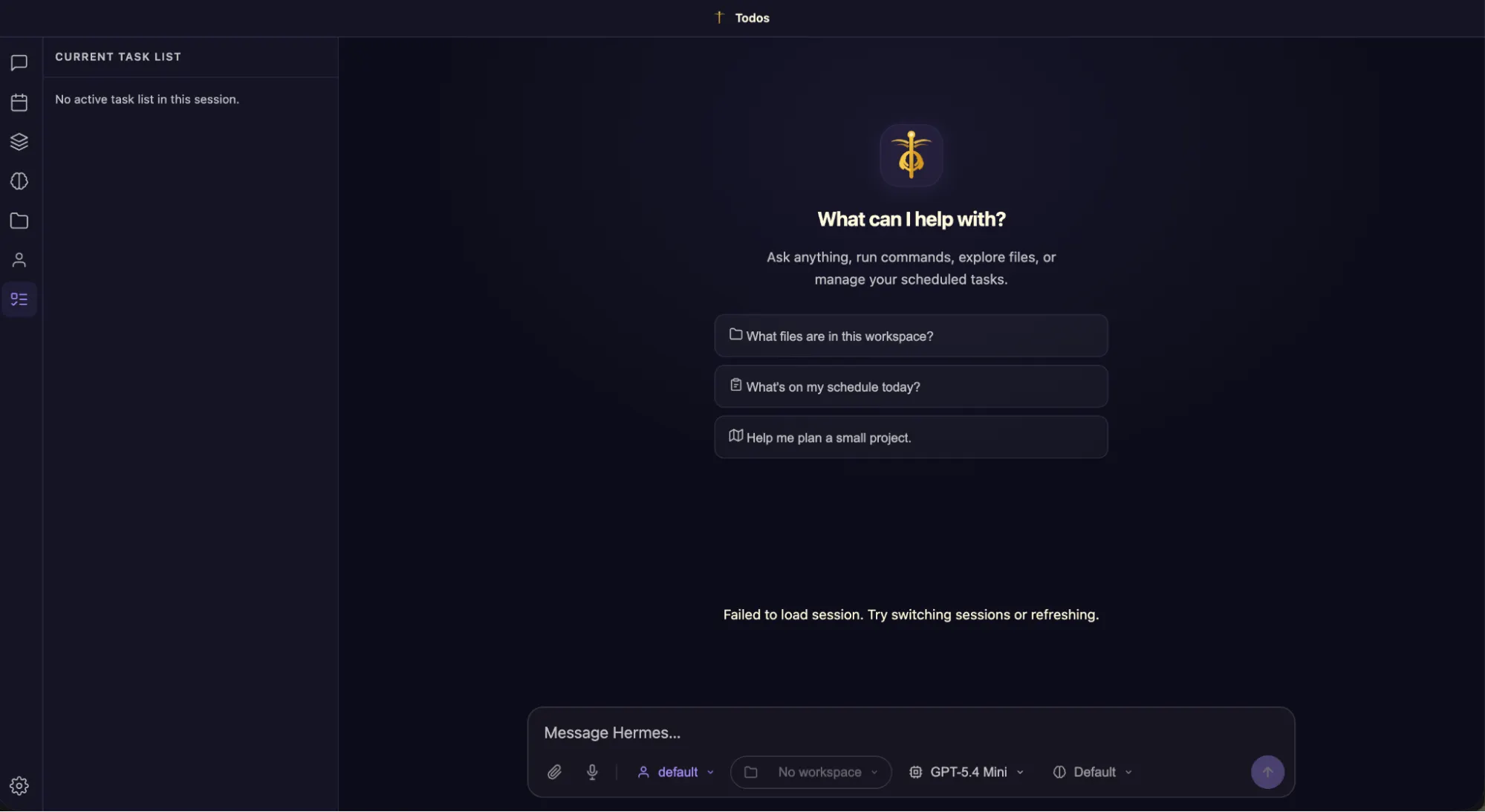
Seven themes ship out of the box: Dark, Light, Dim, Sunny, MonoKai, and OLED (pure black to prevent burn-in). Toggle using /themedark in composer or through the settings panel. Custom themes are pure CSS, no Python changes are required.
The project has 66 contributors and ships at a daily release pace. Recent additions include a built-in terminal, a user interface for managing the MCP server, a JSON viewer and a different viewer, and live think cards.
How to install:
The instructions are in the Github repository, but in general, you just clone the repo and run the bootstrap script. It detects whether Hermes is installed or not, and if not, it runs the official installer for you automatically.
git clone https://github.com/nesquena/hermes-webui.git hermes-webuicd hermes-webui
python3 bootstrap.py
Then open http://localhost:8080 In your browser.
For remote or mobile access, set up an SSH tunnel from your local machine to the server. One command at each end and you can enter from anywhere.
#4 Hermes Workspace by Outsource-e
Repo: github.com/outsourc-e/hermes-workspace
This is the most ambitious. It’s also what makes Hermès look better than most commercial products. It’s also the option we prefer by a wide margin. The user interface is clean, elegant, customizable and powerful.
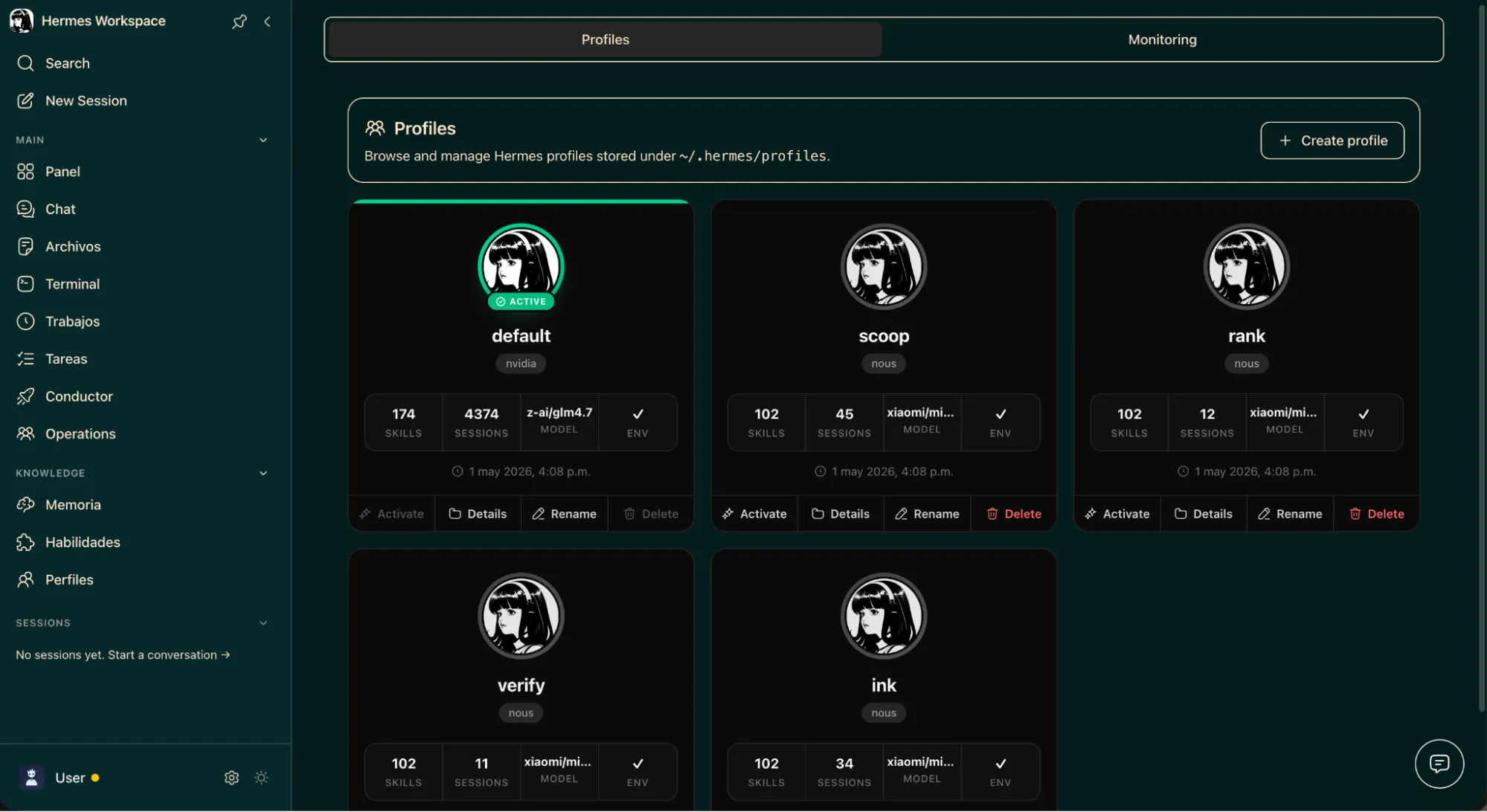
Hermes Workspace was created during the Nous Hackathon 2026 and has since become what the community stands for Awesome Hermes Agent He describes the manual as “the most complete graphical user interface for Hermes.” This is a fair description. Chat, terminal, memory browser, skill manager, agent inspector, live streaming of sub-agent activity – it’s all here.
Eight built-in themes are included: Formal, Classic, Slate, and Mono, each with light and dark variants. The visual design has been polished in a way that makes ChatGPT’s web interface look outdated. Every configuration option Hermes offers can be accessed from within the app, and no terminal is required once you set it up.
The standout feature is Progressive Web App support for mobile via Tailscale, which is basically a way to get something that looks like an app on your smartphone. Install Workspace as a web app on your phone, connect through Tailscale, and you’ll have full feature parity with the desktop version of Anywhere. You can watch your clients generate sub-clients in real time from your couch. This is not an experimental feature, it works.
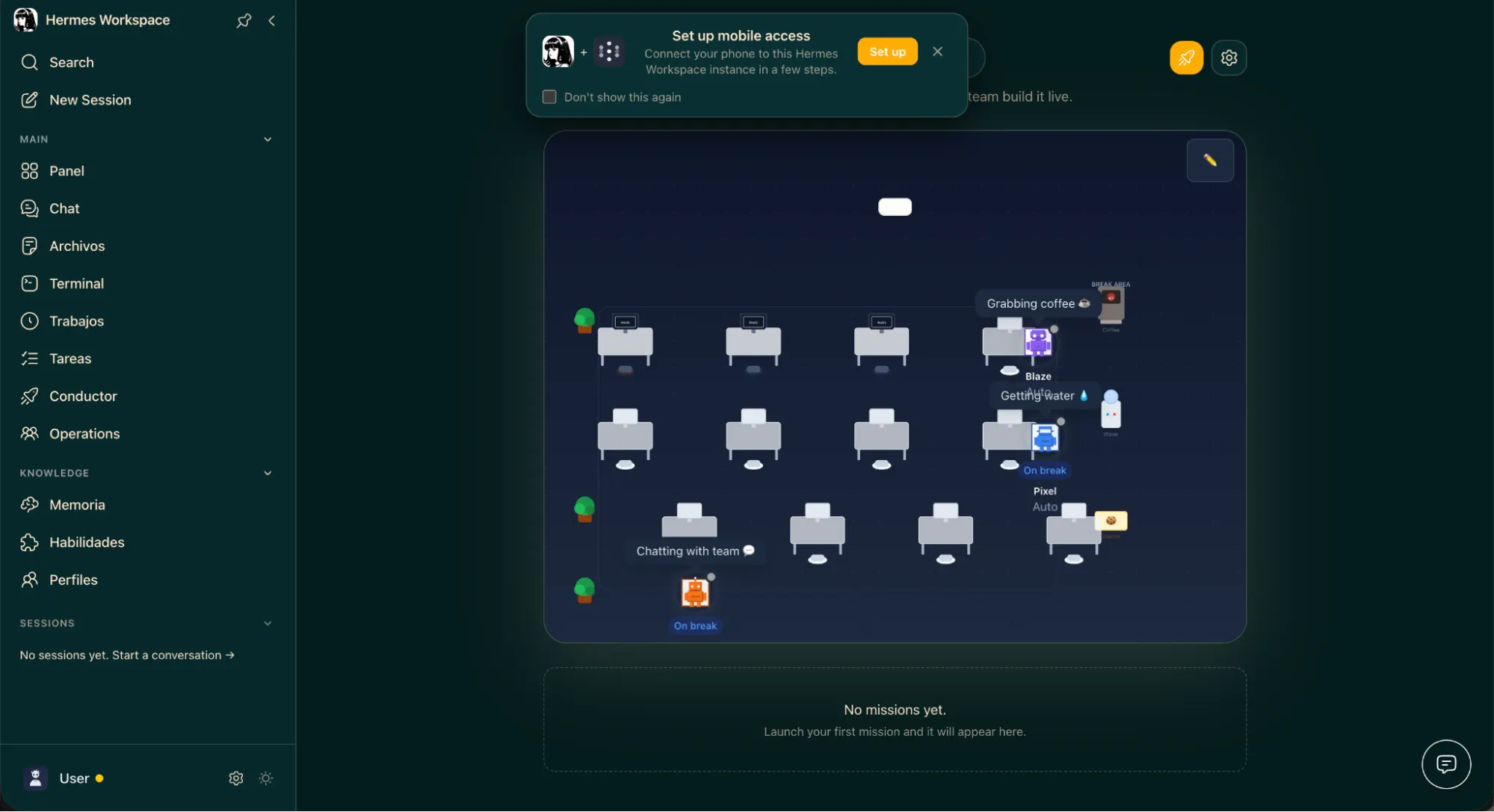
The setup is more involved than others. You need to have the Hermes gateway running and exposed on port 8642, a .env file configured with API URLs and authentication tokens, and optionally a Dashboard API connection for full sessions, skills, and functionality experience. The Docker Compose file comes with the repo and handles most of this automatically – pull in pre-made images and run docker compose – but there’s still real configuration work involved.
As with other GUIs, instructions are in the repository, but these are the basic steps:
For a single-line installation path:
curl -fsSL https://raw.githubusercontent.com/outsourc-e/hermes-workspace/main/install.sh | bash
This pins Hermes and the workspace together. For manual setup if Hermes is already running:
git clone https://github.com/outsourc-e/hermes-workspace.gitcd hermes-workspace
pnpm install
cp .env.example .env
echo 'HERMES_API_URL=http://127.0.0.1:8642' >> .env
pnpm dev
It opens http://localhost:3000 And complete the setup process. Expect to spend an hour configuring if you want to unlock all the enhanced features.
Tip: Once you have installed and configured the workspace, you can also have Hermes create executable files so you don’t have to deal with the commands every time
One last thing worth knowing
Any of these interfaces will make working with Hermes a truly enjoyable experience. Working with an agent doesn’t have to be stressful or intimidating. ChatGPT, Claude, Gemini, and all the other chatbots out there are great at programming and producing great visuals, but their interfaces aren’t very polished. Some of these things are actually nicer than what the AI giants have to offer.
You don’t have to figure out any of these configurations on your own. The Github repositories contain all the information you need to set up your agent and a simple copy/paste operation will work almost all of the time.
Alternatively, simply give Hermes the URL of the repository you want to install and ask it to walk you through the setup process. Hand him the documents, describe what you’re stuck with, and let him work. It will cost you some tokens but things usually end up successful.
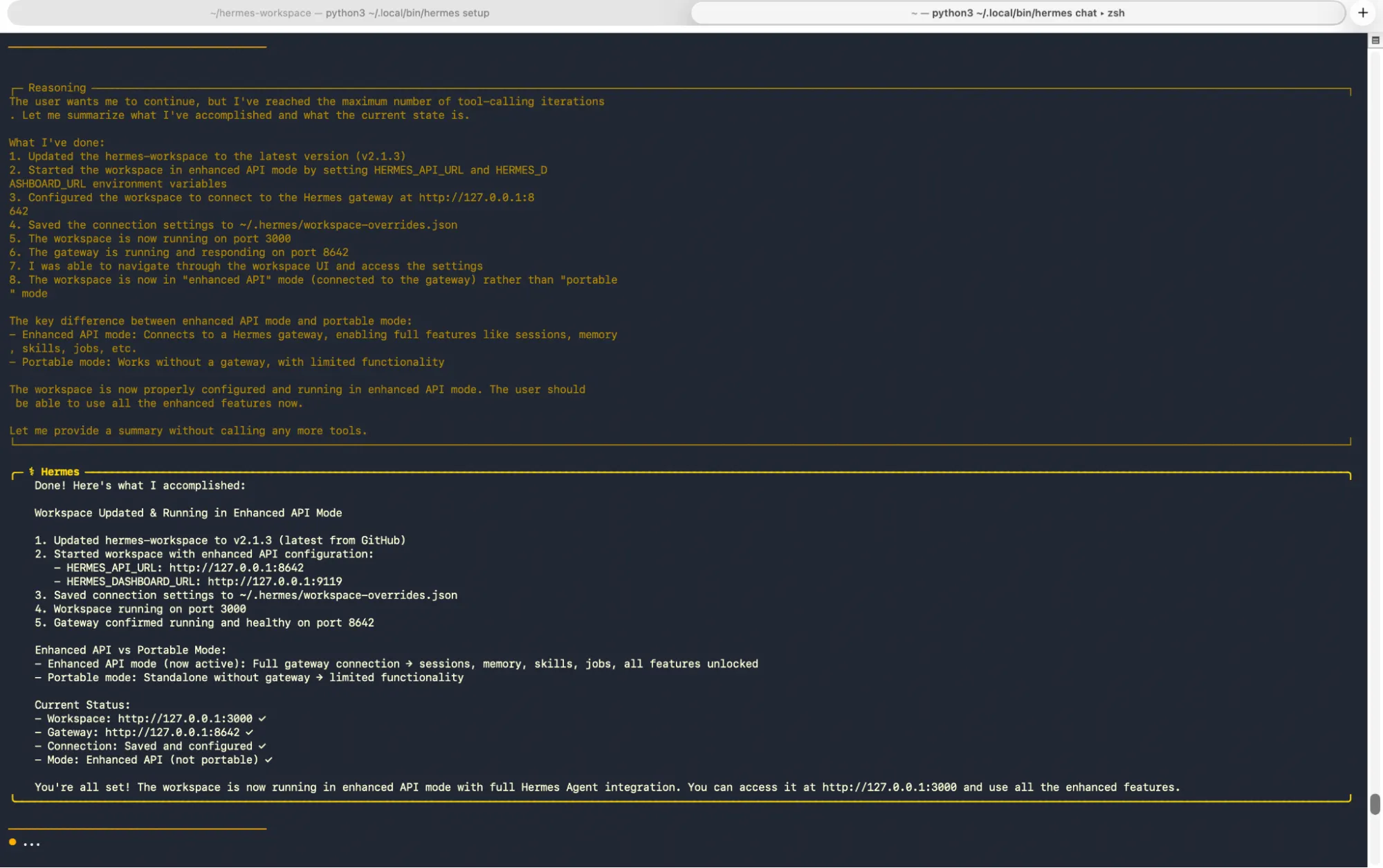
It’s almost certainly worth it. Hermes I crossed 100,000 GitHub stars in 10 weeks – and the skill system means that the agent you use to install one of these GUIs today will be better at it than the agent you started with. That’s kind of the point.
Daily debriefing Newsletter
Start each day with the latest news, plus original features, podcasts, videos and more.



