

Major institutional investors managing trillions in assets are increasingly looking to Canada’s Indigenous equity partnership model as a benchmark for responsible mining investment, according to Adam Matthews, chief responsible investment officer at the Church of England Pensions Board, in a recent interview on Drumbeats, a podcast for investors interested in Indigenous investing in Canada.
“I’m encouraged to see the kind of models you’re showcasing at this event that have been developed by Canada,” Matthews said.
The Canadian Indigenous Investment Summit has sounded the drumbeat. Summit co-chairs Mark Magnaca and Rob Brandt host the program, which includes expert interviews and analysis on economic development within Indigenous communities. Drumbeats focuses on the intersection of Indigenous economic strategies and investment opportunities.
Matthews, who chairs the Global Mining 2030 Investor Committee representing 125 institutional investors with $19 trillion in assets, recently spoke at the 2026 Canadian Indigenous Investing Summit in London, England. He explained how global investment frameworks are evolving to incorporate indigenous rights and partnership structures into capital allocation decisions.
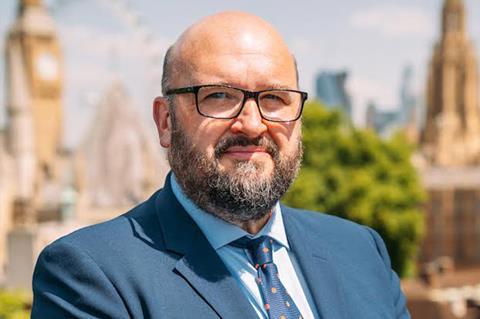
The Church of England Pensions Board manages £6 billion (C$11 billion) for 44,000 clergy, with investment horizons extending into the 21st century. Matthews stressed that mining represents a much greater strategic importance to global investment portfolios than direct holdings might suggest.
“Mining is systemically important. It is more strategically important than direct investments would lead most investors to believe,” he explained. “When you look at all sectors that depend on mining, not just your mining properties, you see the sector very differently.”
Building investment frameworks around indigenous rights
The Global Mining 2030 Investor Committee has set an ambitious target for all mining companies to operate to the highest standards of performance by 2035. Matthews described how the committee is developing an investor mining performance framework that clearly integrates Indigenous rights and partnership models into investment evaluation criteria.
“Consent is not something you get once and check a box. Consent is something you continually work toward,” he noted. “An agreement can be reached, but this agreement comes through real dialogue, respectful dialogue, and recognition of rights.”
“We’re building a tool called the Mining Performance Framework for investors. This is something that’s explicitly for investors to enable us to understand how companies deliver against best practice standards,” Matthews said.
“We are building standards around free, prior and informed consent explicitly into this tool,” he added. “It will inform us of the risks to which companies are exposed and we hope to distinguish among the best practitioners.”
Matthews distinguished between indigenous partnership and superficial methods of compliance. He noted that true approval involves ongoing dialogue and relationship building rather than one-time approvals.
Canada’s constitutional advantage creates investment opportunities
The institutional investor explained how Indigenous equity participation represents an ideal form of consent and creates attractive investment propositions. He argues that Canada’s constitutional framework and legal precedent provide Indigenous communities with legal and business leverage that does not exist in many other jurisdictions.
Matthews situates Canada’s approach within broader global trends toward middle-power cooperation and rules-based international orders. He pointed to Prime Minister Mark Carney’s recent speech in Davos, which highlighted Canadian pension funds and mineral resources as key solutions to global economic fragmentation.
Faith-based investing maintains an environmental, social and governance (ESG) commitment.
Despite political pressures against ESG investing in some regions, Matthews stressed that many institutional investors, including in the US, remain committed to a responsible investment approach. He described climate transition and indigenous rights as trends where “the train has left the station.”
“There is still a very large group of investors who see the risks of issues like climate and the need to embed sustainability and the importance of the long term,” he said.
The Church of England Pensions Board acts as a faith investor translating religious teachings into investment practice while maintaining fiduciary responsibilities. Matthews explained that the fund regularly surveys its members and receives strong support for its responsible investment approach.
“We don’t see financial returns and social impact as competitive,” Matthews said. “You can put the two things together and look at what that means practically in terms of the decisions we make.”
As global investors seek stable and responsible mining partnerships, Matthews suggested Canada’s Indigenous title model could become “one of Canada’s next big exports,” providing frameworks for meaningful partnership even in jurisdictions without constitutional Indigenous rights.
The Mining Performance for Investors Framework, which the Global Investors Committee is developing, is expected to link Indigenous partnership criteria to investment indicators and debt products, creating financial incentives for companies to adopt best practices in Indigenous engagement and partnership development.
To access the full interview, please visit: www.youtube.com/watch?v=qG5ArXbi-C4&t=16s
More information is available at www.rss.com/podcasts/drumbeats
Source link



