
short
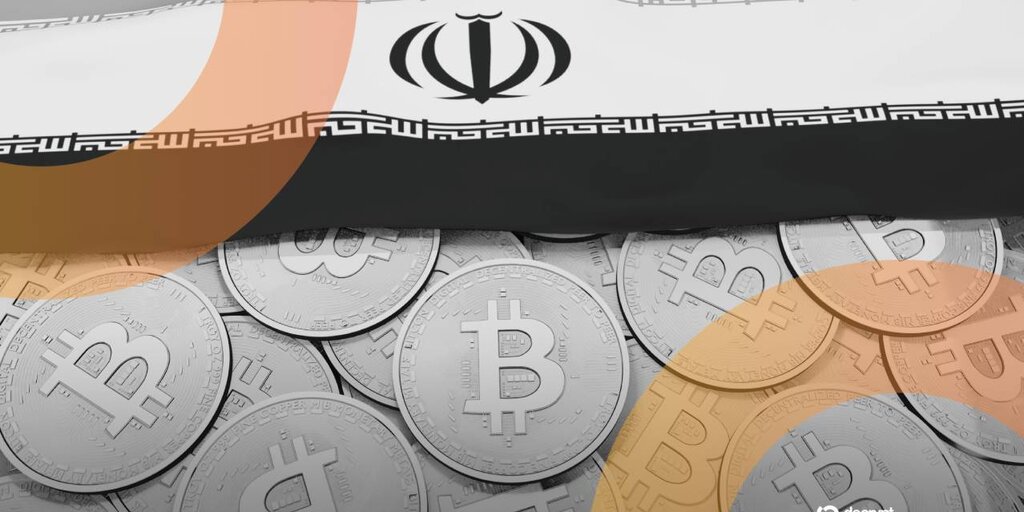
- The Iranian Revolutionary Guard has promoted Hormuz Safe, a platform that settles shipping insurance payments in bitcoin, according to state media reports.
- Europol identified 14,200 posts linked to the IRGC across social media and websites.
- Penalties, tracking, and weak support from insurance companies could limit usage, Decrypt was told.
The IRGC has reportedly promoted Hormuz Safe, a Bitcoin-powered maritime insurance platform for goods transiting the Strait of Hormuz, as part of a broader model explored by Iran’s Ministry of Economy for a strategic oil transit route.
Fars Agency, the official Iranian news agency, I mentioned On Saturday, the Iranian Ministry of Economy had been exploring this model since late April, as the plan would allow for marine insurance policies and certificates of financial responsibility that could generate more than $10 billion for the country.
The platform’s rules state that it provides “fast and cryptographically verifiable insurance policies” for goods moving through the Persian Gulf, the Strait of Hormuz and surrounding waterways, with payments “settled in bitcoin” and coverage starting from the moment of confirmation, according to the report.
Iranian officials reportedly mentioned it more than a month ago He sought to pay in Bitcoin of oil tankers seeking to pass through the Strait of Hormuz, saying the fees would be difficult to trace or confiscate under the sanctions. This suggestion was later followed by reports of scammers impersonating Iranian authorities and Demanding Bitcoin or USDT from ships seeking transit authorization through the Strait.
on Countlesshis prediction market DecryptionParent company Dustan, traders anticipated the possibility of Trump’s announcement Ending the siege of Hormuz Before June, 20%. Users also gave the Iranian regime a 12% chance Fall before October.
A separate market places Iran’s prospects Closing its airspace Before June, 46.5%.
Possible, but difficult
Observers say that the aforementioned model may be technically possible, although it is difficult to scale it outside permitted or specialized commercial channels.
Bitcoin-settled insurance is possible in “specialized sanctioned trading solutions,” but is impractical for mainstream shipping due to sanctions risks, volatility, limited legal recognition and lack of insurer support, said Dominic John, an analyst at Zeus Research. Decryption.
while Bitcoin “It helps get around sanctions,” John said. It remains a “limited solution” because liquidity, traceability and securities limits still pose exposure. He added that cryptocurrencies also “do not solve” counterparty trust or enforceable reinsurance.
Ryan Yun, senior analyst at Tiger Research, said the technical and legal viability of the platform is “highly questionable,” with no confirmed users despite its announced launch. Decryption. He added that the lack of visible users likely reflects the risk of secondary US sanctions, as any shipping company using Hormuz Safe faces “immediate expulsion from the global financial system.”
Bitcoin’s transparency can also make monitoring the model easier.
Transactions recorded in Bitcoin’s ledger are becoming public, meaning wallet addresses linked to Iran will be exposed and the relevant coins could become “tainted,” Wefi board advisor Agne Ling said. Decryption. She added that blockchain analysis firms are likely to identify those flows, even if payments move faster through banking networks that Iran struggles to access.
These reports come at a time when European authorities are targeting electronic activity linked to the Iranian Revolutionary Guard. Europol Announce On Monday, investigators identified 14,200 links linked to what they called the group’s propaganda ecosystem.
Andy Yajin Zhu, an associate professor at the Chinese University of Hong Kong and co-founder of on-chain security firm BlockSec, said the takedown shows how state-linked actors rely on “interconnected digital infrastructure” rather than isolated accounts or websites. Decryption.
Such networks can combine social media, hosting, messaging platforms and cryptocurrency payment channels, so investigators often look beyond posts to the broader system behind them, Chu said.
Cryptocurrency payments could provide “useful investigative signals” because public blockchains allow investigators to track money flows, wallet collections and links to exchanges or OTC networks, Zhou said. However, blockchain data alone is usually “insufficient for ultimate attribution,” he added, as sophisticated actors can use one-time wallets, mixers, or informal settlement channels to reduce traceability.
Daily debriefing Newsletter
Start each day with the latest news, plus original features, podcasts, videos and more.



