

Kevin Warsh chaired his first Federal Open Market Committee meeting this week and immediately showed his hawkish colors. Prices remained constant, however New Fed Chairman He made it clear that he intends to prioritize price stability and reduce loose future guidance. While Warsh focuses on managing the dollar’s ongoing challenges, his debut actually highlights something much deeper: that the dollar still requires ongoing human intervention to avoid dilution and devaluation.
Bitcoin, by contrast, has a very limited supply and predictable issuance that no president can change. Werch’s first meeting as Fed Chairman makes the benefit of Bitcoin’s fixed supply clearer than ever.
System Warsh is trying to manage it
Warsh inherited a central bank that must constantly adjust the money supply to balance inflation and employment.
This is not a temporary problem. It’s built into how fiat currencies work. The Fed can expand or contract the money supply at will, and history shows that it tends to expand over time.
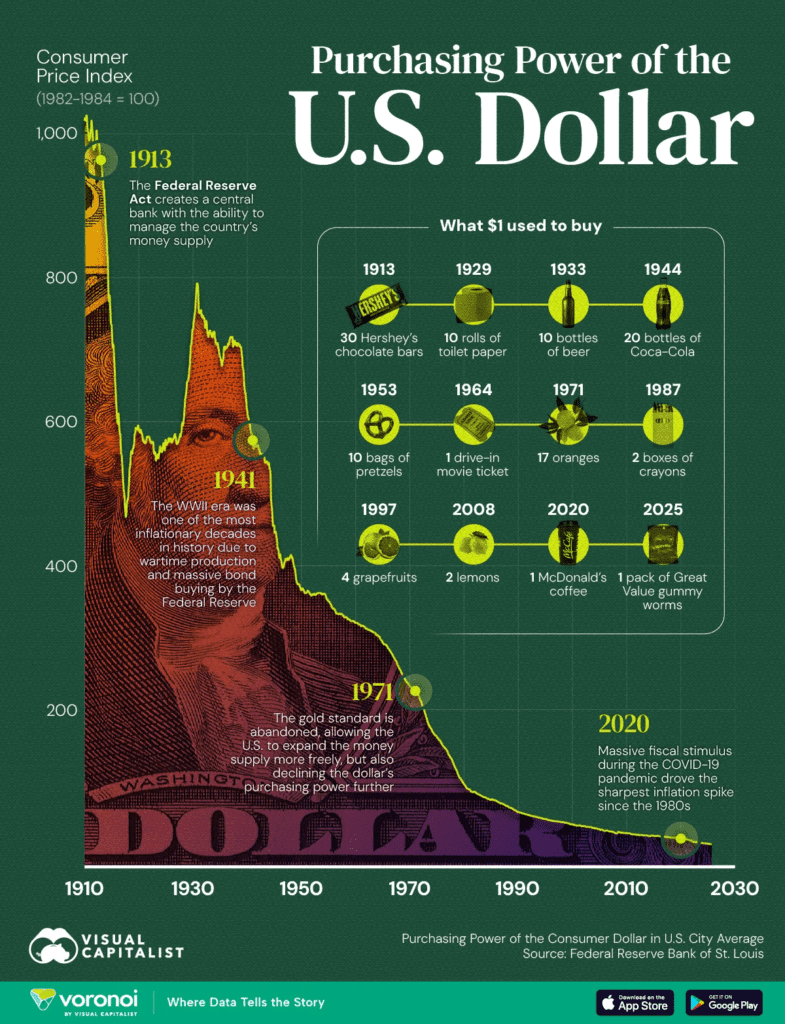
Since the United States left the gold standard in 1971, the dollar has lost approximately 88% of its purchasing power. A dollar from that era now buys what it buys today, about twelve cents.
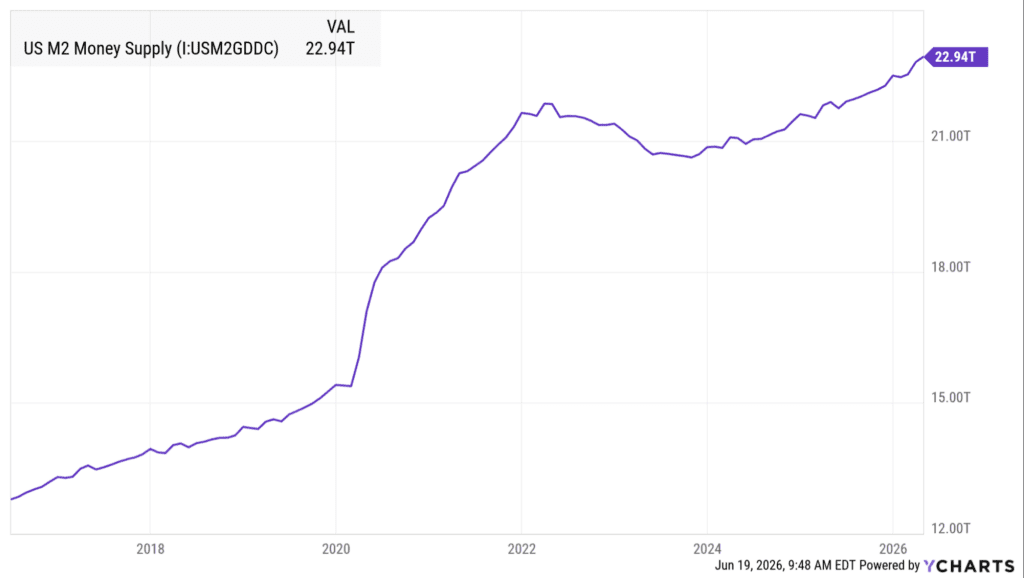
The M2 money supply in the United States has grown from hundreds of billions of dollars to more than $22 trillion. Each major expansion represents dilution to existing shareholders.
The structural problem Fiat cannot escape
Even a disciplined and hard-line chairman like Warsh must operate within a system in which the money supply is discretionary. Political decisions, political pressures, and economic shocks affect the amount of new money entering circulation. This creates recurring cycles of inflation and erosion of purchasing power. Bitcoin removes this discretion completely.
The fixed supply of Bitcoin changes the equation
Bitcoin has a cap of 21 million coins. The new supply is released according to a transparent schedule that halves every 210,000 blocks, approximately every four years, until issuance approaches zero in approximately 2140. No individual, committee or government can increase this total.
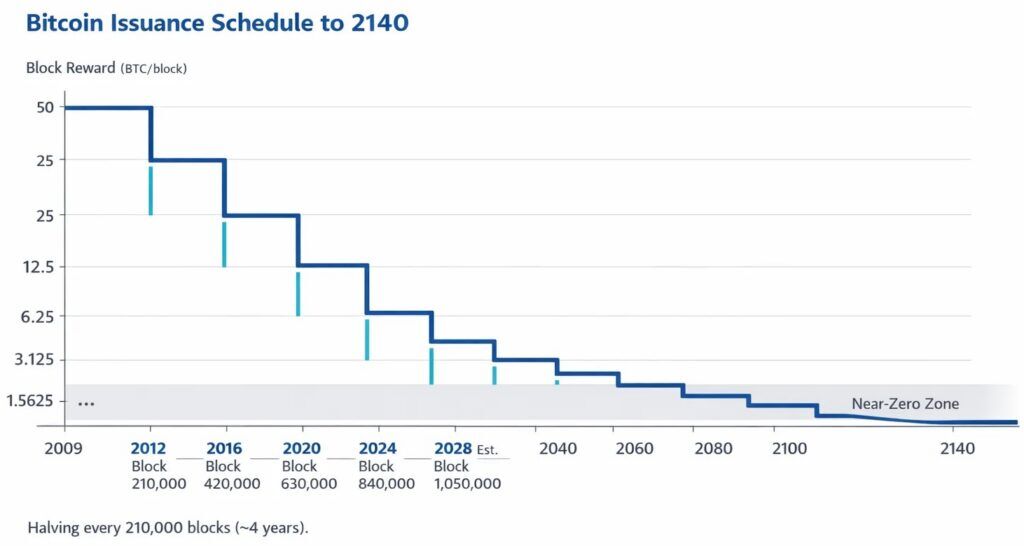
This creates a level of monetary predictability that paper-based systems cannot match. Rules are enforced through code and network consensus rather than policy statements. Once a block is sufficiently confirmed, the transaction history becomes practically immutable.
Why Warsh’s approach makes the contrast more pronounced
Warsh’s focus on price stability and reducing forward guidance is an attempt to bring more discipline to the existing system. This effort in itself reveals the fundamental difference: the dollar needs active management to prevent excessive devaluation. Bitcoin’s supply rules do not require constant intervention or trust in any central authority.
The hawkish Fed Chairman’s attempt to curb inflation does not pose a threat to Bitcoin’s long-term situation. This is evidence that the legal system still needs restraint. Bitcoin is designed to have self-control built into the protocol from the beginning.
Practical difference
| feature | Fiat (US Dollar) | Bitcoin |
|---|---|---|
| Maximum width | None – can be expanded | Maximum 21 million |
| Version control | Discretionary (Fed policy) | Algorithmic and transparent |
| The ability to change the rules | Relatively easy through politics | Very difficult (requires consensus) |
| Inflation path | A managed goal, often missed | An expected decrease towards zero |
| Transparency | partial | Fully verifiable on-chain |
Warsh’s first FOMC meeting shows a serious attempt to manage the dollar responsibly. At the same time, it highlights why money with fixed and immutable supply rules provides a fundamentally different basis.
Bitcoin does not promise stable prices in the short term. It promises something narrower but more powerful: a monetary base that cannot be weakened by political decisions. In a world where committed central bankers must constantly struggle against expansion, this fixed supply stands out as the most obvious structural advantage.
For public companies and operators sitting on large cash reservesThis reality has direct consequences. Cash in bank accounts or short-term instruments continues to face gradual erosion by inflation, even under a more disciplined Fed presidency. Warsh’s focus on price stability is welcome, but it does not change the basic design of fiat currency — supply can still expand when policymakers decide to.
Many CFOs are now quietly revaluation What does it mean to hold hundreds of millions, or even billions, in a currency whose value is constantly managed? The fixed supply of Bitcoin offers a fundamentally different option: an asset that cannot be diluted by political decisions and whose scarcity is guaranteed by protocol rather than promise.
For operators thinking beyond the next few quarters, treating a portion of treasury reserves as a long-term store of value rather than pure liquidity is becoming a more serious strategic consideration.
Disclaimer: This content was prepared on behalf of Bitcoin for businesses For informational purposes only. It reflects the author’s analysis and opinion and should not be relied upon as investment advice. Nothing in this article constitutes an offer, invitation or solicitation to buy, sell or subscribe for any security or financial product.



