
One researcher has taken a small but notable step toward cracking the cryptography that secures Bitcoin, but the claim has already sparked dissent over how significant the finding really is.
Project Eleven said it has awarded a “Q-Day Prize” of 1 bitcoin to Giancarlo Lelli for deriving a private key from a public key using a quantum computer.
A small quantum breakthrough, and a huge controversy over what it proves
The test used a 15-bit elliptic curve, which is much smaller than the 256-bit standard used by Bitcoin and most blockchains.
The company described the result as the largest public offering to date for Quantum attack on elliptic curve cryptography. She said the work shows the threat is moving from theory to early implementation.
However, the size gap remains large. A 15-bit key has a search space of just over 32,000 possibilities. Bitcoin security It is based on numbers that are too large to be enforced with current machines.
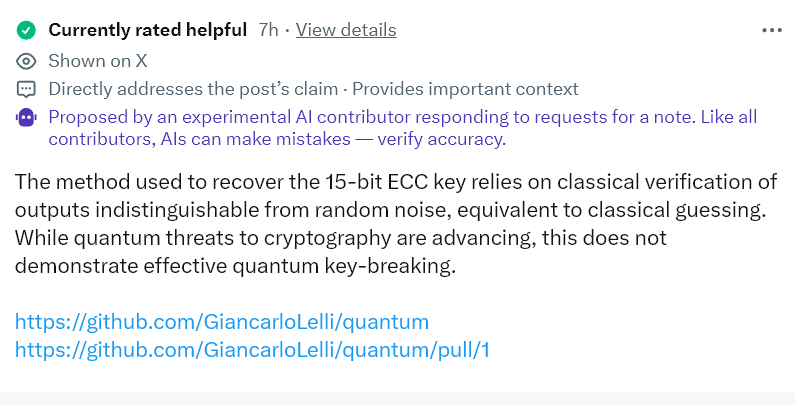
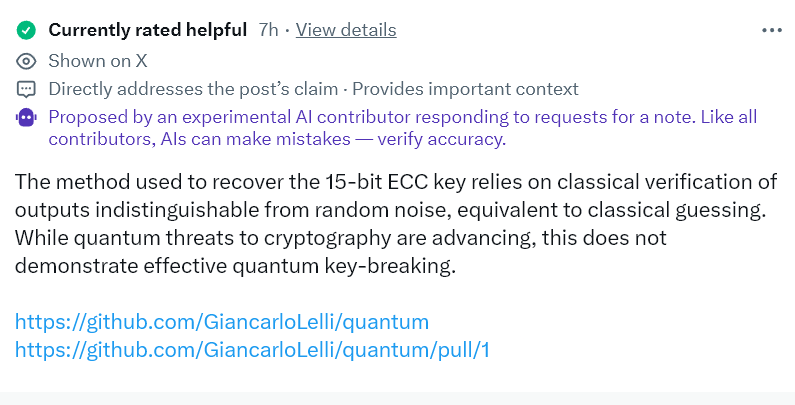
Critics quickly challenged this claim. A community note on the announcement said the method relies heavily on classical verification, not pure quantitative calculation.
In simple terms, the quantum system may not have done the hardest part of the attack on its own.
This distinction is important. Real quantum attacks will use Shor’s algorithm to efficiently solve problems that secure digital signatures. Partial or hybrid approaches have not yet demonstrated this ability on a large scale.
However, the result adds to the style. Previous demonstrations have broken smaller keys. Meanwhile, research suggests that the hardware needed to attack real-world encryption may be less than previously thought.
For Bitcoin, there is no immediate risk. However, the discussion highlights a longer-term issue. Upgrading encryption across decentralized networks is slow and complex, even if more secure alternatives already exist.
Right now, takeaways are tight. Quantum progress is real, but its practical impact remains distant and contested.
this post New Quantum Break Claim Sparks Controversy About Bitcoin Security appeared first on BeInCrypto.



