short
- OpenAI released GPT-5.6 Sol, along with the cheaper Terra and Luna, ending a two-week preview held by the US Commerce Department.
- Sol in ultra mode outperforms Terminal-Bench 2.1 by 91.9% and matches Anthropic’s restricted Mythos Preview on ExploitBench while burning nearly a third of its tokens.
- The launch will take place a day after Grok 4.5 and hours after Meta’s Muse Spark 1.1, making Google’s Gemini 3 in November 2025 the oldest frontier flagship still standing.
OpenAI’s GPT-5.6 Sol is now publicly available. The company released its new flagship model to general users today, launching alongside its two younger sisters, Terra and Luna, after the US Commerce Department kept the preview limited to about 20 trusted partners for two weeks.
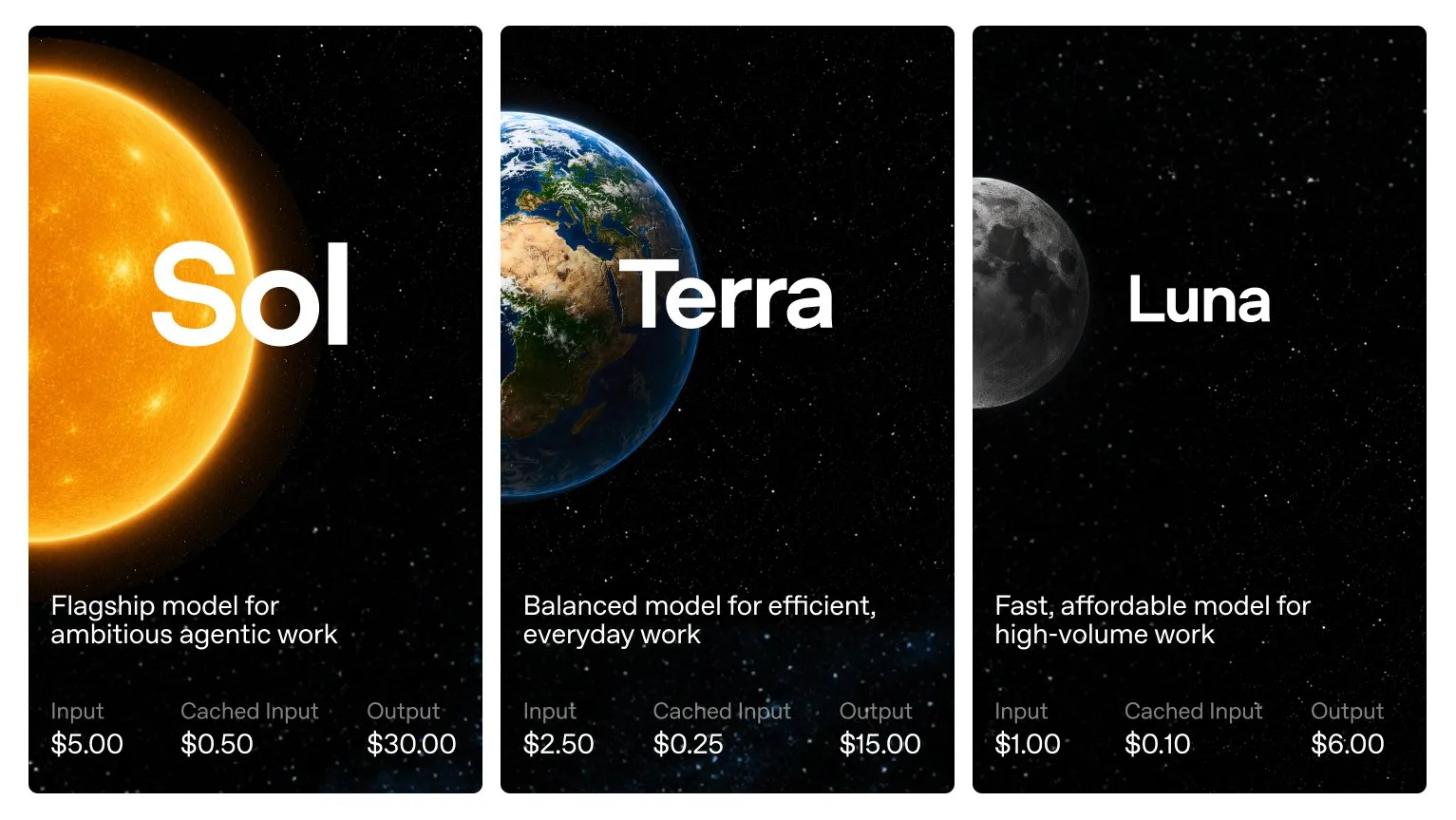
The naming strategy is new for OpenAI. This is the first time that the company has given names to its models instead of just using numbers. Sol, Terra, and Luna determine which ability levels can move at their own pace. Sol is the flagship model, Terra, the daily model that OpenAI says matches GPT-5.5 at half the price, and Luna is the cheapest option.
The price is $5.30 per million I/O tokens for Sol, dropping to $1.6 for Luna. (Tokens, for those who don’t know, are the smallest unit of information a model can handle. Companies typically price their models on a per-token basis for API services) And with it comes two new knobs: a maximum thinking effort that allows Sol to think longer, and a super-mode on which it farms sub-agents.
For context, Anthropic charges $10/$50 for Claude Fable 5, Google charges $2/$12 for Gemini 3.1 Pro, and xAI charges $15/$75 for Grok 4.5.
On the Chinese side: DeepSeek charges US$1.74/US$3.48 for the V4 Pro, and Xiaomi charges just US$1/US$5 for the MiMo v2.5 Pro – putting the Sol between premium US frontier models and low-cost Chinese rivals.
What the standards show
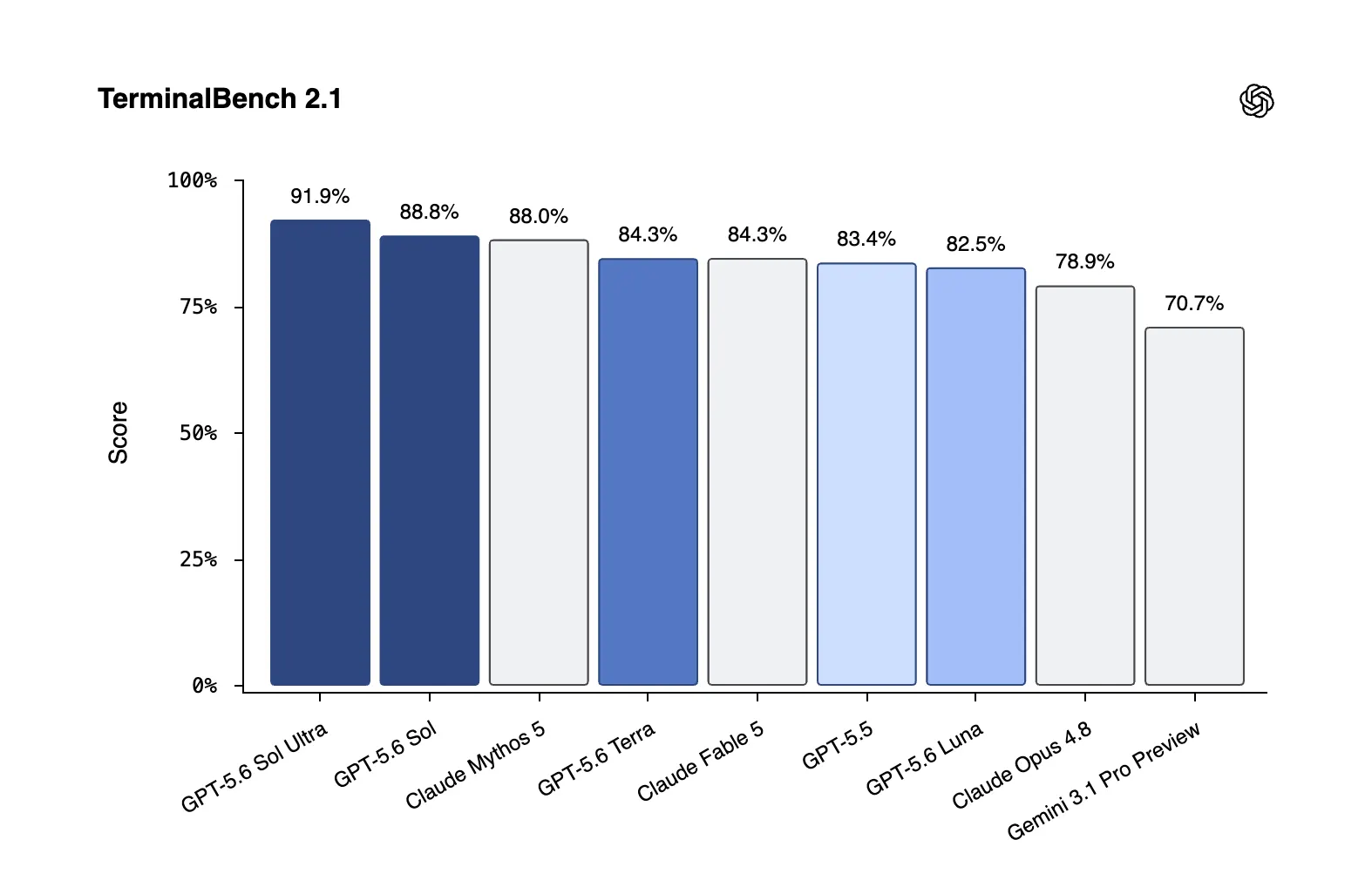
In Terminal-Bench 2.1—a test of command-line workflow that rewards planning, tool use, and iteration, and is scored as a percentage of tasks the form completes—Sol in its premium configuration scored 91.9%, with Sol standard at 88.8%.
This puts both of them at the forefront of anthropomorphism Claude Mythos 5 by 88.0%, Cloud Fable 5 by 84.3%, and Cloud Opus 4.8 by 78.9%. The Google Gemini 3.1 Pro Preview trailed off the chart at 70.7%.
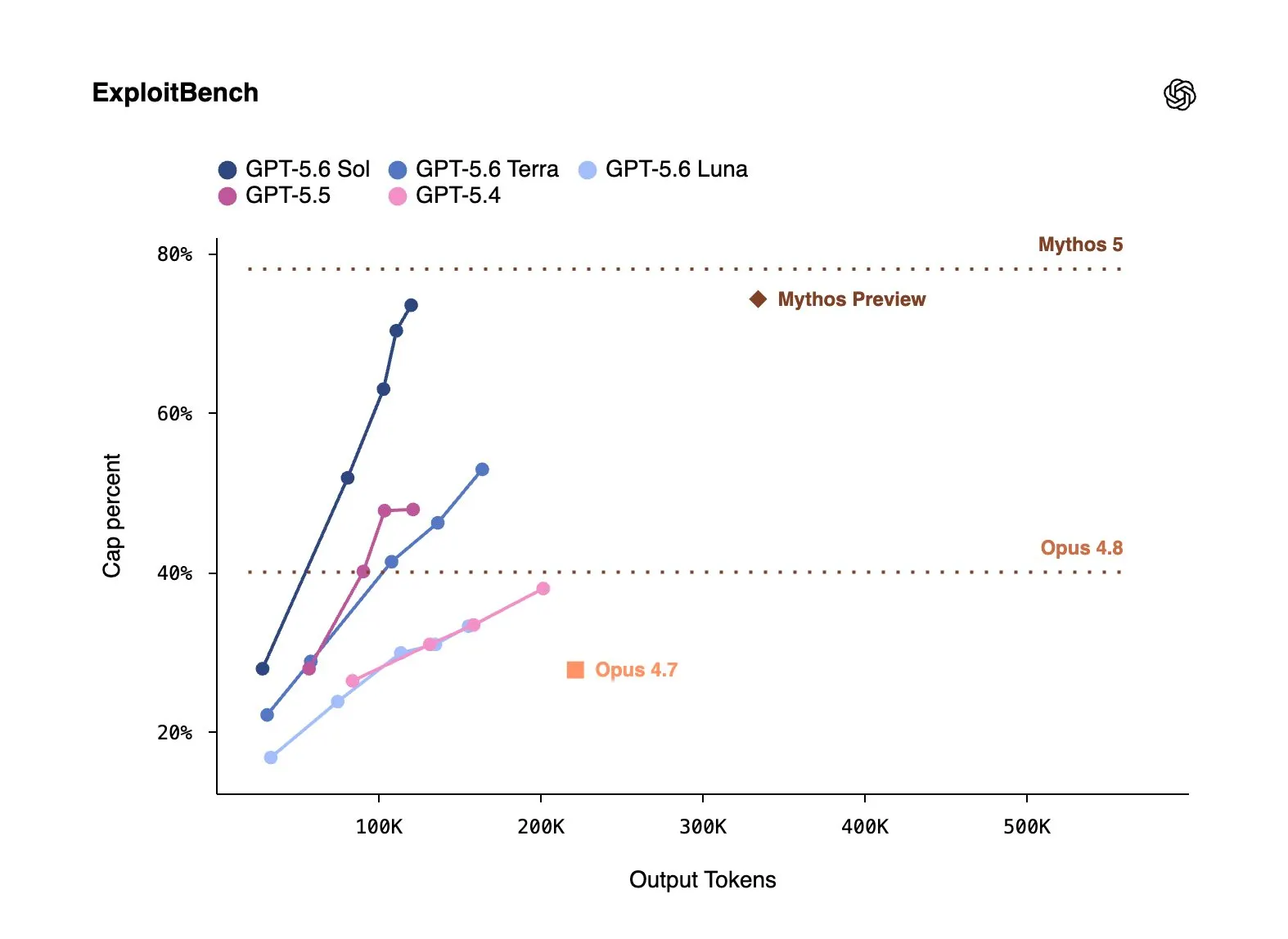
OpenAI was heavily dependent on the Internet. In ExploitBench, which measures how well a model can detect and weaponize software vulnerabilities, Sol matched the restricted Mythos Preview while spending nearly a third of its tokens. OpenAI says Sol still doesn’t cross the “cyber-critical” line in its risk framework.
Testers already have opinions
Early access was high. Theo, a well-known AI developer, YouTuber and CEO of AI platform T3 Chat, described Sol as the “world leader in computing” and said it fixed complaints he had about GPT-5.5.
Dan Schipper, whose team at Every tested it for a month, offered the clearest statement: “GPT-5.6 is like a Porsche, Fable is like a twisty drive.” His reading is that Sol is your daily driver and Fable is the thing you reach for to cross the galaxy.
Researcher Daichi Konno, who got in early, said Sol clearly outperforms GPT-5.5 and lands close to Fable 5, with Anthropic still ahead on write tasks. His most telling observation was that Sol’s safeguards did not falter in life sciences questions, which he believes might make them a default standard in biology research.
Leaks already indicate that it has been exceeded. one Roadmap tracking account“Synthwave” on The same thread links Anthropic’s Fable 5.1 and the public release of DeepSeek V4 as being imminent.
The timing is specific. Sol arrives the same week that Anthropic’s Fable 5 drops out of subscription plans — then It’s back globally On July 1, the model moved to usage-only credits once the 50% weekly allowance expired on July 7.
It’s crowded at the top. SpaceXAI has shipped Grok 4.5 Yesterday at a fraction of the price, Elon Musk described it as “almost the same as Opus 4.7, but much faster.” Meta Muse released Spark 1.1 this morning, its first paid model. Neither of them leads the group, but they are both from the border class.
This leaves Google as the only major US laboratory that has not updated its flagship software in this race. her role model, Gemini 3released since November 2025, is the oldest frontier version still standing while OpenAI, Anthropic, xAI, and Meta were all ported in the same seven days.
Daily debriefing Newsletter
Start each day with the latest news, plus original features, podcasts, videos and more.