

Pi Network’s native cryptocurrency, Pi (PI), has fallen more than 10% in the past 24 hours. This drop came days after the PI rose by 11% following the v25 protocol upgrade.
Trading volume increased by approximately 35%, indicating increased activity as the index fell.
By contrast, Bitcoin (BTC) trading volume declined, suggesting that traders were less active across the broader market. This divergence indicates that PI faced stronger currency-specific selling pressures.
On top of the bearish market structure, profit-taking and upcoming token openings contributed to the PI sell-off.
Can PI avoid an all-time low?
The daily market structure of the PI remained bearish, while its hourly structure also turned negative. This reversal came days after the PI gained short-term momentum after v25 protocol upgrade.
The bears regained control after the PI broke below the uptrend line formed from its all-time low.
The PI reached an all-time low of $0.07036 before recovering towards $0.10072. However, the recent crash left the token at around 13% above this record low.
The Moving Average Convergence and Divergence (MACD) has shown strong bearish momentum.
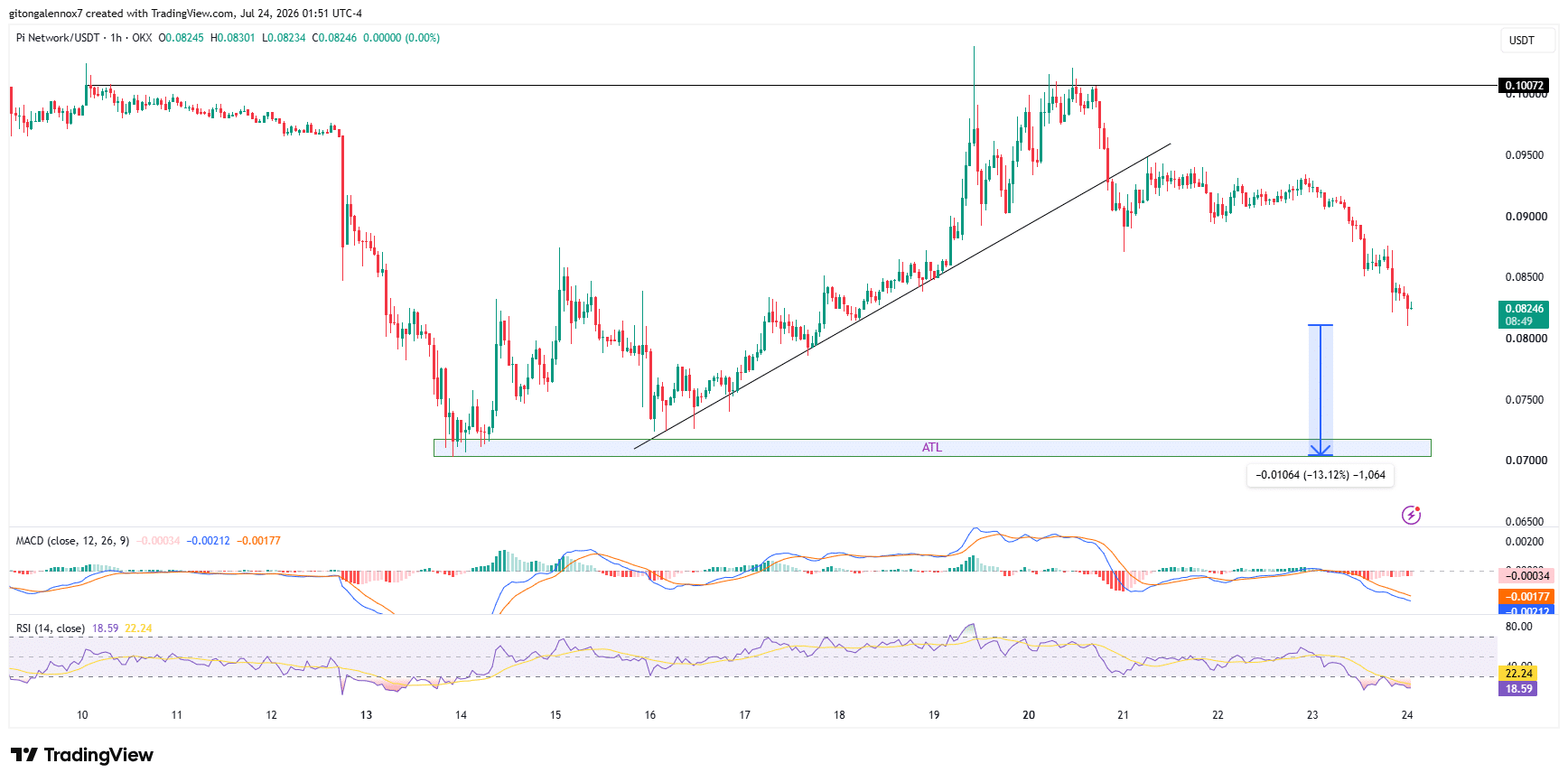
Meanwhile, the Relative Strength Index (RSI) fell to 18, putting the PI deep into oversold territory. A break below $0.0800 could expose the all-time low at $0.07036 (ATL).
However, an RSI in the oversold zone may indicate seller exhaustion and create room for a short-term reversal.
Buyers could also bounce back around demand levels above the record low, especially after another positive catalyst. However, the PI will need to reclaim the broken trend line before indicating that the bulls have regained control.
Why might the sell-off be just the beginning?
There is selling pressure from bulls who are taking profits from the rally generated by the v25 protocol upgrade craze. In total, the PI made a move of more than 43%, rising from an ATL of $0.07036 to $0.10072.
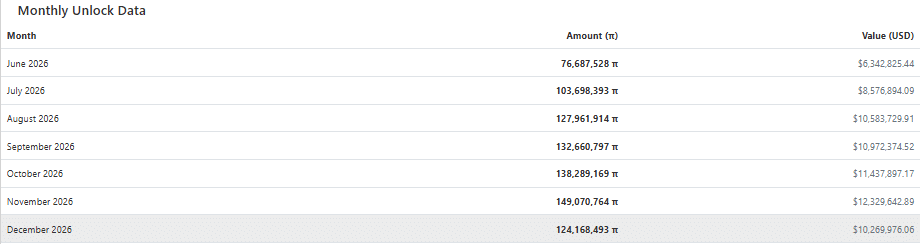
Additionally, selling pressure comes from heavy openings extending into December 2026. The Pi Network is scheduled to open 775.8 million PI tokens in the months leading up to the end of the year. This will certainly continue to increase the liquid supply in the market.
On the other hand, additional supply can improve market liquidity and support greater trading activity.
Better liquidity may limit sharp price fluctuations, but it is unable to absorb sustained selling on its own.
Therefore, the PI forecast depends on whether new demand can match the associated profit taking and opening bids.
Without stronger demand, the recent decline could develop into a deeper retest at $0.07036.
Final summary
- Pi Network stock is down more than 10% in the past 24 hours after breaking below key market structure.
- The PI price appears to be heading lower amid profit-taking and large liberalizations, but meeting liquidity shortfalls could mitigate the selling.



