

Canada risks losing competitiveness in its minerals, energy and other strategic sectors unless it accelerates infrastructure investment and project approvals, according to a new report. PricewaterhouseCoopers Canada report.
Canada is expected to invest $4.7 trillion in infrastructure by 2050, but the country spends a smaller share of its economy on infrastructure than many of its high-performing peers, and risks falling behind in sectors poised for rapid global growth. Canada currently invests 6.6% of GDP in infrastructure versus 7.4% among leading countries, a gap that PricewaterhouseCoopers estimates will require an additional $34 billion per year by 2050 to close.
“Canada can exceed these expectations. It can also fail to meet them,” PwC said in the report. “The difference comes down to the moves we make next.”
The report identifies resources as Canada’s largest infrastructure opportunity, with cumulative spending expected to reach $1.6 trillion by 2050. Annual investment in resource infrastructure is expected to rise to $63 billion from $53 billion today as demand for critical minerals and energy grows and countries look for reliable alternatives to concentrated global suppliers.
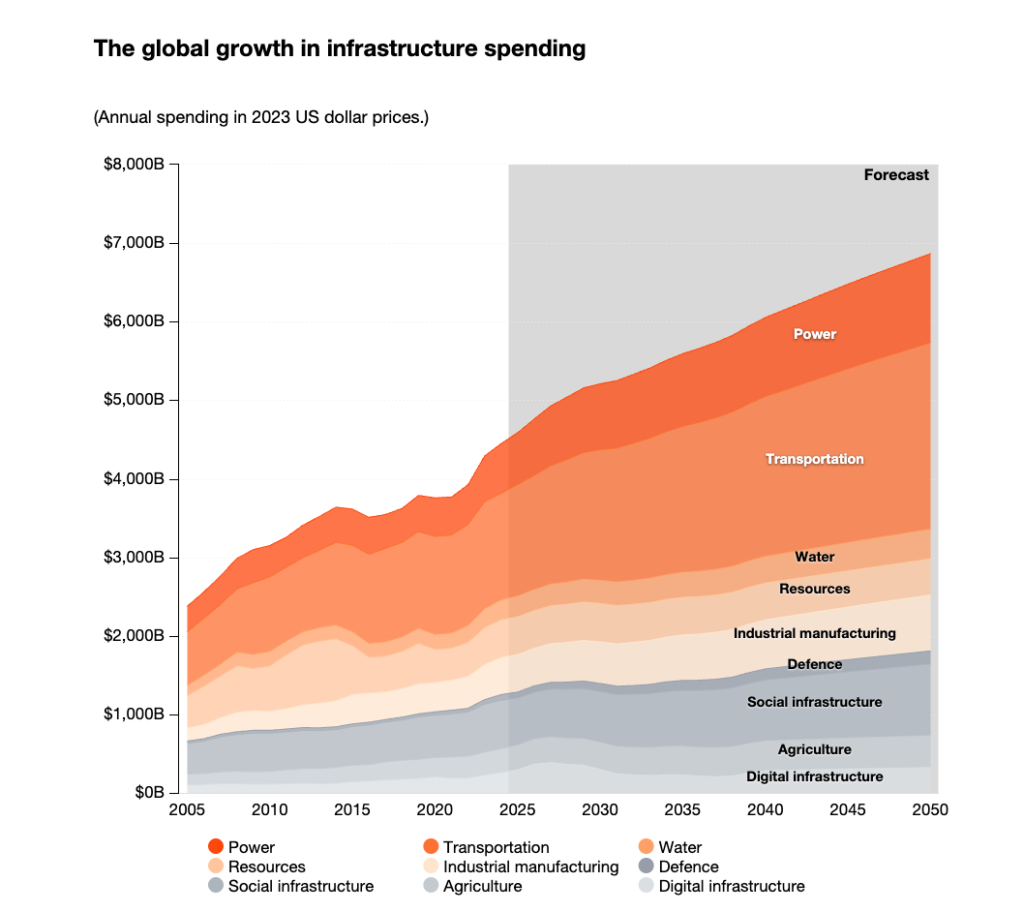
PwC said the biggest opportunities increasingly depend on integrated infrastructure rather than standalone projects. Ontario’s “Ring of Fire,” one of the largest undeveloped mineral areas in Canada, will require roads, energy transmission, digital connectivity and community infrastructure to be developed together before large-scale mining can begin.
The approval process is the main hurdle
The report argues that Canada’s lengthy regulatory approval processes remain one of the biggest barriers to this growth. Projects often face years of overlapping regulatory reviews and requirements, increased costs and uncertainty compared to competing jurisdictions.
While spending will be dominated by resources, the report warns that Canada is underinvested in many sectors compared to its global counterparts. Investment in nuclear energy is expected to grow by just 11% in Canada until 2050, compared to 45% globally. The United States is also expected to outperform Canada in areas including airports, data centers and other strategic infrastructure categories.
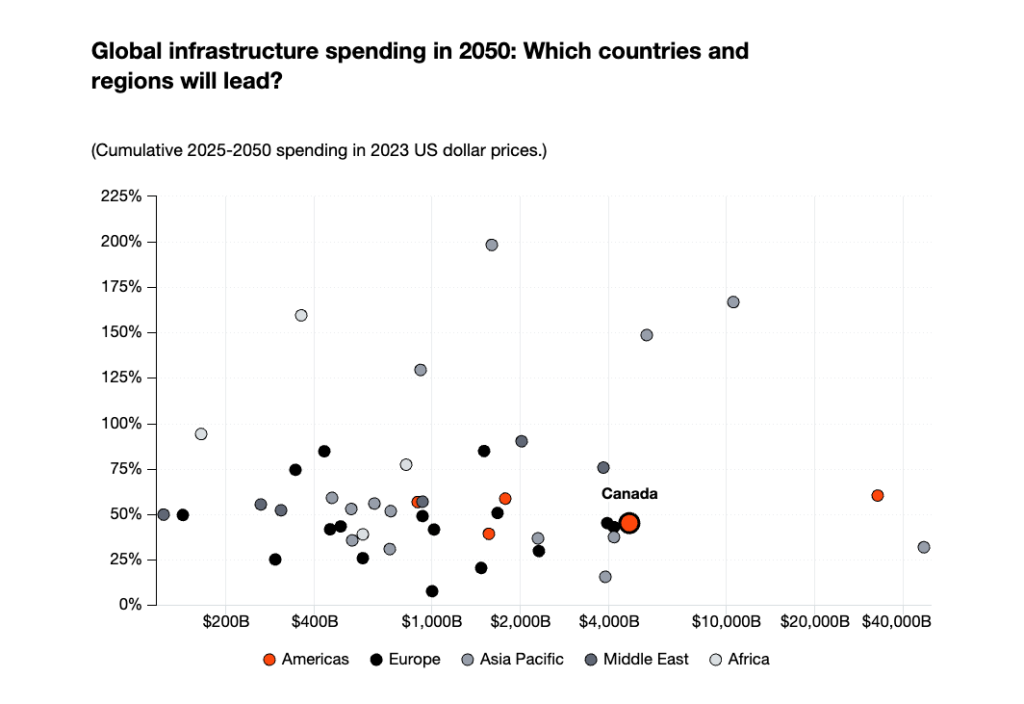
PwC reflects what the industry has been saying for years: Faster approvalsStronger Partnership with First NationsHowever, greater private sector engagement and new financing models will be needed if Canada hopes to benefit from shifting global supply chains and growing demand for critical minerals. The company believes that infrastructure projects that serve multiple purposes and users, such as transportation, energy and communications networks, will play a central role in unleashing future economic growth.
The findings come as governments and companies race to secure supplies of critical minerals needed for electricity, defense and advanced manufacturing while strengthening domestic supply chains amid increasing geopolitical competition.
Source link



