

SEC Commissioner Hester Peirce took issue with expectations that the agency may soon open the door to unrestricted token stock trading through a proposed “innovation exemption.”
summary
- SEC Commissioner Hester Peirce said any token stock exemption would likely apply only to on-chain issues of existing common stock.
- Synthetic stock tokens that track stock prices without shareholder rights are not expected to qualify under the proposed SEC framework.
- Industry executives from Superstate and Securitize said a narrower approach could reduce the risk of fragmentation in tokenized stock markets.
According to comments Pearce posted on X on Thursday, any exemption under consideration would only apply to on-chain issues of existing securities that are already trading on public secondary markets.
She said she always expected the proposal to remain “limited in scope,” adding that it would facilitate trading only for “digital representations of the same underlying securities that an investor can purchase on the secondary market today.”
Its clarification came days after Bloomberg announced that the SEC was exploring a framework for conditional relief that could allow some tokenized securities products to operate with modified regulatory requirements.
Fox Business journalist Eleanor Terret described Pierce said he “tempered expectations” around the proposal and narrowed its focus to “on-chain stock products, not synthetic tokens that mimic stocks without giving investors the same shareholder rights.”
Pearce’s comments also appear to exclude synthetic equity style tokens under the expected exemption. These products typically track stock prices without giving holders the ownership rights associated with the underlying shares.
The SEC’s discussions focus on shareholder rights
Ditto I mentioned crypto.news, SEC officials have discussed allowing tokenized stocks only if the tokens retain the same economic and governance rights associated with traditional stocks, including voting rights and access to dividends.
The agency collected comments from hundreds of market participants while drafting the proposal, people familiar with the matter said. The report added that discussions are still ongoing and that the final conditions could still change before any exemption is approved.
Concerns about synthetic equity products emerged shortly after the news broke. Brett Redfearn, head of tokenization firm Securitize, warned that allowing third parties to tokenize shares without the issuer’s involvement could lead to fragmentation problems across the market.
Other industry figures also supported Peirce’s narrower interpretation.
Robert Leshner, CEO of tokenization platform Superstate, He said On
Meanwhile, Carlos Domingo, CEO of Securitize, said Argue Restricting the exemption to real assets linked to stocks would reduce the risks associated with synthetic products.
“This is good, we want to do cross-chain trading, but for the right assets, not to help spread those derivatives that fragment the market and cause additional risks,” Domingo said.
Even with growing interest from cryptocurrency companies and financial institutions, token stocks remain a relatively small corner of the digital asset sector, although… It is expected to grow.
Data from RWA.xyz shows that token shares currently represent approximately $1.48 billion in on-chain assets. Current offerings include token exposure tied to companies like Circle, Strategy, and Google.
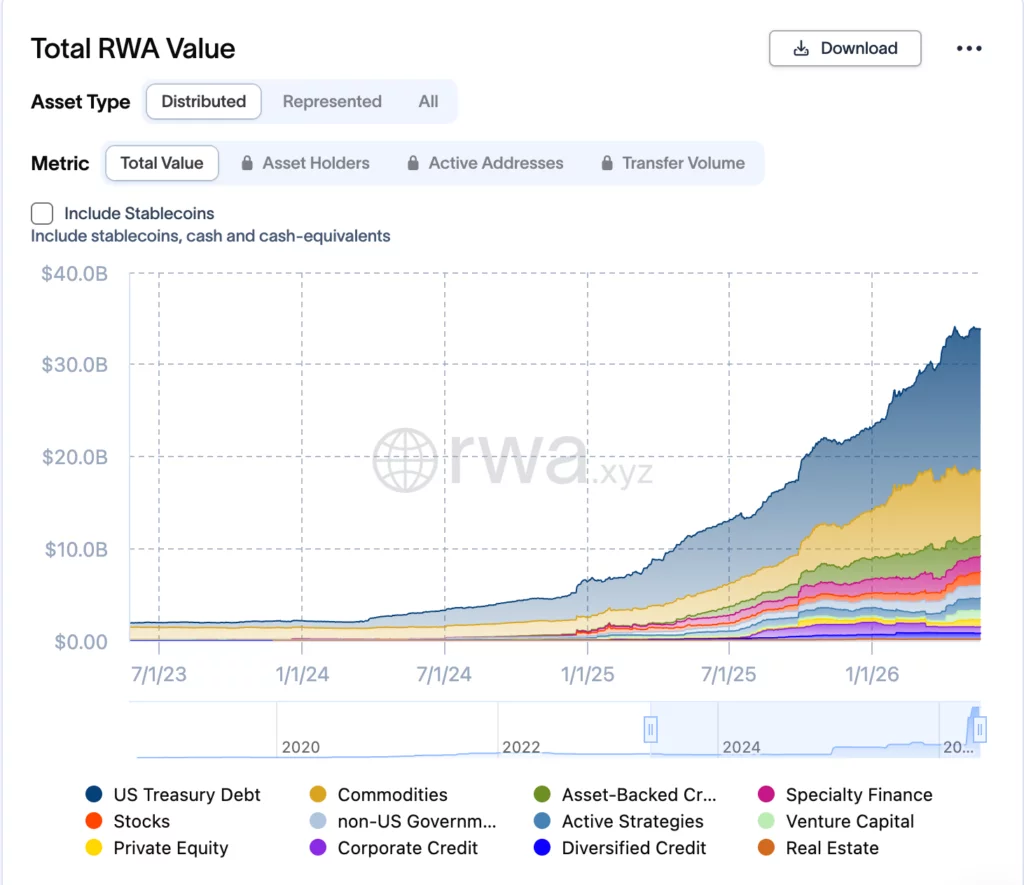
Total market capitalization of RWA. Source: RWA.xyz
Previously, it was also reported that some SEC officials were still hesitant about allowing token stock trading at all, despite ongoing discussions about a potential exemption.



