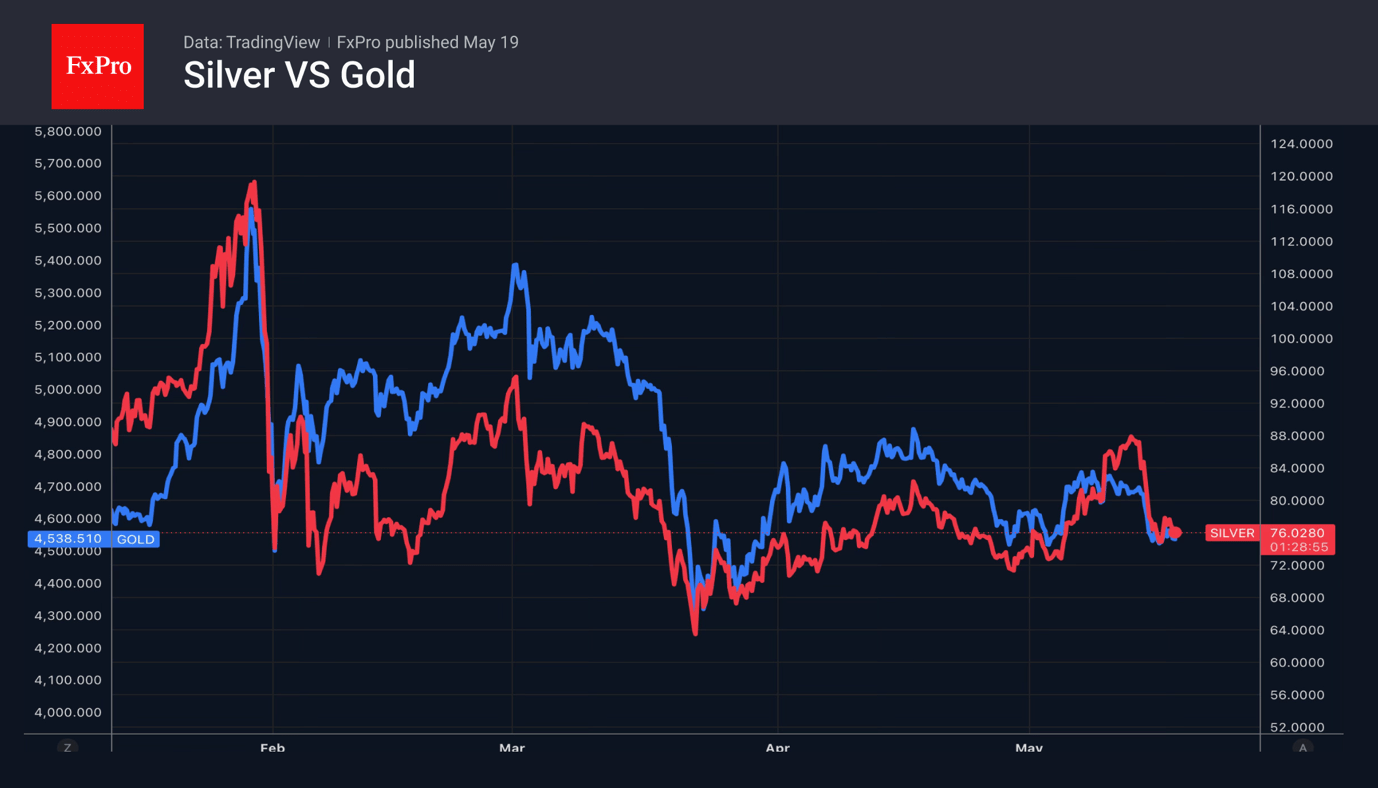
After a long period of calm, volatility has returned to the silver market. Silver rose to a two-month high, rising more than 20% from its May lows in just one week. However, concerns about monetary policy tightening and rising bond yields have put pressure on prices since then.
Of course, the current volatility cannot be compared to what we saw last January, when a 35% drop occurred in a single day. Investors felt that the rise had gone too far. However, the situation does not yet look like a classic bubble burst, with silver prices still 130% higher than a year ago, suppressing global demand. UBS estimates a decline of 50 million ounces this year, allowing the bank to lower its price forecast from $100 to $85 per ounce by the end of the second quarter.
High prices force not only jewelers but also industrialists to look for alternatives to silver. There has been some success in replacing copper in solar panels. This sector represents a fifth of global supply. Due to lower global demand, the 46.3 million ounce deficit the Silver Institute forecast for 2026 could be lower, putting pressure on the price of an ounce.
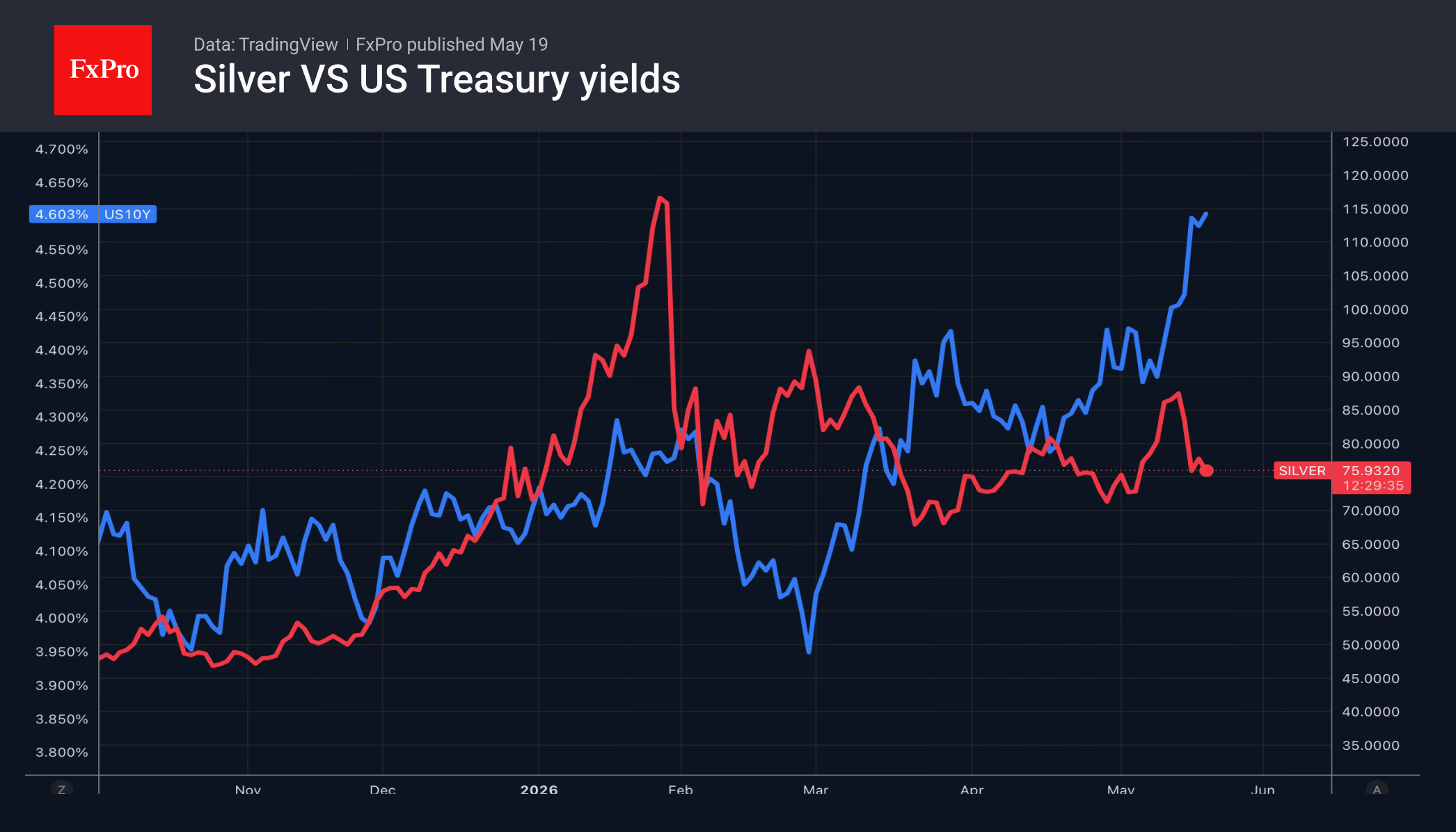
Silver is also facing weaker investment demand. The rise in global bond yields and the strength of the US dollar are putting pressure on the metal. UBS reported that speculative interest fell sharply, while silver ETF holdings fell by 70 million ounces since the beginning of the year, to 794 million ounces.
Stopping the escalation in the Middle East could turn the tables. Oil, US dollar and Treasury yields will decline, which will be positive for silver. However, as long as the Strait of Hormuz remains closed, it will remain under pressure.
The silver market is relatively small compared to gold, which makes it more vulnerable to speculative trades. This often leads to sharp price movements in both directions.